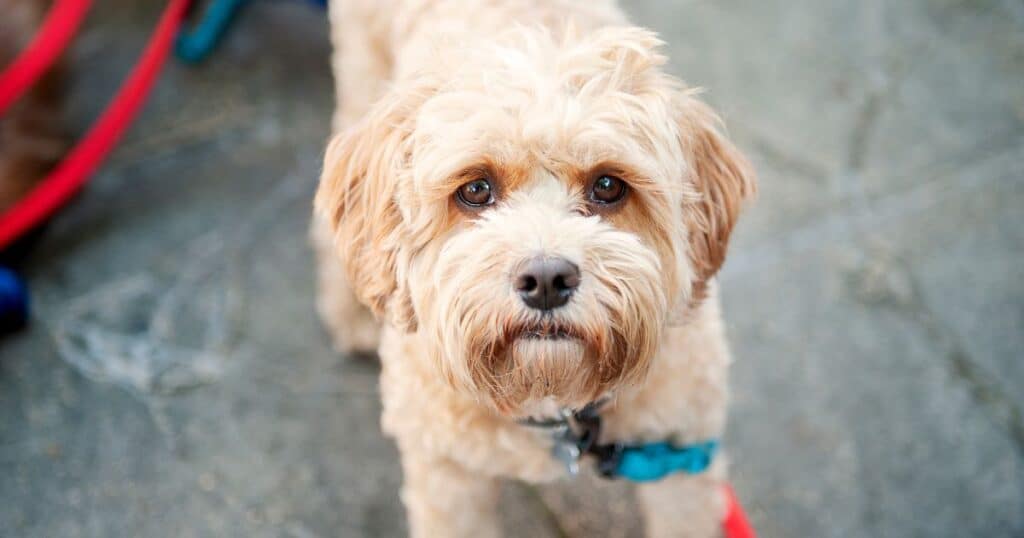
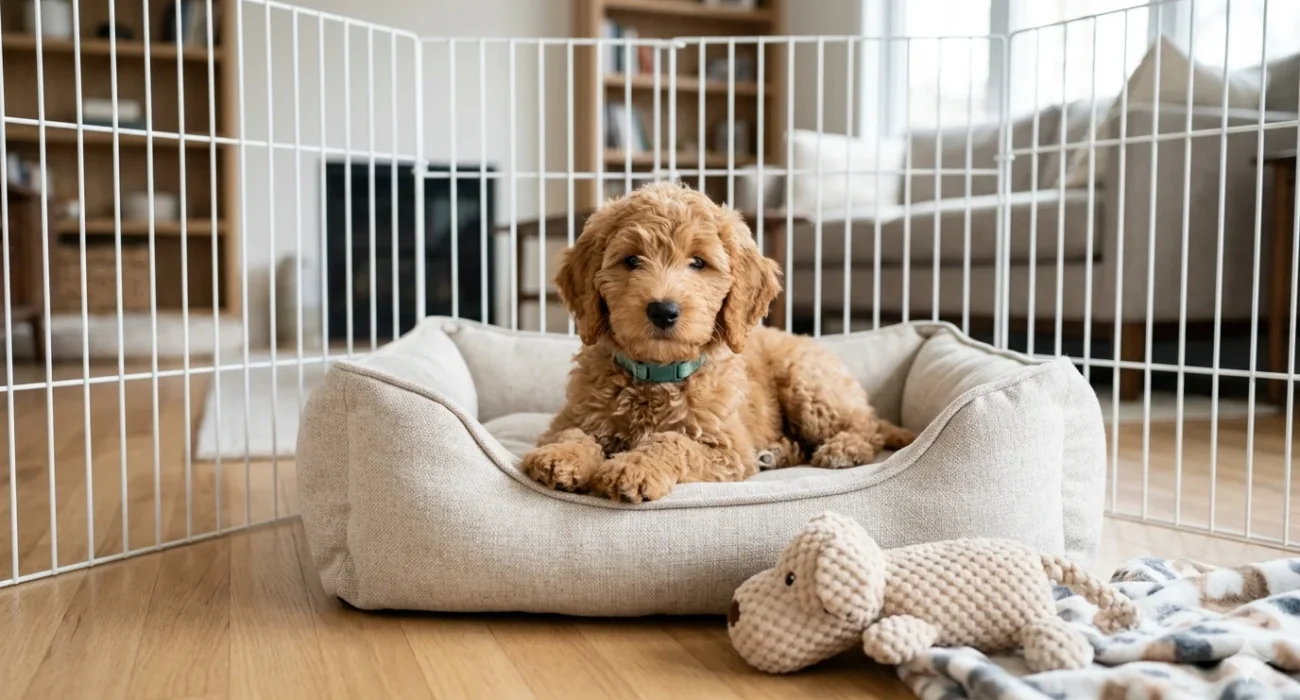
Learning how to prevent separation anxiety in small Doodle puppies starts from the first day you bring your new puppy home. Bringing home a small Doodle puppy, whether it’s a Cavapoo, Cockapoo, Maltipoo, Mini Goldendoodle or Mini Labradoodle, is exciting, but early independence training is essential.
You’re never alone again.
Your puppy follows you everywhere, watches your every move, and acts like your shadow 24/7.
Cute? Absolutely.
Convenient when you need space? Not really.
The tricky part is that this level of attachment—if not guided early—can turn into separation anxiety. And the good news is: you can prevent it with the right approach from day one.
This guide walks you through a practical, step-by-step way to raise an independent, calm puppy without stress, guesswork, or overwhelm.
Whether you have a Cavapoo, Cockapoo, Maltipoo, Mini Goldendoodle or Mini Labradoodle, teaching independence from an early age can make a lasting difference. Small Doodle breeds are known for their affectionate personalities, but without gradual alone-time training they can become overly dependent on their owners. The good news is that separation anxiety is often preventable with consistent, positive training from the very beginning.
First, let’s validate what you’re seeing
If your puppy:
- Cries when you leave the room
- Follows you constantly
- Gets anxious when confined
- Seems unsettled when alone
You’re not doing anything wrong.
This is common in Doodle puppies because they’re naturally people-oriented, sensitive, and quick to form strong bonds.
The goal isn’t to “stop the attachment”—it’s to teach your puppy how to feel safe even when you’re not around.
Is Separation Anxiety Normal in Small Doodle Puppies?
Many young puppies naturally cry when separated from their owners, especially during the first few weeks in a new home. Mild whining or following you from room to room is usually normal puppy behaviour. True separation anxiety is much more intense and involves panic, destructive behaviour and an inability to settle even after repeated training.
What separation anxiety actually looks like
Not every bit of whining means true separation anxiety.
Typical early puppy behavior may include:
- Light whining when left alone
- Following you from room to room
- Mild protest when confined
True separation anxiety is more intense and may include:
- Panic-level distress when alone
- Destructive escape behavior (scratching doors, chewing exits)
- Drooling, pacing, heavy panting
- Inability to settle at all
- Accidents despite being house trained
Some owners describe in this Reddit thread how their puppy would escalate quickly when left alone, struggling to settle unless someone returned.
Understanding this difference helps you respond appropriately instead of overcorrecting normal behavior.
| Normal Puppy Behaviour | Separation Anxiety |
|---|---|
| Mild whining | Panic |
| Settles quickly | Never settles |
| Sleeps | Paces |
| Waits | Scratches doors |
| Plays | Destroys furniture |
Why Small Doodle puppies are more prone to it
Small Doodles tend to develop separation issues more easily because:
- They’re bred to be companion-focused
- They often get carried or kept close
- They quickly learn routines (and dependency patterns)
- They’re emotionally sensitive and highly aware of changes
- They adapt to “constant access” to their human
None of these traits are bad—they just require intentional training early on.
How Long Can a Small Doodle Puppy Stay Alone?
| Age | Recommended Time |
|---|---|
| 8 Weeks | 5–10 min |
| 10 Weeks | 15–20 min |
| 12 Weeks | 30–45 min |
| 4 Months | 1–2 hrs |
| 6 Months | 3–4 hrs |
The mindset that makes everything easier
Instead of thinking:
“I need to toughen my puppy up”
Shift to:
“I need to teach my puppy that being alone is safe and normal.”
That’s the foundation of preventing separation anxiety.
Everything else is just how you teach that skill step by step.
How to Prevent Separation Anxiety in Small Doodle Puppies
Learning how to prevent separation anxiety in small Doodle puppies starts from the moment your new companion comes home. Whether you have a Cavapoo, Cockapoo, Maltipoo, Mini Goldendoodle or Mini Labradoodle, early independence training can help your puppy feel safe, confident and relaxed when left alone. With the right routine, positive reinforcement and gradual alone-time practice, you can reduce the risk of separation-related behaviours before they become long-term habits.
This guide explains how to prevent separation anxiety in small Doodle puppies using practical, easy-to-follow training techniques that work for first-time and experienced dog owners alike. You’ll discover the early warning signs, common mistakes to avoid and proven tips to help your puppy build confidence, enjoy alone time and grow into a happy, well-adjusted family companion.
PRO TIP: For the best results, combine gradual independence training with guidance from trusted organizations. The American Kennel Club (AKC) offers helpful puppy training resources, the RSPCA provides practical advice on dog welfare and behaviour, and VCA Animal Hospitals explains the signs and treatment of separation anxiety in dogs. Following evidence-based recommendations from these trusted sources can help your small Doodle puppy grow into a confident and well-adjusted companion.
Step 1: Start micro-absences immediately
This is one of the most effective prevention strategies—and it should begin on day one.
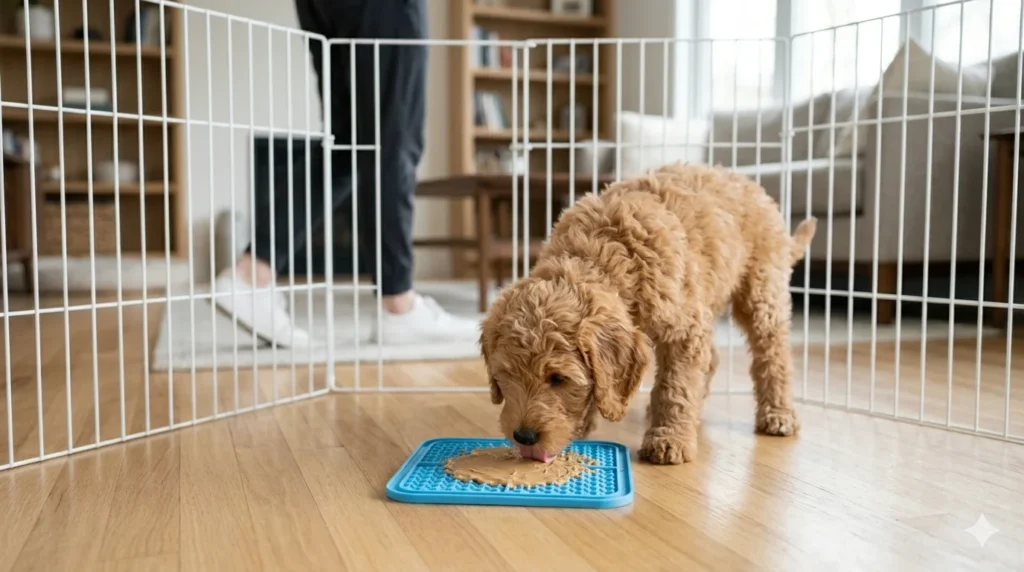
How to do it:
- Place your puppy in a safe area (crate or playpen)
- Give a small treat or chew
- Step away for just 1–5 seconds
- Return calmly before your puppy becomes distressed
- Repeat multiple times a day
You’re teaching your puppy:
- Leaving is normal
- Returning always happens
- Being alone is not scary
What success looks like:
- Puppy notices you leave but stays calm
- Mild curiosity instead of panic
- Continues engaging with a chew or toy
Common mistake:
Waiting until your puppy is already crying, then returning. That teaches crying = attention.
Instead, keep absences short enough that your puppy stays under their stress threshold.
Step 2: Avoid constant togetherness
If your puppy follows you everywhere all day, they never get a chance to practice independence.
You don’t need to ignore them—you just need to create structured separation throughout the day.
Practical ways to build independence:
- Use a pen or crate while you cook
- Give a chew during your shower time
- Allow short “tether time” where they stay near but not on you
- Encourage naps in their own space
This helps your puppy learn:
“I can be okay even when I’m not right next to my human.”
Step 3: Teach your puppy how to settle
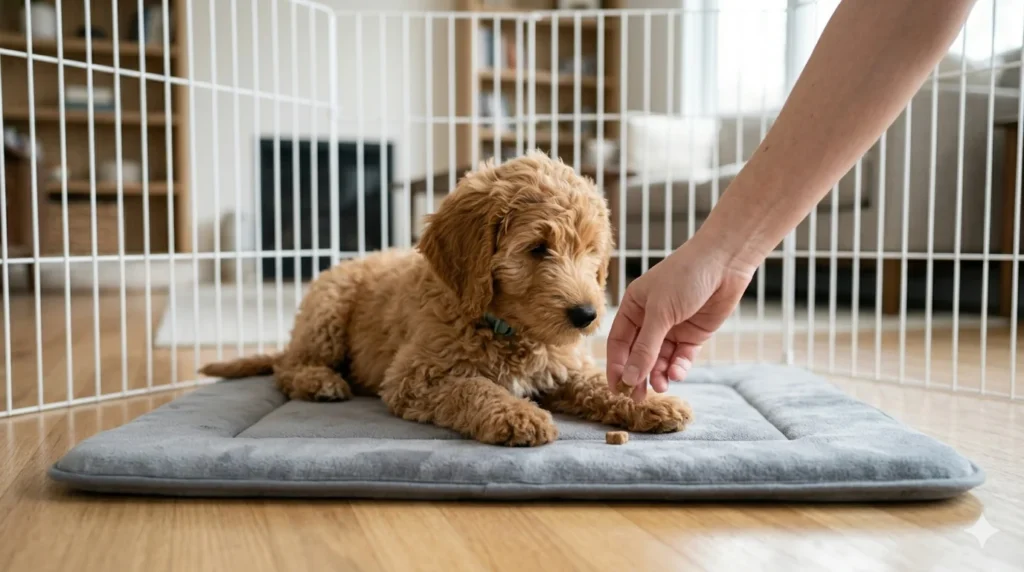
A puppy that can’t relax will struggle to be alone.
You want to actively teach calm behavior.
Simple settle exercise:
- Place a mat or bed down
- Reward your puppy for stepping onto it
- Reward sitting, then lying down
- Gradually increase the time between rewards
You can even use mealtime for this training.
This builds a powerful skill:
Calm behavior leads to good things.
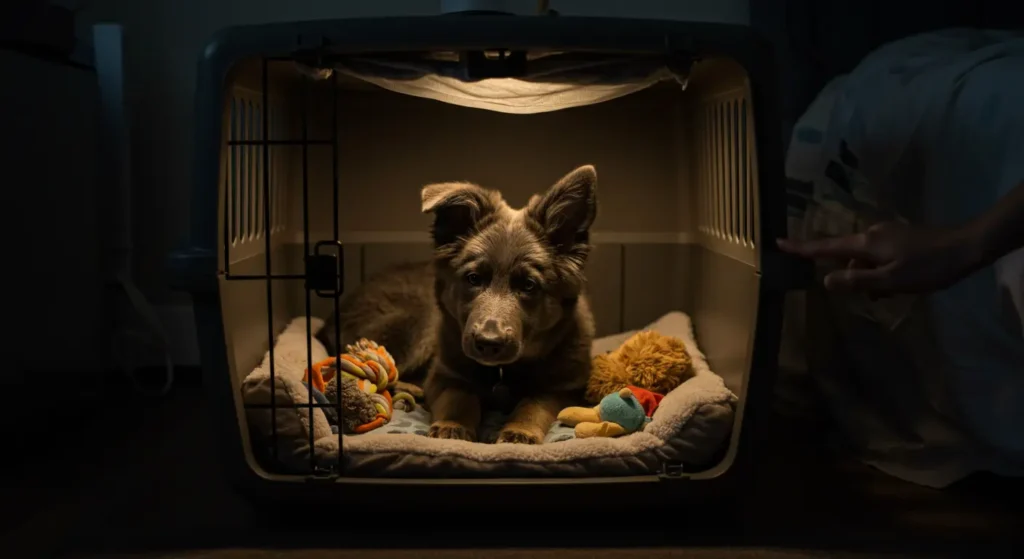
Step 4: Make the crate or pen a positive place
Your puppy should associate their crate or pen with comfort—not isolation.
Do this:
- Feed meals inside the crate
- Offer special chews only inside
- Use the crate while you are still home
- Add white noise if your home is noisy
- Keep the environment calm and comfortable
Some owners notice their puppies resist being alone at first, especially when confinement is introduced suddenly. Others share similar experiences where puppies only settle when gradually introduced to being alone, as seen in this Reddit thread about crate comfort and adjustment.
The key is consistent positive association—not forced isolation.
Step 5: Remove “departure triggers”
Dogs quickly learn your leaving routine:
- Keys
- Shoes
- Bag
- Coat
These cues can trigger anxiety before you even leave.
Practice desensitization:
- Pick up your keys, then sit back down
- Put on shoes, then don’t leave
- Grab your bag, then walk around the house
This breaks the pattern of “these actions always mean abandonment.”
Step 6: Use food strategically
Food can either calm your puppy—or overstimulate them depending on how it’s used.
Best approach:
- Use stuffed Kongs or lick mats during alone time
- Provide chews that last long enough to encourage relaxation
- Pair alone time with something enjoyable
Licking and chewing naturally reduce stress and help your puppy settle.
Avoid:
- High-energy treats that hype your puppy up
- Giving food only after distress starts
- Treats that are finished too quickly
Step 7: Keep departures and arrivals low-key
Big emotional goodbyes and reunions can unintentionally reinforce anxiety.
Instead:
- Leave calmly without extra attention
- Avoid prolonged goodbye rituals
- When returning, wait briefly before greeting
- Reward calm behavior rather than excited reactions
This teaches your puppy that:
Your presence is normal—not something to panic about.
Step 8: Build alone time gradually like training at the gym
Think of alone time training as progressive exposure.
Example progression:
- Seconds (day 1–3)
- Minutes (week 1)
- Short intervals (week 2)
- Longer durations (week 3+)
Increase duration slowly, based on your puppy’s comfort level.
Important rule:
Only increase one variable at a time (duration, environment, or difficulty).
Step 9: Don’t accidentally reinforce anxiety
If your puppy whines and you return immediately every time, they learn:
“Whining brings my human back.”
Instead:
- Return when your puppy is calm (even briefly)
- Or reduce the difficulty of the exercise
- Reward calm behavior, not distress
This is one of the most important mindset shifts in training.
Step 10: Establish a predictable daily routine
Puppies feel more secure when they know what to expect.
A simple routine could look like:
- Morning potty + short walk
- Breakfast via training or puzzle feeder
- Nap time in crate/pen
- Midday potty + play
- Afternoon nap
- Evening training + calm chew
- Night potty + bedtime
Small Doodle puppies also need a lot of sleep. Overstimulation and overtiredness often make separation training harder.
If you work full-time
Young puppies cannot handle long stretches alone without support.
Practical options:
- Midday help from family or a dog walker
- Scheduled breaks during the day
- Pet sitter or daycare (age appropriate)
- Gradual independence training combined with managed care
The goal is not to force independence too early—but to build it gradually while ensuring your puppy’s needs are met.
Common mistakes to avoid
- Skipping alone-time training early on
- Letting your puppy follow you everywhere all day
- Using the crate only when leaving
- Ignoring early signs of distress
- Making departures emotionally intense
- Expecting a young puppy to handle long absences immediately
These patterns can unintentionally reinforce anxiety instead of preventing it.
Simple daily routine you can follow
Here’s a no-stress structure:
- Potty break
- Short play or training session
- Crate/pen time with a chew or lick mat
- Calm exit (no dramatic goodbye)
- Gradual return with calm greeting
- Repeat throughout the day
Consistency matters more than perfection.
When to seek professional help
Consider working with a certified trainer or veterinary behaviorist if:
- Your puppy shows panic-level distress when alone
- Behavior worsens over time
- There’s destructive escape behavior
- Your puppy cannot settle even for short separations
- You’re unable to progress despite consistent training
Early intervention makes a significant difference.
Final takeaway
Preventing separation anxiety in small Doodle puppies isn’t about avoiding attachment—it’s about building independence alongside it.
If you:
- Start early
- Train alone time gradually
- Keep routines consistent
- Reward calm behavior
- Avoid reinforcing panic
…you’ll raise a puppy who feels secure whether you’re in the room or not.
And that’s the real goal: a confident, relaxed companion who can enjoy both time with you and time on their own.
FAQs (Frequently Asked Questions)
What is separation anxiety in puppies and how can I tell if my puppy has it?
Separation anxiety in puppies is an intense distress reaction when left alone, which can include panicking, destructive behavior like scratching doors or chewing frames, drooling, pacing, heavy panting, potty accidents despite being house trained, and symptoms that escalate over time. Unlike normal puppy whining or separation frustration, true separation anxiety specifically occurs when the puppy is alone or separated from a particular person.
Why are small Doodle puppies more prone to separation anxiety?
Small Doodle puppies (like Cavapoos, Maltipoos, Cockapoos, Mini Goldendoodles, Mini Labradoodles) are more prone to separation anxiety because they are bred as companion dogs with people-focused temperaments. They often get carried frequently which reduces independence training. Many live in apartments or small homes where they can constantly follow their owners. Their intelligence helps them quickly learn routines of constant access to humans, and their sensitivity means they notice small changes emotionally.
What is the main goal when preventing separation anxiety in a small Doodle puppy?
The main goal is to teach your puppy that being alone is safe, predictable, and sometimes even awesome. This means ensuring nothing scary happens when you leave (safe), that you always come back (predictable), and that alone time comes with positive experiences like chews, food puzzles, or naps (awesome). This mindset helps prevent clinginess and separation anxiety before it develops.
How do I start preventing separation anxiety from day one with my new puppy?
Begin by practicing ‘micro-absences’ multiple times a day starting on day one. Place your puppy in a safe area like a pen or crate with a treat or lick mat, step away for just 1 to 5 seconds before calmly returning. Repeat this while your puppy remains calm to teach them that human leaving is boring and human return is normal. Avoid returning only after your puppy cries as this reinforces panic behavior.
What daily routine can help teach my small Doodle puppy to settle and relax alone?
Implement a simple 5-minute daily ‘settle’ routine: place a bed or mat down; reward your puppy for stepping on it; then for sitting; then lying down; and finally for staying calmly down with gradually increasing time between treats. Feeding meals this way also helps. The aim is for your puppy to learn that relaxing leads to good things happening, which supports independence and reduces separation issues.
How can I make the crate or pen a positive space rather than a place associated with being left alone?
Make the crate or pen feel like a ‘puppy spa’ by associating it with good experiences even when you’re home. Feed meals inside the crate or pen regularly so your puppy sees it as a comfortable and rewarding spot—not just confinement linked to your absence. This positive association helps reduce anxiety related to being confined when you leave.