
If you’re wondering “Why does my Cockapoo scratch so much?” you’re not alone. Excessive scratching in Cockapoos is commonly caused by allergies, fleas, yeast infections, skin irritation or ear problems. Identifying the underlying cause early can help relieve itching and prevent more serious skin infections. If you have a Cockapoo, you already know the pattern.
They’re sweet, playful, a little dramatic… and then suddenly—the scratching starts.
Not just a quick itch. I’m talking about:
- Full-body scratching sessions
- Chewing paws like it’s a hobby
- Face rubbing on carpets
- That late-night thump-thump-thump back leg
If you’re wondering, “Why is my Cockapoo so itchy all the time?”—you’re not overreacting. This is one of the most common (and frustrating) issues owners deal with.
Why Does My Cockapoo Scratch So Much?
Cockapoos usually scratch because of allergies, fleas, yeast infections, bacterial skin infections, hot spots, matting or stress-related licking. The exact cause can often be identified by looking at where your dog scratches, whether there is redness, smell, ear irritation or excessive paw licking.
First—quick truth: scratching is a symptom, not the problem
Scratching is your dog’s way of saying:
“Something feels wrong on my skin.”
The tricky part?
Different problems can look exactly the same.
- Fleas → itching
- Allergies → itching
- Yeast infection → itching
- Dry skin → itching
- Stress → even itching
So the goal isn’t just to stop the scratching.
It’s to find the trigger behind it.
1. Allergies (the #1 reason Cockapoos itch)
This is the big one—and often the root of recurring problems.
What it looks like in real life:
- Constant paw licking (often stained reddish-brown)
- Face rubbing on furniture or carpet
- Repeated ear infections
- Red belly, armpits, or groin
- Itching that seems seasonal… or sometimes constant
One owner described in this Reddit thread how their dog licked its paws so much every day that it became a habit, and nothing helped until they realized it wasn’t just “itchiness”—it was an underlying allergy that needed a proper plan dog constantly licking paws due to allergies. If your Cockapoo’s itching continues despite home care, the American Kennel Club’s guide to common skin allergies in dogs explains how environmental and food allergies can affect your dog’s skin and overall health.
Why it happens:
There are 3 main types:
Environmental (most common)
- Pollen, grass, dust, mold
- Worse during certain seasons
- Chicken, beef, dairy, eggs
- Usually year-round itching
Flea allergy
- Even one bite can trigger days of intense itching
What actually helps:
- Rule out fleas first (always step one)
- Wipe paws and belly after walks
- Try a structured elimination diet (8–12 weeks if needed)
- Use vet-prescribed meds if itching is constant
What not to do:
- Don’t keep switching foods randomly
- Don’t rely only on shampoos
2. Fleas and parasites (even if you don’t see them)
A lot of owners skip this because “my dog is clean.”
But fleas don’t care.
What it looks like:
- Scratching around tail base and lower back
- Sudden flare-ups
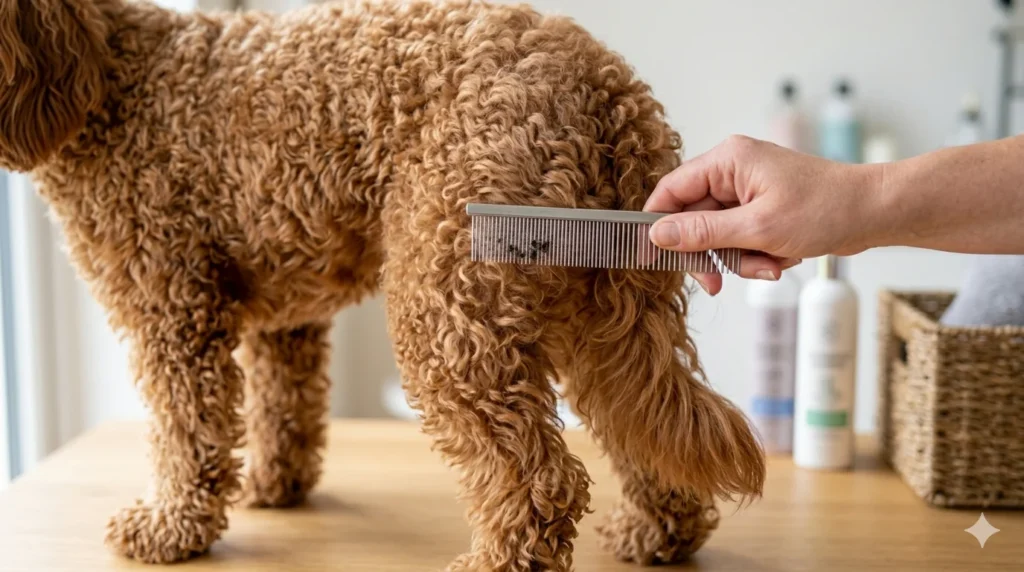
- Small black specks (flea dirt)
- Other pets itching too
Why it gets missed:
Fleas are:
- Tiny
- Fast
- Easy to miss
What actually helps:
- Use a flea comb (check tail base, neck, thighs)
- Start consistent vet-recommended flea prevention
- Check for flea dirt (turns reddish when wet)
What not to do:
- Don’t assume “I don’t see fleas” = no fleas
3. Yeast overgrowth (especially paws and ears)
Cockapoos are very prone to this because of their coat and ear structure.
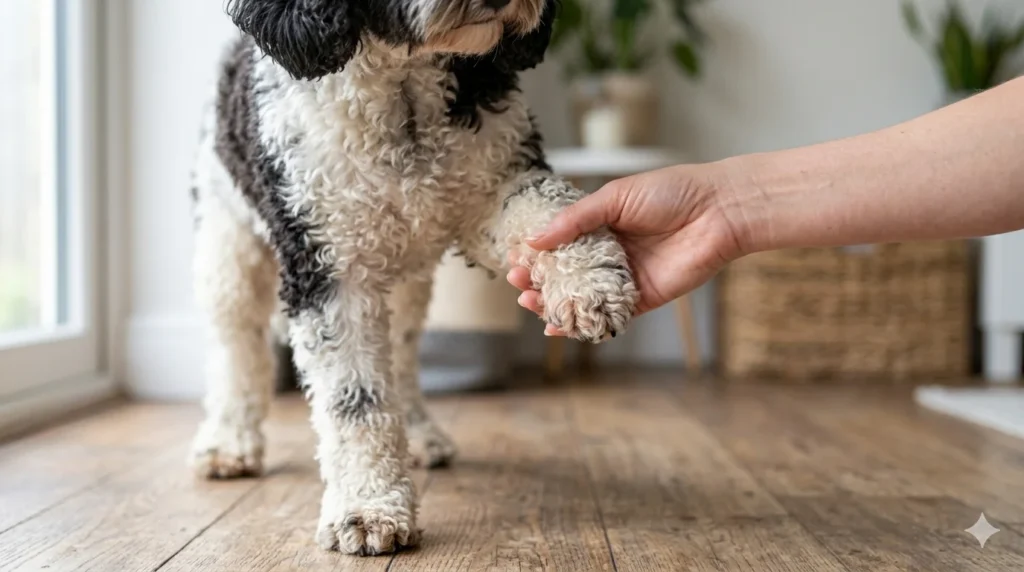
What it looks like:
- Corn chip smell (very specific)
- Brown staining on paws
- Red, irritated skin between toes
- Greasy or slightly sticky skin
- Ear scratching or head shaking
Why it happens:
- Moisture (after baths, walks, humidity)
- Allergies damaging the skin barrier
- Trapped heat in dense coat
What actually helps:
- Dry paws and ears thoroughly
- Use medicated shampoo if recommended
- Treat underlying allergies (this is key)
What not to do:
- Don’t ignore the smell—it’s a big clue
- Don’t keep washing without addressing the cause
4. Bacterial skin infections
The Merck Veterinary Manual’s information on skin diseases in dogs explains how bacterial and yeast infections develop and why proper diagnosis is important before starting treatment. These often show up after scratching has already started.
What it looks like:
- Red bumps or pimples
- Crusty patches
- Oozing or sore spots
- Skin looks irritated and painful
Why it happens:
Scratching damages the skin → bacteria enters → itch gets worse.
What actually helps:
- Vet treatment (topical or oral meds)
- Keeping the area clean and dry
What not to do:
- Don’t treat this as “just itching”
5. Hot spots (fast and aggressive)
These can go from tiny to serious in a day.
What it looks like:
- Red, wet, inflamed patch
- Hair missing or matted
- Strong smell
- Constant licking
What actually helps:
- Stop licking (e-collar if needed)
- Vet treatment early
What not to do:
- Don’t wait—these spread quickly
6. Matting and coat problems (very common in Cockapoos)
This one is often overlooked.
What it looks like:
- Scratching specific spots
- Sensitivity when touched
- Hidden irritation under the coat
Mats can:
- Pull on skin
- Trap moisture
- Hide infections underneath
What actually helps:
- Regular brushing down to the skin
- Professional grooming when needed
What not to do:
- Don’t brush only the top layer
- Don’t pull tight mats out painfully
7. Stress or boredom licking
Not all itching starts as a skin problem.
What it looks like:
- Licking one paw repeatedly
- Worse when alone or anxious
- Starts clean → becomes irritated over time
What actually helps:
- Mental stimulation (puzzles, sniff games)
- Gradual alone-time training
- Address anxiety if needed
What not to do:
- Don’t assume it’s “just behavioral” once skin is damaged
Where your Cockapoo scratches matters (quick clues)
- Paws → allergies or yeast
- Ears → yeast, infection, allergies
- Belly/groin → environmental allergies
- Tail base → fleas or anal glands
- Face rubbing → environmental triggers
Use location as a shortcut to narrow things down.
What you can do at home (without making it worse)
Start simple and structured:
Step 1: Check for fleas properly
Use a flea comb—don’t just look casually.
Step 2: Smell paws and ears
That “corn chip” smell = yeast clue.
Step 3: Adjust bathing routine
- Use gentle dog shampoo
- Don’t over-bathe
- Dry thoroughly
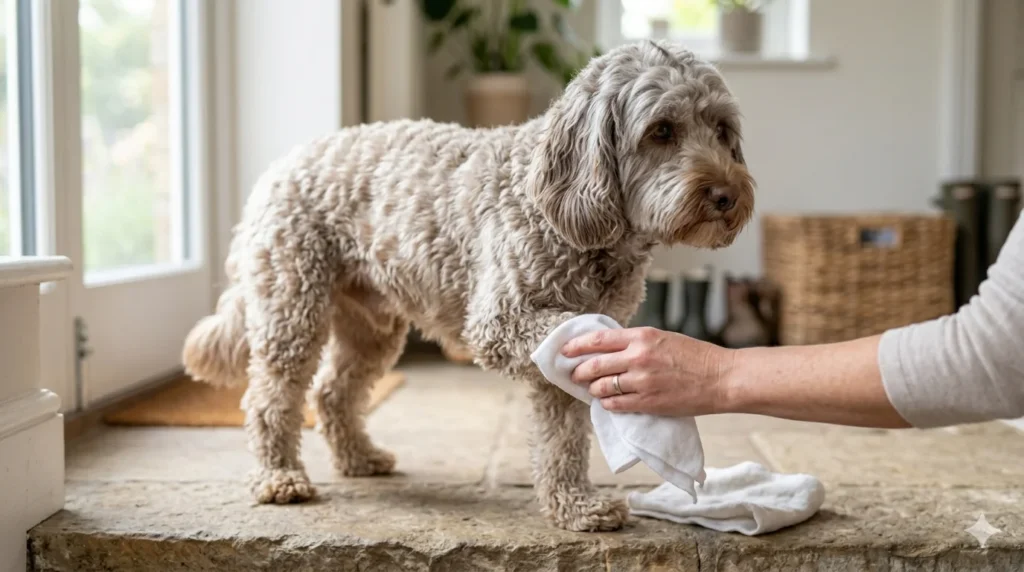
Step 4: Wipe after walks
Removes pollen and grass allergens.
Step 5: Check for mats
Focus on:
- Behind ears
- Armpits
- Collar area
Step 6: Simplify diet
- Stop extra treats temporarily
- Keep food consistent
Step 7: Stop self-trauma
Use an e-collar if your dog is damaging skin.
When to stop guessing and call the vet
Don’t wait if you see:
- Constant scratching (can’t settle)
- Open sores or hot spots
- Strong odor from skin or ears
- Head shaking or ear pain
- Hair loss patches
Also—if this keeps coming back, you need a proper plan, not trial and error.
What your vet will usually check
A good workup often includes:
- Skin cytology (yeast vs bacteria)
- Ear swab
- Flea check
- Skin scraping (for mites)
- Diet trial (if needed)
This helps avoid guessing—and gets faster results. For persistent itching, recurring ear infections or skin irritation, the VCA Animal Hospitals guide to itchy skin in dogs explains when professional veterinary care is recommended.
The “why it keeps coming back” cycle
This is extremely common:
Allergies → scratching → skin damage → yeast/bacteria → more itching → temporary fix → repeat
If this sounds familiar, you’re not doing anything wrong.
You just need a two-part approach:
- Treat the flare
- Manage the underlying cause
A simple plan you can start tonight
- Check for fleas (properly)
- Smell paws and ears
- Look for mats or hot spots
- Wipe down after walks
- Stop excessive licking if present
The honest takeaway
Most itchy Cockapoos aren’t dealing with just one issue.
It’s usually a combination of:
- Allergies
- Moisture/yeast
- Skin barrier damage
That’s why it feels confusing.
But once you:
- Rule out fleas
- Identify patterns
- Treat infections early
- Build a consistent routine
Things get a lot more manageable.
You don’t need to fix everything overnight.
You just need to figure out what your dog is reacting to—and stay one step ahead of it.
FAQs (Frequently Asked Questions)
Why does my Cockapoo scratch so much and what does the scratching mean?
Scratching in Cockapoos is a symptom, not the problem itself. It indicates your dog is trying to relieve itchiness, irritation, pain, or discomfort caused by various triggers such as allergies, parasites, infections, or stress. Identifying the root cause is essential to effectively address the issue.
What are the most common causes of excessive scratching in Cockapoos?
The main reasons Cockapoos scratch excessively include allergies (environmental, food, and flea allergy dermatitis), parasites like fleas and mites, yeast overgrowth especially on paws and ears, bacterial skin infections (pyoderma), and hot spots caused by irritation or infections.
How can I tell if my Cockapoo’s itching is due to allergies?
Allergic Cockapoos often show symptoms like itchy paws with licking and chewing, rubbing their face on furniture or carpet, recurring ear infections, redness on the belly or groin area, and sometimes a seasonal pattern for environmental allergies. Food allergies generally cause year-round itching along with possible gastrointestinal issues.
Could fleas or mites be causing my Cockapoo’s scratching even if I don’t see any fleas?
Yes. Fleas are tiny and fast, often hiding well so you might not see them directly. Flea allergy dermatitis can cause intense itching from just one bite. Mites like sarcoptic mange (scabies) cause severe itching and are contagious. Look for signs such as scratching after outdoor time, flea dirt (black specks), hair loss patches, crusty skin, or intense itching disproportionate to visible signs.
What role do yeast infections play in my Cockapoo’s skin problems?
Cockapoos are prone to yeast overgrowth due to their floppy ears and dense coat that create moist environments. Yeast infections often develop secondary to allergies or after antibiotic use and cause symptoms like a corn chip smell on paws, brown staining from licking, greasy skin, redness between toes, frequent ear scratching or head shaking.
When should I stop guessing at home remedies and consult a vet for my Cockapoo’s scratching?
If your Cockapoo’s scratching is intense, persistent, worsening despite home care, accompanied by hair loss, crusty or oozing skin patches, hot spots (red wet painful areas), recurring ear infections, or signs of parasites like mites suspected — it’s time to seek veterinary help for accurate diagnosis and appropriate treatment.