Cockapoo matting behind ears is one of the most common grooming problems owners face. Because the hair behind the ears is soft and exposed to constant friction, moisture and movement, knots can quickly turn into painful mats. This guide explains why Cockapoos develop mats behind their ears, how to prevent them with a simple grooming routine, and the safest way to remove small mats before they become a bigger problem. If you have a Cockapoo, you already know the “behind the ears” area is basically a magnet for knots.
One day your dog looks fluffy and perfect, and the next day you feel a tight little dreadlock right where the ear meets the head. And it is not just annoying. Mats behind the ears can get painful fast, trap moisture, cause hot spots, and turn grooming into a fight.
In this guide, I’m going to show you exactly why Cockapoos mat behind the ears so much, how to prevent it with a simple routine, which tools actually help, and what to do if you already found a mat.
Why does my Cockapoo get mats behind the ears?
Cockapoos develop mats behind their ears because the hair in this area experiences constant friction, moisture and movement. Floppy ears, soft coat texture, collars, scratching and trapped moisture all contribute to tangles that quickly tighten into painful mats. Daily comb checks and regular line brushing are the best ways to prevent ear matting.
Why Cockapoos Mat Behind the Ears So Easily
Cockapoos are famous for having a coat that is… unpredictable.
Some have more Poodle type curls, some have more Cocker Spaniel waves, and many have a mix. That mix often means the coat tangles easily and then tightens into mats quickly.
Behind the ears is the perfect storm area because:
1) Constant friction
Every time your dog shakes their head, scratches, rubs on furniture, or plays, the ear leather moves and rubs against the hair.
Friction equals tangles. Tangles become mats.
An owner in this Reddit discussion on persistent matting shared that their dog would form mats ‘literally overnight’ behind the ears even after brushing. This is almost always due to ‘love mats’—a combination of friction from petting and missed undercoat tangles—proving that high-friction areas require a dedicated deep-comb check every single day.
2) Fine “baby” hair
A lot of Cockapoos have softer, finer hair behind the ears than on the body. Fine hair tangles quicker and mats tighter.
3) Moisture and oils
Behind the ears can stay slightly damp from water bowls, rain, drool, or even trapped humidity.
4) Harnesses, collars, and tags
If your dog’s collar sits close to the ears, it can rub that area all day.
5) Ear issues and scratching
If your dog has itchy ears, they scratch—and scratching creates mats fast.
Why You Should Take Ear Mats Seriously
It is tempting to think, “It’s just a knot.”
But mats behind the ears tighten quickly, and that spot is sensitive.
- Pain and skin pulling
- Hot spots and irritation
- Hidden infections
- Increased head shaking (and risk of ear flap issues)
- Grooming becoming stressful
What “Early Matting” Feels Like
If you only check when you see a mat, you’re already late.
Look for:
- Slight stickiness near the ear base
- Tiny snags when running fingers through
- Small clumps that separate
- Flat web-like tangles near skin
The 10-second daily check
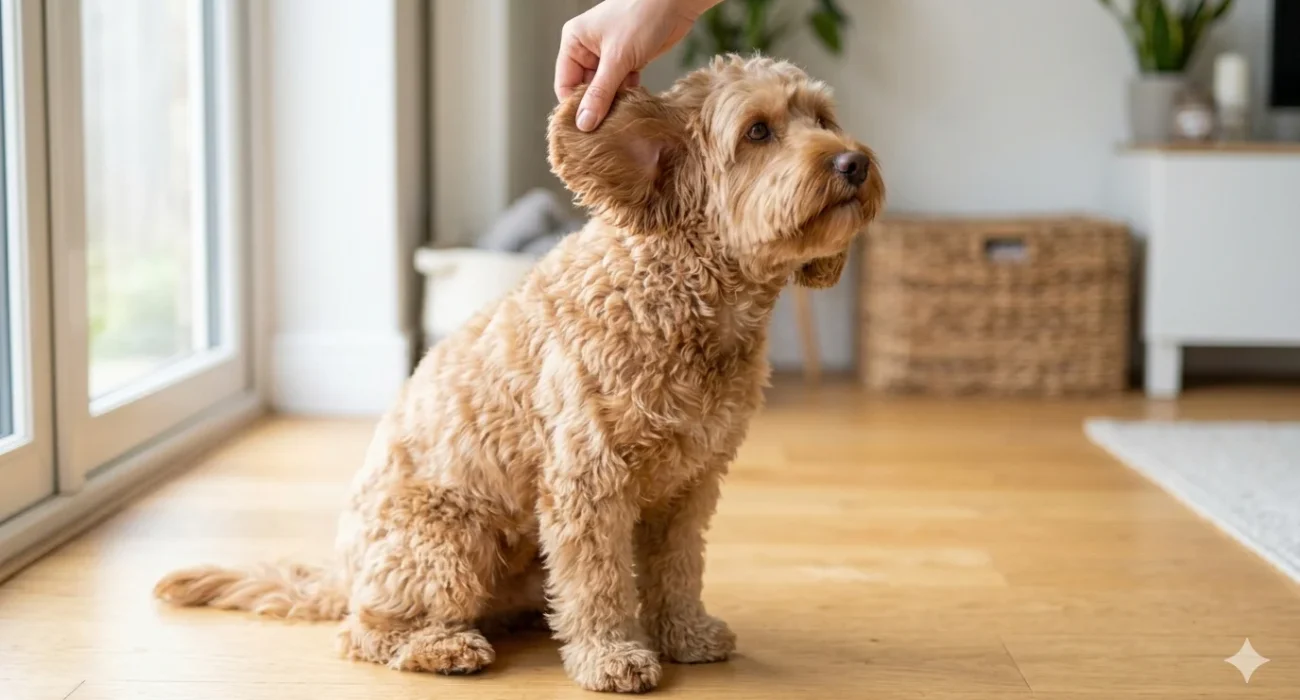
- Lift the ear
- Feel the base
- Separate hair gently
If your fingers don’t glide easily, brush that spot today.
The Prevention System (That Actually Works)
Most people fail because they try to do too much at once.
Instead, do a small routine consistently.
Step 1: Use the Right Tools
You can brush daily and still get mats if your tools only hit the surface. The American Kennel Club’s guide to brushing and grooming your dog explains why using the correct grooming tools and brushing technique helps prevent painful mats.
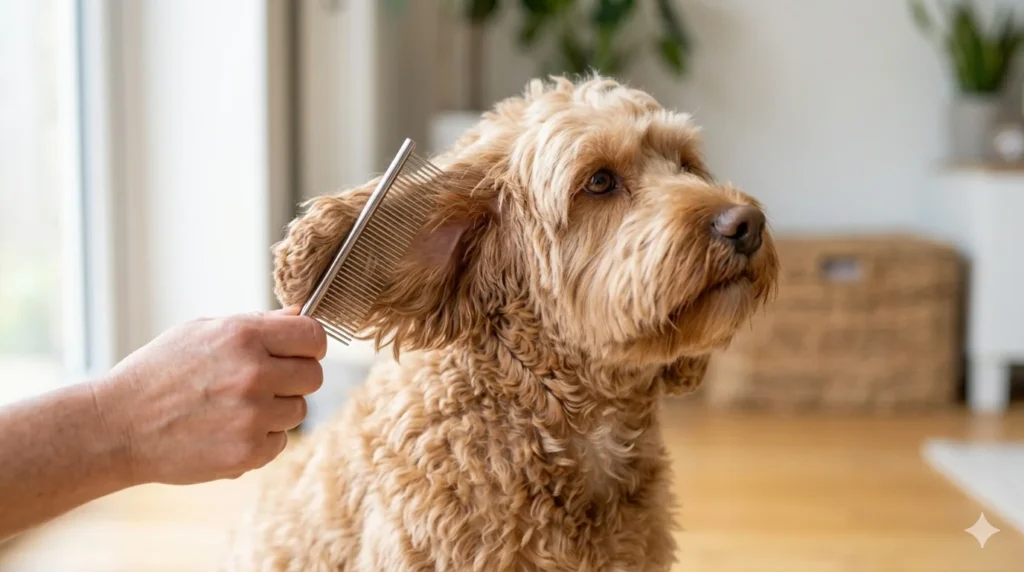
Core toolkit:
- Slicker brush (soft/medium)
- Greyhound metal comb
- Detangling spray
- Optional dematting tool
Step 2: Line Brushing (Game Changer)
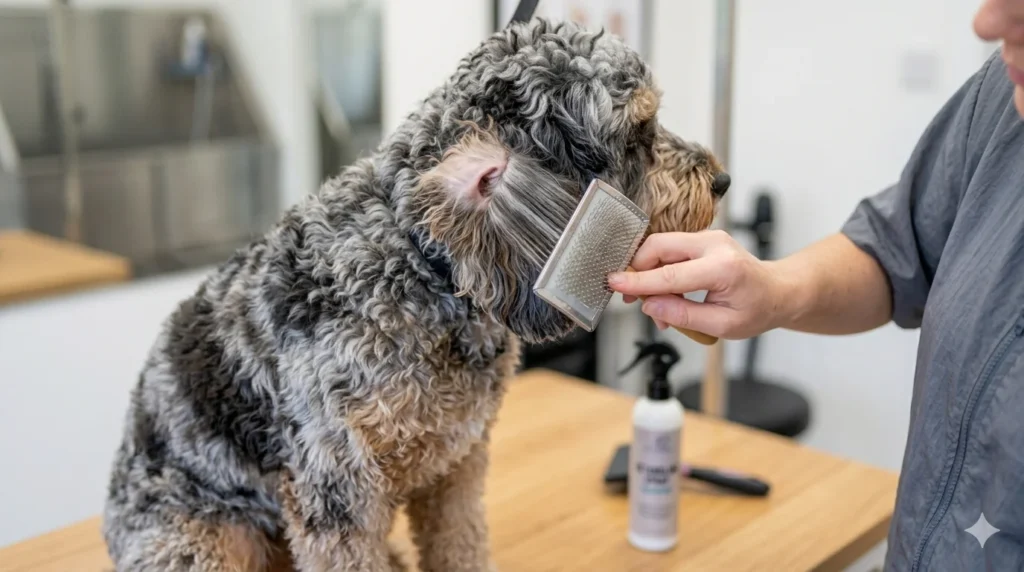
This is the difference between:
“Looks brushed”
Actually mat-free
How to do it:
- Light mist of detangler
- Lift ear
- Part hair into thin lines
- Brush from skin outward
- Repeat in sections
- Finish with comb check
Frequency:
- Comb check: daily
- Line brushing: 3–5 times/week
Step 3: Control Moisture
Moisture = mat accelerator.
After:
- Drinking water
- Rain walks
- Baths
Do this:
- Towel dry thoroughly
- Blow dry on low if possible
- Brush once dry
Step 4: Fix Collar & Harness Friction
Simple adjustments:
- Loosen collar slightly
- Use rolled collars
- Remove indoors if safe
- Check harness placement
Constant rubbing = constant tangling.
Step 5: Keep Ears Healthy
If your dog scratches, mats will follow. The Merck Veterinary Manual’s guide to ear disorders in dogs explains how ear infections and inflammation can contribute to excessive scratching and coat matting.
Watch for:
Step 6: Choose the Right Coat Length
Long fluffy coats = more maintenance.
If you can’t commit to frequent brushing:
→ go shorter
→ trim behind ears slightly
Even groomers often quietly shorten this area because it mats first.
Weekly Behind-Ears Routine (Simple + Realistic)
Daily (30–60 seconds)
- Lift ear
- Finger check
- Quick comb pass
3–5x per week
- Light detangler
- Line brush
- Comb check
Weekly
- Full ear grooming
- Skin check
- Clean if needed
What To Do If You Find a Mat
Step 1: Assess
- Small and loose? → manageable
- Tight and close to skin? → groomer
Step 2: Safe home method (small mats only)
- Light detangler
- Finger break apart
- Hold hair near skin
- Brush ends first
- Then comb
Stop if it’s painful.
Step 3: Avoid scissors
This is where many accidents happen. The VCA Animal Hospitals guide to grooming your dog safely explains when professional grooming is safer than attempting to remove tight mats at home.
Step 4: Sometimes shaving is kinder
If the mat is tight:
→ brushing = pain
→ shaving = quick relief
A short reset is often the best option.
Common Mistakes (Even Good Owners Make)
1) Surface brushing
Fix: line brush + comb
2) Skipping post-bath grooming
Fix: always detangle before and after
3) Air drying
Fix: dry properly
4) Wrong tools
Fix: slicker + comb combo
5) Waiting too long
Fix: daily 30-second checks
Puppy vs Adult: Why It Gets Worse Suddenly
Around 6–12 months:
- Coat changes
- Matting increases dramatically
What to do:
- Brush more often
- Keep coat shorter temporarily
- Focus on ear area
How to Make Your Dog Tolerate Ear Brushing
- Do short sessions
- Reward immediately
- Start with fingers
- Stay calm
- Hold hair near skin
Avoid turning it into a battle.
When to Call a Groomer or Vet
Groomer:
- Tight mats
- Multiple mats
- Dog resists strongly
Vet:
Sometimes matting is just a symptom.
Final Action Plan (Simple + Effective)
- Daily comb check behind ears
- Line brush 3–5 times/week
- Keep area dry
- Reduce friction
- Don’t fight tight mats at home
Behind-ear matting feels like a constant problem… until you build a tiny routine.
FAQs (Frequently Asked Questions)
Why do Cockapoos mat behind the ears so easily?
Cockapoos mat behind the ears easily due to a combination of factors: constant friction from ear movement and rubbing, fine ‘baby’ hair that tangles quickly, moisture and oils trapped near the ear area, rubbing from collars and tags, and scratching caused by ear issues. This creates a perfect storm for mats to form rapidly in this sensitive spot.
What problems can mats behind the ears cause for my Cockapoo?
Mats behind the ears are not just cosmetic; they can cause pain by pulling on the skin, trap moisture leading to hot spots and sores, hide infections or irritation, increase the risk of ear flap hematomas due to head shaking, and make grooming stressful and uncomfortable for your dog.
How can I detect early matting behind my Cockapoo’s ears before it becomes a big problem?
Early matting feels like slightly gritty or sticky patches near the ear base, tiny snags when running fingers through hair, little clumps that separate into strands when pulled gently, or flat webby tangles close to the skin. Performing a quick daily 10-second check by lifting the ear flap and gently feeling for these signs helps catch mats early.
What simple daily routine can help prevent mats behind my Cockapoo’s ears?
Prevention involves a consistent small routine focused on no tangles close to the skin rather than perfect hair. Daily line brushing behind the ears using proper tools like a soft slicker brush and a greyhound-style metal comb combined with detangling spray reduces friction and prevents hidden mats effectively.
Which grooming tools are essential for preventing and removing mats behind Cockapoos’ ears?
The core toolkit includes a soft or medium slicker brush to fluff and loosen tangles in thin layers, a greyhound-style metal comb (coarse + fine) to detect hidden tangles down to the skin, light dog-safe detangling spray to ease brushing, and optionally a dematting tool used carefully only on small stubborn mats. Avoid human brushes that don’t reach undercoat, flea combs for mats, and scissors near ear base unless trained.
Why should I avoid ignoring or delaying treatment of mats behind my Cockapoo’s ears?
Ignoring mats allows them to tighten quickly causing pain from skin pulling, creates hot spots from trapped moisture leading to inflammation, hides infections or ticks making diagnosis harder, increases risk of hematomas due to head shaking from irritation, and makes grooming more difficult and traumatic. Early attention ensures your dog’s comfort and health.