
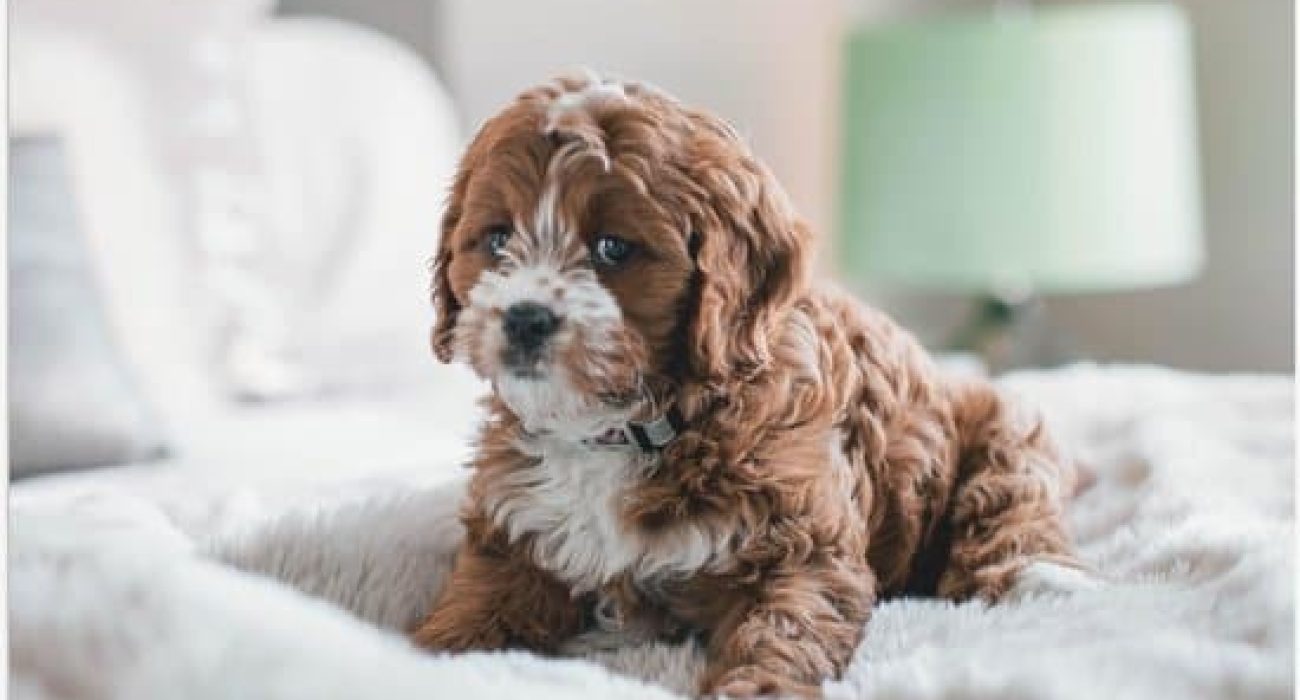
Does your Cavapoo cry, bark, or panic whenever you leave the house? Cavapoo separation anxiety is one of the most common behaviour problems in this affectionate breed. Fortunately, with gradual independence training, predictable routines, and positive reinforcement, most Cavapoos can learn to stay home alone calmly and confidently. If you have a Cavapoo, you already know the vibe.
They’re affectionate, cuddly, and usually glued to your side like a fluffy little shadow. Bathroom trip? They follow. Kitchen snack? They follow. Quick email at your desk? Yep… still there.
So when you finally leave the house — even for 20 minutes — the same scene can happen:
- whining
- barking
- scratching the door
- peeing “out of nowhere”
- chewing something expensive
- pacing or panicking
That’s separation anxiety. And Cavapoos are one of the breeds most likely to struggle with it because they bond so intensely with their people.
The good news: this can absolutely improve.
Not with one magic trick — but with a simple training approach that teaches your Cavapoo one important life skill:
Being alone is safe, boring, and temporary.
Let’s walk through how to get there.
Cavapoo Separation Anxiety (Quick Answer)
Cavapoo separation anxiety happens because this breed forms exceptionally strong bonds with its family. While some clinginess is normal, excessive barking, pacing, destructive behaviour, accidents, or panic whenever you leave usually indicate separation anxiety rather than simple boredom. Early training and gradual alone-time practice offer the best long-term results.
First: Make Sure It’s Actually Separation Anxiety
A lot of owners assume their Cavapoo has separation anxiety when the problem is actually something else.
The difference matters — because the solution depends on the cause.
Signs That Point to True Separation Anxiety
These behaviors usually happen right after you leave or when your dog thinks you’re about to leave.
- Barking or howling shortly after departure
- Scratching doors or windows
- Drooling, pacing, trembling
- Potty accidents despite good house training
- Ignoring food or treats when you’re gone
- Extreme clinginess when you’re home
For example, one Cavapoo owner described in this Reddit thread how their dog would stand by the door whining and barking the entire time they were gone, even during very short absences like a quick trip to a store — a classic case of separation anxiety.
Things That Look Similar (But Aren’t)
Sometimes the issue is actually:
Boredom
- Chewing or mischief
- But they’ll still eat treats and settle eventually
Not enough exercise
- Too much pent‑up energy
Noise reactivity
- Barking at hallway sounds or neighbors
Potty schedule issues
- Accidents unrelated to departures
The Easiest Way to Confirm
Set up a simple camera (phone, webcam, or pet cam).
Watch the first 5–30 minutes after you leave.
Many dogs with separation anxiety begin showing stress almost immediately. If panic starts at minute one, simply leaving them longer “so they get used to it” usually makes the fear worse, not better.
Why Cavapoos Struggle With Being Alone
Cavapoos are a mix of Cavalier King Charles Spaniel and Poodle — both breeds that were historically bred to be close companions.
Combine that with modern life and you get the perfect recipe for attachment:
- They spend most of the day with their owners
- Many grow up in work‑from‑home households
- They’re smart enough to predict departure cues
- They often have sensitive temperaments
Another owner shared their story in this Reddit thread. For example, one discussion about training a Cavapoo to stay home alone highlights how families worry about this breed struggling to be by itself for long periods.
None of this means you did anything wrong.
It just means independence needs to be trained intentionally.
The Big Rule: Never Train During Panic
This is where many owners accidentally make things worse.
If your Cavapoo is already panicking, they cannot learn.
Trying to “push through it” only reinforces the fear.
Instead, training must happen below the panic threshold.
Think of it like strength training.
You start with a manageable weight and slowly build up.
Separation training works the same way.
Step 1: Fix the Daily Routine
Before working on alone time, your dog needs a predictable day.
Dogs feel safer when life is structured.
A simple routine that helps many Cavapoos
Morning
- Potty break
- Sniff walk (15–25 minutes helps a lot)
Breakfast
- Puzzle toy or slow feeder
Midday
- 5‑minute training session
- Rest time
Afternoon
- Play + potty break
Evening
- Walk or enrichment games
Night
- Consistent bedtime routine
Dogs who are overstimulated, understimulated, or living in chaos struggle more with separation anxiety.
Your goal is a dog who can actually settle.
Step 2: Teach “Relax While I’m Home”
Many Cavapoos practice clinginess all day without owners realizing it.
If your dog follows you everywhere, they never develop independence.
Some owners notice this early. One person described in this Reddit thread how their Cavapoo would cry even when they simply left the room to cook dinner, despite being perfectly happy at night in the crate.
That’s a sign your dog hasn’t learned to relax without constant contact.
How to teach independence at home
- Place a dog bed or mat nearby.
- Toss a treat onto it.
- When your dog steps on it, calmly say “bed” or “relax.”
- Feed a few treats while they stay there.
- Gradually increase the time.
Practice while you:
- answer emails
- cook
- watch TV
- fold laundry
This builds the habit of being near you without needing to touch you.
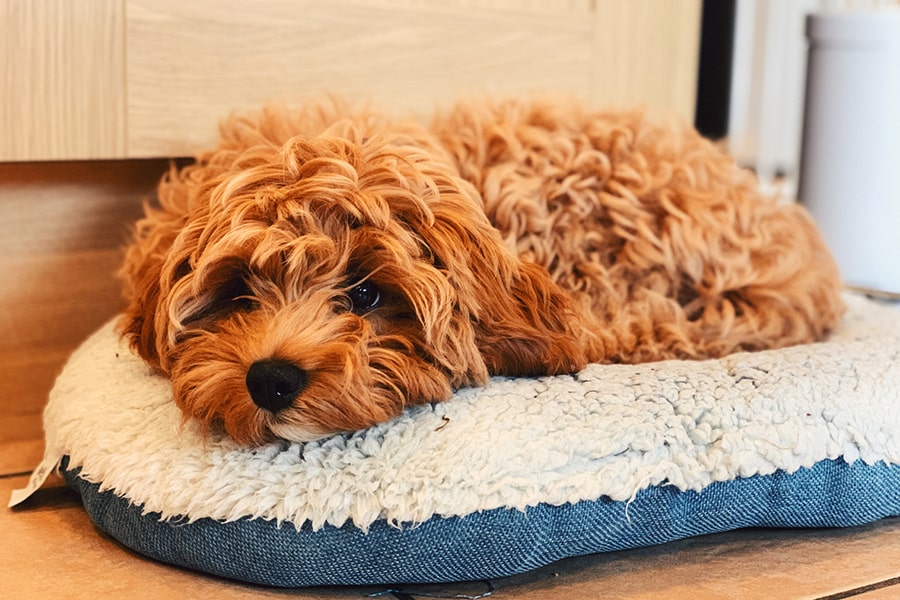
Image Source: aspcapetinsurance.com
Step 3: Make Leaving Cues Boring
Cavapoos are extremely good at predicting when you’re about to leave.
Keys. Shoes. Jacket. Bag.
If those cues trigger anxiety, you need to neutralize them.
The exercise
Several times per day:
- pick up your keys… then sit down
- put on shoes… then make coffee
- grab your bag… then watch TV
- open the door… then close it and stay
You’re teaching your dog:
“These cues don’t always mean you’re leaving.”
Many owners notice anxiety start to drop within a week.
Step 4: Start Micro‑Absences (The Core Training)
This is the most important part.
You leave for very short periods and return before anxiety begins.
What you need
- High‑value treats
- A calm setup
- Ideally a camera
The method
- Give your dog something enjoyable (like a lick mat).
- Step outside for 1–5 seconds.
- Return before whining begins.
- Act completely normal.
Repeat.
It might feel silly — but this is how dogs learn that departures are safe.
Example progression
If your dog stays calm:
- 5 seconds
- 10 seconds
- 20 seconds
- 40 seconds
- 1 minute
- 2 minutes
- 5 minutes
- 10 minutes
If panic appears, simply go back to the last successful step.
Consistency beats speed.
Step 5: Choose the Right Alone Setup
The environment matters more than most people realize.
Some Cavapoos relax in a crate.
Others panic when confined.
For example, one owner shared in this Reddit thread that their dog screamed for hours in the crate but suddenly relaxed when allowed to roam a safe room instead.
Common options
Crate
Works if your dog already sleeps there calmly.
Playpen
Often the best middle ground.
Safe room
Puppy‑proofed area with:
- bed
- water
- chew toys
Environment checklist
- cool and quiet space
- limited outside stimulation
- white noise if hallway sounds trigger barking
Step 6: Use Food the Right Way
Food tools can help — but only if your dog is calm enough to eat.
Some anxious dogs completely ignore treats when alone.
For instance, one owner discussed in this Reddit thread how their Cavapoo refused frozen Kongs and stared at the door until the human returned.
That usually means anxiety is already too high.
Best enrichment options
- Lick mat
- Frozen Kong
- Snuffle mat
Tip: reserve one special item only for alone training so it becomes a positive signal.
Step 7: What NOT to Do
Avoid:
- forcing longer absences too quickly
- “cry it out” methods
- dramatic goodbyes
- punishment after accidents or destruction
- using the crate if it causes panic
Anxiety isn’t misbehavior — it’s fear. Training works best when we lower the fear first.
Step 8: A Simple Action Plan You Can Start Tonight
Tonight’s 10‑minute routine
- Do one calm walk.
- Practice mat relaxation for 5 minutes.
- Pick up keys randomly 5–10 times.
- Try 3 micro‑absences (5–10 seconds each).
- Return calmly every time.
Tiny daily sessions add up faster than occasional long ones.
Puppy vs Adult Cavapoo
Puppy: Ideal for preventing severe anxiety with daily short training and calm independence practice.
Adult: Progress takes longer but is absolutely possible with consistency.
Professional Help & Medication
Seek help if:
- self-injury occurs
- nonstop screaming
- extreme panic
Look for CSAT-certified trainers or force-free separation anxiety specialists. Medication can sometimes help lower baseline anxiety so training works.
The American Veterinary Medical Association (AVMA) recommends discussing sudden behavioural changes with your veterinarian to rule out medical conditions before beginning a training programme.
What Success Looks Like
The goal is not for your Cavapoo to love being alone — it’s to settle, nap, chew calmly, and handle departures without panic.
Alone time becomes normal.
Final Thoughts
Cavapoo separation anxiety is common — but not permanent.
Train below your dog’s panic threshold and build up slowly.
Consistency + calm routines = less barking, less destruction, and more peace for both of you.
Cavapoo separation anxiety can feel overwhelming, but it is one of the most manageable behaviour problems when approached correctly. By creating predictable routines, teaching independence, rewarding calm behaviour, and gradually increasing alone time, most Cavapoos learn that being home alone is safe. Consistency, patience, and positive reinforcement will help your Cavapoo become a happier and more confident companion.
FAQs (Frequently Asked Questions)
What are the common signs of separation anxiety in Cavapoos?
Common signs of separation anxiety in Cavapoos include barking or howling soon after you leave, scratching doors, chewing window sills, trying to escape, drooling, panting, pacing, trembling, having accidents despite being potty trained, and refusing treats or food when you’re gone.
The American Kennel Club (AKC) explains that separation anxiety is one of the most common behavioural disorders in companion dogs and should be treated with gradual behaviour modification instead of punishment.
How can I differentiate between separation anxiety and other issues like boredom or under-exercise in my Cavapoo?
Separation anxiety behaviors usually occur only when you leave or are about to leave. In contrast, boredom might cause chewing but your dog will eat treats and settle eventually. Under-exercised dogs show chaotic energy that calms down after exercise. Noise reactivity involves barking at sounds like neighbors or delivery trucks. Potty schedule issues cause accidents randomly, not specifically around departures.
Why are Cavapoos particularly prone to separation anxiety?
Cavapoos are a mix of Cavalier King Charles Spaniel and Poodle, both breeds known for being people-focused. Many Cavapoos are raised as constant companions without proper independence training. They’re smart enough to predict leaving cues like keys or shoes, and some have sensitive temperaments that make them easily overwhelmed. This combination makes separation anxiety a common issue in Cavapoos.
What is the most important rule when training a Cavapoo with separation anxiety?
The key rule is never to train while your Cavapoo is panicking. You should work under their panic threshold by leaving them alone only for short periods where they can stay calm and gradually increase the duration over time. This gradual approach helps teach your dog that being alone is safe and manageable.
VCA Animal Hospitals recommends gradually increasing alone time while ensuring your dog remains below their anxiety threshold throughout training.
How can I create a daily routine that helps reduce my Cavapoo’s separation anxiety?
Establishing a predictable daily routine helps reduce chaos and stress. A simple framework includes: morning potty and sniff walk (15–25 minutes), breakfast in a puzzle toy or slow feeder, midday short training session (5 minutes) followed by rest, afternoon playtime and another potty break, evening walk plus calm enrichment activities, and a consistent bedtime routine. This structure helps your dog settle more easily.
What is an effective technique to teach my Cavapoo to relax when I’m at home?
You can train your Cavapoo to ‘go relax’ by placing a dog bed or mat in a visible spot. Toss treats onto it and says a cue like ‘bed’ or ‘relax’ when they step on it. Feed a few treats there then pause for 10 seconds doing nothing. Repeat this slowly so your dog learns to settle on cue without constantly monitoring you—building independence even while you’re home.
3 Responses