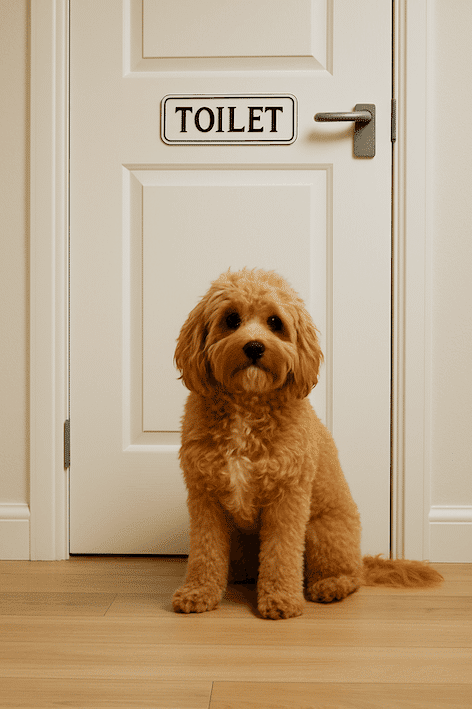
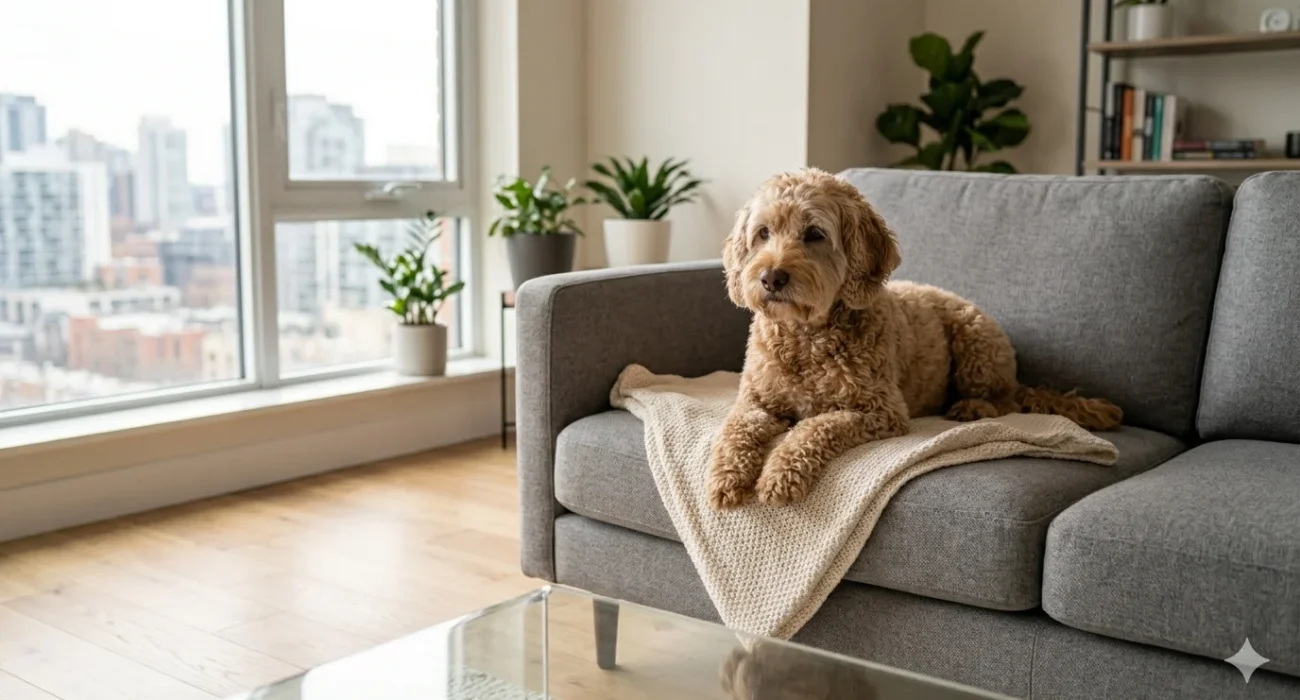
Can small Doodles live in small apartments? Yes, when their physical exercise, mental enrichment and daily routine meet their needs, many small Doodle breeds can thrive in apartment living. If you’re considering a Small Doodle and you live in an apartment, you’re probably asking yourself one very honest question:
“Is this going to be a cute, manageable companion… or a high-energy fluff ball that turns my home upside down?”
That concern is completely valid.
The reassuring answer is: yes, Small Doodles can live very happily in apartments.
But the realistic answer is: they only thrive if their needs are properly met—because their size doesn’t automatically mean low energy or low maintenance.
Let’s break this down in a practical, no-nonsense way so you know exactly what to expect and how to make it work.
Emotional Reality Check (Before We Go Further)
A lot of apartment owners feel unsure at first—and that’s normal.
Small Doodles are:
- Social
- Intelligent
- Energetic (often more than expected)
- Emotionally attached to their owners
Without the right structure, these traits can lead to barking, anxiety, or restlessness. With the right setup, however, they become affectionate, adaptable apartment companions.
What Actually Counts as a “Small Doodle”?
“Small Doodle” usually refers to smaller Poodle mixes such as:
- Cavapoo (Cavalier x Poodle)
- Cockapoo (Cocker Spaniel x Poodle)
- Maltipoo (Maltese x Poodle)
- Havapoo (Havanese x Poodle)
- Mini Goldendoodle
- Mini Labradoodle
- Schnoodle
Most fall roughly between 10–30 lbs, but size and temperament can vary significantly depending on genetics.
This matters because a calm 12 lb Maltipoo and a high-energy Mini Goldendoodle can behave very differently in the same apartment.
Apartments Are About Lifestyle, Not Square Footage
One of the biggest misconceptions is that dogs need large living spaces to be happy.
In reality, dogs don’t exercise by roaming around your home—they rely on you for:
- Daily physical activity
- Mental stimulation
- Consistent routines
- Structured alone time
- Controlled exposure to noise
If those needs are met, even a small apartment is more than enough. If they’re not, even a large house won’t solve behavioral issues.
Why Small Doodles Can Thrive in Apartments
1. Their size fits the environment
Smaller dogs adapt more easily to limited space. It’s easier to create designated areas for sleeping, playing, and resting without overcrowding your home.
2. They’re typically companion-oriented
Many Small Doodles are bred to be people-focused. With proper early socialization, they adapt well to apartment routines, including elevators, hallways, and urban noise.
3. Apartment living encourages consistency
Interestingly, apartment owners often walk their dogs more consistently than homeowners with yards. That routine is a huge advantage for dogs.
Real-World Challenges You Should Expect
1. Barking can become noticeable quickly
In apartments, sound travels easily. Small Doodles may bark at:
- Hallway activity
- Door knocks or footsteps
- Other dogs passing by
- Outdoor movement near windows
This is one of the most common issues that leads to neighbor complaints.
2. Separation anxiety is a real possibility
Small Doodles often form strong attachments to their owners. Without proper training, being left alone can trigger stress behaviors like:
- Whining or barking
- Scratching doors
- Inability to settle
One owner described in this Reddit thread how their puppy struggled to settle alone and would cry whenever they left the room.
3. Grooming demands are ongoing
Doodle coats require regular maintenance:
- Frequent brushing to prevent matting
- Professional grooming every few weeks
In a small apartment, neglecting grooming quickly leads to:
- Tangled fur
- Hair buildup in living areas
- Discomfort for the dog
4. Potty training requires more effort
Unlike homes with yards, apartment potty routines involve:
- Leash + elevator + outdoor access
- Timing coordination
- Repetition and patience
This extra step can be challenging, especially for puppies.
What Your Small Doodle Actually Needs in an Apartment
1. Daily Exercise (Non-Negotiable)
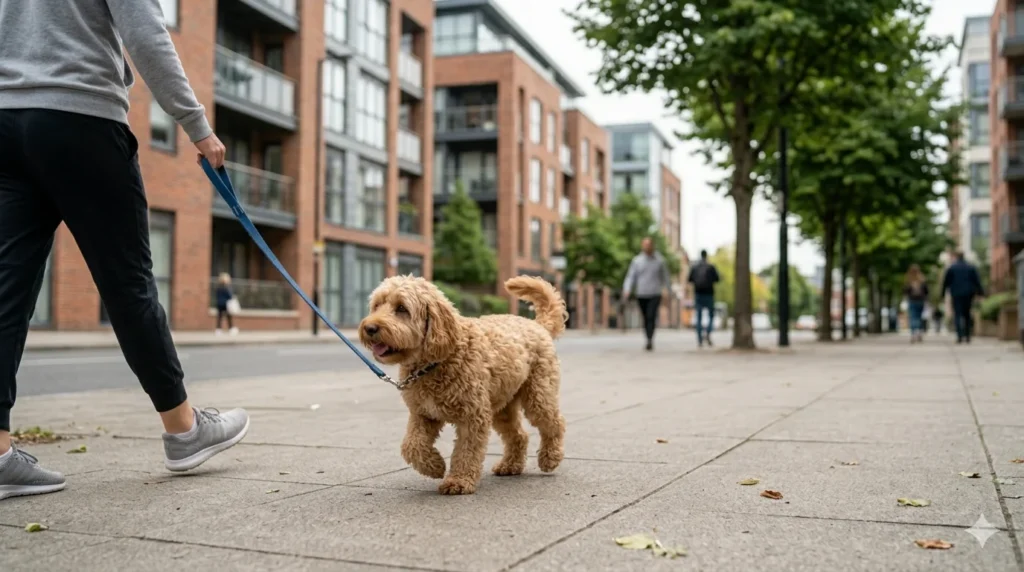
A good baseline:
- 2–4 short potty walks daily
- 1 longer walk or play session
Typical routine:
- Morning: 20–40 minute walk
- Midday: short potty + play
- Evening: 20–40 minute walk
- Night: quick potty break
Without this, pent-up energy often turns into barking, chewing, or zoomies.
Pro Tip: Apartment living can work wonderfully for small Doodles when their physical and mental needs are met. For trusted advice on dog care, training and behaviour, explore the American Kennel Club (AKC), RSPCA, and VCA Animal Hospitals. Their expert resources can help you raise a happy, confident and well-adjusted companion.
2. Mental Stimulation (The Secret Weapon)
Mental activity can tire a dog faster than physical exercise in small spaces.
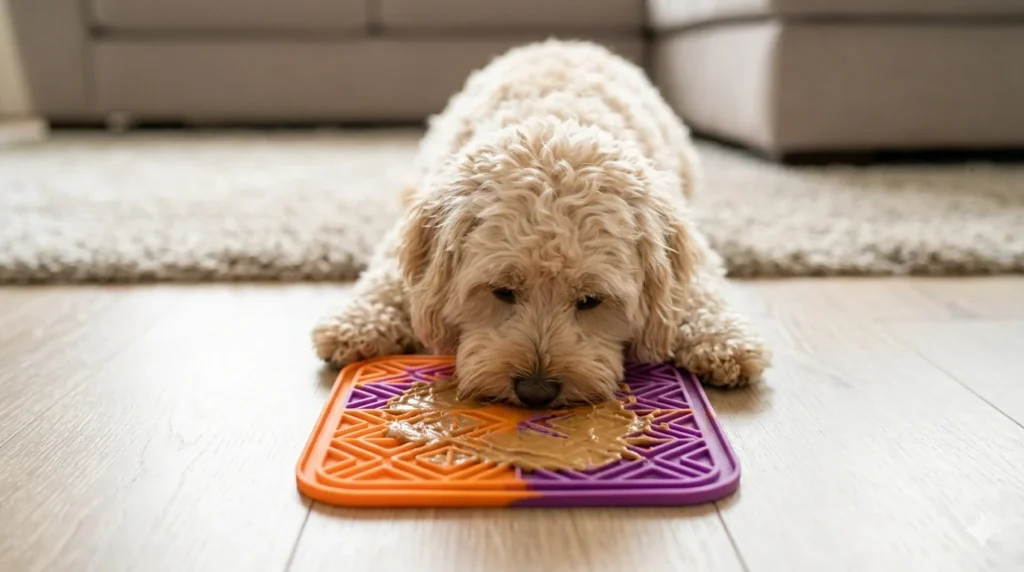
Effective options include:
- Puzzle feeders
- Snuffle mats
- Training sessions (sit, stay, recall)
- Hide-and-seek treat games
- Lick mats or stuffed Kongs
These activities help reduce boredom-related behaviors like barking or restlessness.
3. Noise & Barking Management
A few practical strategies:
- Use white noise to mask hallway sounds
- Limit visual triggers from windows
- Teach a “quiet” cue
- Reward calm behavior when noise occurs
- Train a “place” command for settling
4. Alone-Time Training
This is critical for apartment living.
Start early:
- Use a crate or designated safe space
- Begin with very short separations
- Gradually increase duration
- Pair alone time with positive experiences (chews, toys)
Another owner shared in this Reddit thread about dogs struggling to be alone that their dog couldn’t relax unless someone was nearby—highlighting how important gradual training is from the start.
5. Potty Training Strategy
To reduce accidents:
- Take puppies out frequently (after sleep, meals, play)
- Keep a consistent schedule
- Clean accidents with enzyme cleaner
- Consider temporary indoor potty options if needed
Consistency matters more than location.
Which Small Doodles Tend to Adapt Well?
Temperament matters more than breed name, but generally:
Often well-suited (with training):
- Cavapoo
- Maltipoo
- Havapoo
- Cockapoo
Can work well but vary in energy:
- Mini Goldendoodle
- Mini Labradoodle
- Schnoodle
When choosing a puppy, focus on personality traits like:
- Calmness when separated
- Lower reactivity to noise
- Ability to settle after excitement
- Independence level
Simple Action Plan for Apartment Owners
If you’re bringing a Small Doodle home, start with this:
Daily routine:
- Morning walk (20–40 min)
- Midday potty + short play
- Evening walk (20–40 min)
- Night potty
Training focus (first 2–4 weeks):
- Potty training consistency
- Alone-time training in small increments
- Basic commands (sit, place, stay)
- Barking management cues
Environment setup:
- Dedicated dog resting area
- Crate or playpen for structure
- Toys rotated to maintain interest
- White noise if needed
What Not to Do
- Don’t assume a small dog = low maintenance
- Don’t skip daily exercise “because it’s raining”
- Don’t ignore early barking or anxiety signs
- Don’t leave a puppy alone for long periods too soon
- Don’t neglect grooming routines
Small issues in apartments can escalate quickly if not addressed early.
Final Takeaway
Yes—Small Doodles can absolutely live in small apartments.
In many cases, they do extremely well.
The difference between a peaceful apartment companion and a stressed, noisy dog usually comes down to:
- Consistent exercise
- Early training
- Mental stimulation
- Structured routines
- Proper alone-time conditioning
If you’re prepared to meet those needs, your apartment won’t feel restrictive at all—it will simply become a comfortable, well-managed home for both you and your dog.
FAQs (Frequently Asked Questions)
Can Small Doodles live happily in small apartments?
Yes, Small Doodles can absolutely live in small apartments, but their success depends on setting them up correctly with proper exercise, mental stimulation, routines, and noise management.
What breeds are considered Small Doodles suitable for apartment living?
Small Doodles typically include Poodle mixes like Cavapoo, Cockapoo, Maltipoo, Havapoo, Mini Goldendoodle, Mini Labradoodle, and Schnoodle. They usually weigh between 10 to 30 lbs but size can vary based on genetics and breeding.
What are the key needs of Small Doodles to thrive in an apartment?
Small Doodles need daily physical exercise (multiple walks and play sessions), daily mental stimulation (like puzzle feeders or training games), predictable routines, calm alone time skills, and effective noise management to thrive in apartment settings.
What challenges might I face when keeping a Small Doodle in an apartment?
Common challenges include excessive barking triggered by hallway noises or being left alone, separation anxiety due to strong human bonding, grooming demands because of their easily matted coats, and potty training difficulties without instant outdoor access.
How much exercise does a Small Doodle need living in an apartment?
Most Small Doodles do well with 2 to 4 short potty walks per day plus one longer walk or active play session. A typical routine could be 20-40 minute walks in the morning and evening, shorter potty breaks midday and night.
What mental stimulation activities help Small Doodles adjust to apartment life?
Activities like stuffed Kongs or lick mats for calming, snuffle mats or scatter feeding, basic obedience training (sit, stay, recall), scent games like ‘find it’ with treats hidden around a room, and puzzle feeders provide effective mental stimulation that reduces unwanted behaviors.