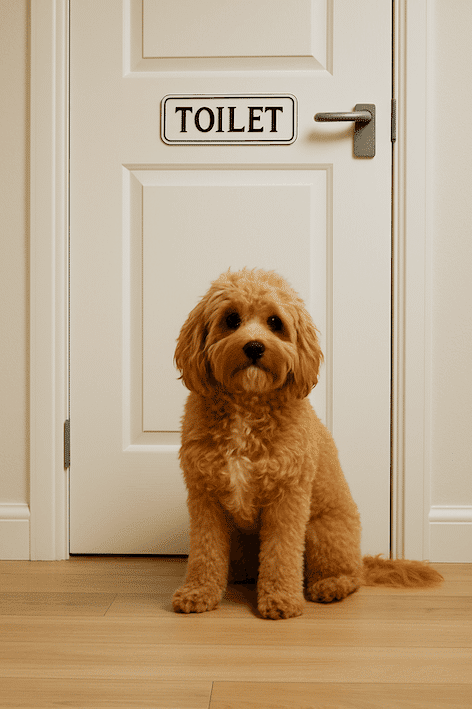

Does your Cavapoo bark every time someone walks down the hallway, a door closes, or the elevator dings? If you live in an apartment, this behaviour is surprisingly common. In this guide, you’ll learn why your Cavapoo barks at every noise in an apartment, what triggers the behaviour, and the most effective ways to teach calm, quiet responses. You finally sit down after a long day.
Then it happens.
A car door slams outside.
The elevator dings.
Someone walks down the hallway.
And your Cavapoo instantly turns into a tiny security alarm.
If you live in an apartment with a Cavapoo, you probably know this routine well. The frustrating part isn’t just the barking — it’s the feeling that every little sound becomes a big event in your home.
The reassuring news?
This behavior is extremely common, and in most cases it’s very fixable.
Cavapoos are sensitive, intelligent dogs. When they live in a building full of unpredictable sounds, their instinct is to react. Once you understand why this happens and give them a calmer response pattern, many dogs settle down surprisingly quickly.
Let’s break it down in a practical, solution-focused way.
Why Does My Cavapoo Bark at Every Noise in an Apartment? (Quick Answer)
Cavapoos are naturally alert, intelligent, and people-focused dogs. Apartment living exposes them to constant unfamiliar sounds such as footsteps, doors closing, neighbours, elevators, and hallway activity. Most barking is simply your Cavapoo reacting to these unexpected noises rather than trying to be disobedient. With consistent training and positive reinforcement, most dogs become much calmer over time.
First: Is This Normal Cavapoo Behavior?
Yes — annoying, but completely normal.
Cavapoos come from two breeds that are naturally tuned into their surroundings:
- Cavalier King Charles Spaniel – affectionate, people-focused, sensitive
- Poodle – extremely intelligent and alert
Now add apartment living where sounds travel through:
- hallways
- shared walls
- elevators
- vents and plumbing
Your dog ends up hearing far more activity than you do.
One Cavapoo owner described this exact situation in this Reddit discussion about a Cavapoo barking at outside noises in an apartment. Their young dog barked whenever people or dogs passed the building.
Experiences like this are very common among apartment owners.
But here’s the key idea to remember:
Barking isn’t the problem. It’s a symptom.
Your Cavapoo is reacting to something in their environment.
Why Apartment Living Makes Noise Barking Worse
According to the American Kennel Club (AKC), barking is a natural form of communication for dogs, but excessive barking is often triggered by fear, boredom, or environmental stimulation rather than stubbornness. Apartments create a lot of unpredictable sound triggers.
Unlike houses where most activity happens outside, apartment sounds come from everywhere:
- above you
- beside you
- below you
- the hallway
- the front door
- shared walls and pipes
Dogs don’t like unpredictable noise. Their instinct is to alert or investigate.
Cavapoos are also often “Velcro dogs.” They stay close to their owners and constantly watch their reactions. If you tense up when a noise happens, your dog may assume the noise is important.
The good news is that once you change your dog’s response pattern, these sounds become much less exciting.
1. Startle Barking: “That Noise Came Out of Nowhere”
This is the most common apartment bark.
Sudden sounds trigger a quick reflex reaction.
Typical triggers include:
- doors slamming
- elevator dings
- footsteps in hallways
- objects dropping nearby
One Cavapoo owner shared in this Reddit thread about a Cavapoo barking at every noise that their puppy reacted to birds, people outside, and random household sounds.
What It Looks Like
- barking starts immediately after a noise
- your dog runs toward the door or window
- they calm down fairly quickly
Why It Happens
Your dog briefly interprets the sound as “something might be happening nearby.”
The Fix: Change the Meaning of the Noise
The fastest way to improve this is with a simple association exercise.
Whenever a noise happens:
- Calmly say “Good.”
- Drop a small treat on the floor.
That’s it.
You’re teaching your dog:
Noise → Good things happen
Many dogs start looking for treats instead of barking after a couple of weeks of consistency.
2. Alert Barking: “Something Is Near Our Space”

Image Source: dogster.com
Some noises trigger a territorial response, especially near the front door.
Common triggers include:
- hallway footsteps
- keys and locks
- elevator sounds
- people talking outside
A Cavapoo owner described this issue in this Reddit thread about barking at hallway noises where their dog reacted whenever someone walked past the apartment.
Why It Happens
Your dog hears activity close to home but can’t see what’s happening.
That uncertainty often leads to barking.
A Simple Door Routine That Works
When hallway sounds occur:
- Calmly say “Thanks.”
- Toss a few treats away from the door toward your dog’s bed.
This teaches your dog:
Hallway noise = move away from the door and relax.
Over time, many dogs stop rushing the door entirely.
3. Noise Anxiety or Sensitivity
The American Veterinary Medical Association (AVMA) recommends identifying the cause of anxiety before beginning behaviour modification, as fear-based barking requires a different approach than attention-seeking behaviour. Sometimes barking comes from genuine stress.
Signs include:
- pacing
- panting
- trembling
- hiding
- refusing treats when noises happen
One owner noticed their Cavapoo suddenly reacting to people and dogs passing their apartment in this Reddit discussion about noise reactivity.
What Helps Most
Focus on making your dog feel safer.
Helpful changes include:
- white noise or a fan near the front door
- a cozy resting area where your dog relaxes daily
- predictable daily routines
Punishing anxious barking usually increases stress. Calm exposure and reassurance work much better.
4. Learned Attention Barking
Dogs quickly learn what behaviors get a response.
If barking consistently makes you:
- talk to your dog
- check the door
- comfort them
- pick them up
…your Cavapoo may start barking because it gets interaction.
This pattern often shows up in owner discussions like this Reddit thread about Cavapoo barking behavior.
The Fix: Give Your Dog a Clear Job
Teach a simple alternative behavior like “Go to bed.”
Practice when things are quiet:
- Toss a treat onto your dog’s bed.
- Say “Bed.”
- Reward when your dog lies down.
Later you can use this cue when noises happen.
Your dog now has a script:
Noise → go to bed → relax
5. Under-Stimulation: A Smart Dog With Too Much Energy
Cavapoos may be small, but they’re mentally active dogs.
When they’re bored, they become hyper-aware of everything happening around them.
One Cavapoo owner worried about neighbor complaints in this Reddit thread about a vocal Cavapoo puppy because their dog barked at nearly every outside noise.
Signs This Is the Issue
- barking increases in the evening
- your dog seems restless indoors
- behavior improves after walks
Quick Fixes That Help
Add more mental stimulation:
- 1–2 walks per day
- one relaxed sniff walk
- puzzle toys or lick mats
- short training games
A tired brain is usually a quieter brain.
What Not To Do (These Often Make Barking Worse)
Some reactions accidentally reinforce the problem.
Avoid:
Yelling “No”
Dogs may think you’re joining the noise.
Running to the door every time
This confirms the sound was important.
Bark collars
They suppress barking but can increase anxiety.
Instead, focus on teaching calm responses to noise.
VCA Animal Hospitals explains that providing daily exercise, enrichment activities, and predictable routines helps reduce excessive barking in many companion dogs.
A Simple 7-Day Plan to Start Reducing Apartment Barking
You don’t need hours of training — just consistent small steps.
Day 1–2: Reduce Noise Triggers
- add a draft stopper under the door
- place a rug near entry areas
- run white noise or a fan
- move your dog’s bed away from the door
Day 3–4: Start the “Noise = Treat” Habit
Whenever a sound happens:
say “Good” → drop a treat
This teaches your dog that unexpected sounds are safe.
Day 5–6: Introduce “Go to Bed”
Practice short sessions:
- Toss a treat onto the bed
- Say “Bed”
- Reward when your dog lies down
Day 7: Combine Everything
When a noise happens:
Good → Treat → Bed
Soon the pattern becomes automatic.
Signs Your Cavapoo Is Already Improving
Progress often shows up in small ways first.
1) Barking Stops Faster
Instead of barking for 30 seconds, your dog stops after a few barks.
2) Your Dog Looks at You When a Noise Happens
This means your dog expects the treat routine instead of reacting.
3) They Go to Their Bed on Their Own
Your dog is starting to self-regulate.
4) Evening Barking Gets Milder
Lower stress levels during the day often reduce nighttime reactions.
The Bottom Line
Your Cavapoo isn’t barking because they’re stubborn or badly behaved.
They’re responding to an environment full of unpredictable sounds and movement.
The most effective plan is simple:
- Reduce noise triggers
- Train noise = treat
- Teach a calm behavior like “go to bed”
- Meet your dog’s daily exercise and mental needs
With consistency, many apartment owners notice meaningful improvement within a few weeks — and a much calmer home in the months that follow.
Your Cavapoo doesn’t need complete silence.
They just need to learn that everyday apartment noises are nothing to worry about.
If your Cavapoo barks at every noise in your apartment, remember that this behaviour is usually driven by alertness, uncertainty, or excitement rather than disobedience. By reducing environmental triggers, rewarding calm responses, and following a consistent training routine, you can help your Cavapoo become quieter and more confident. Patience and consistency are the keys to long-term success.
FAQs (Frequently Asked Questions)
Why does my Cavapoo bark at every noise in our apartment?
Cavapoos bark at every noise in apartments because they are naturally alert and sensitive dogs. Apartment living amplifies sounds from all directions—above, beside, below, and through walls—making your Cavapoo react to sudden or unfamiliar noises as potential threats or alerts.
Is it normal for a Cavapoo to be so noisy in an apartment setting?
Yes, it is normal. Cavapoos are a mix of Cavalier King Charles Spaniel and Poodle traits, making them social yet alert and noise-aware. The echoing sounds in apartments trigger their natural instincts to bark and comment on everything around them.
What are the main reasons behind my Cavapoo’s barking at noises?
The six common reasons include: 1) Startle response to sudden sounds, 2) Alert or territorial barking due to unclear boundaries, 3) Fear or anxiety about unknown noises, 4) Demand or attention-seeking barking, 5) Under-exercise and boredom causing reactive behavior, and 6) Hearing sounds humans can’t detect.
How can I stop my Cavapoo from barking at hallway noises and door knocks?
To reduce alert or territorial barking at hallway sounds and door knocks, implement door routines, boundary training, and sound desensitization exercises. These help your dog feel more secure by clarifying territory lines and reducing uncertainty about noises outside your apartment.
What should I do if my Cavapoo’s barking is due to anxiety?
If your Cavapoo shows signs of anxiety like pacing or trembling alongside barking, avoid punishment as it worsens fear. Instead, use calm exposure techniques, establish safety routines, and consider consulting a vet or behavior professional for specialized support.
How can I manage my Cavapoo’s barking without constant training sessions?
Focus on practical strategies like changing your reactions to barking (avoid reinforcing attention-seeking), providing daily exercise with sniff walks and brain games to reduce boredom, and using targeted sound desensitization. This approach helps control barking without turning life into a nonstop training bootcamp.