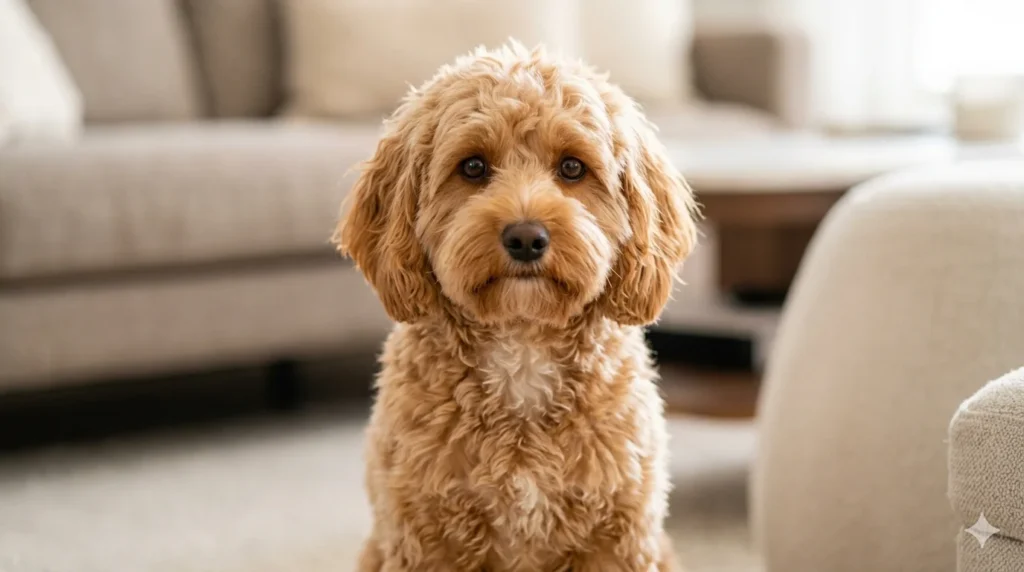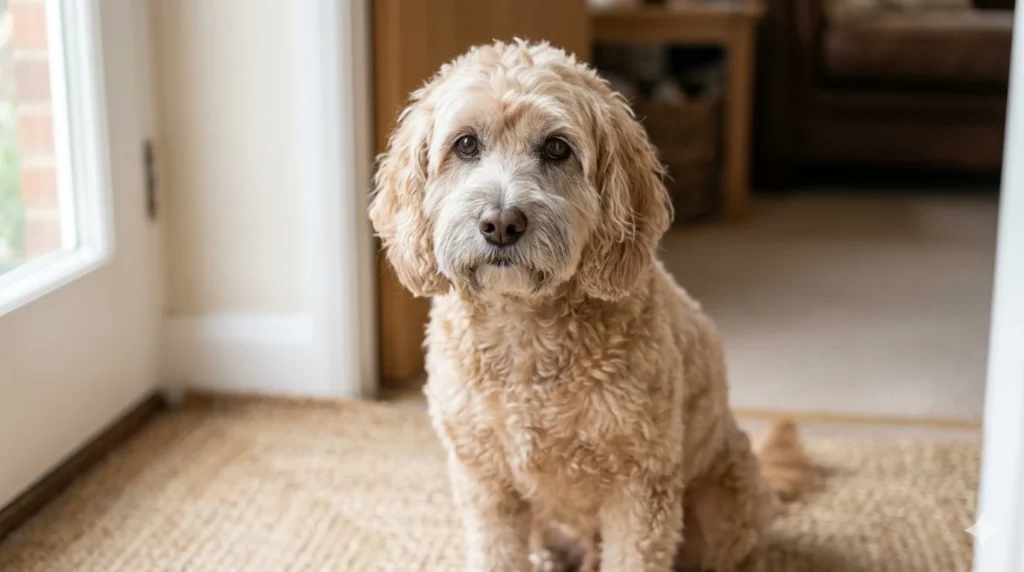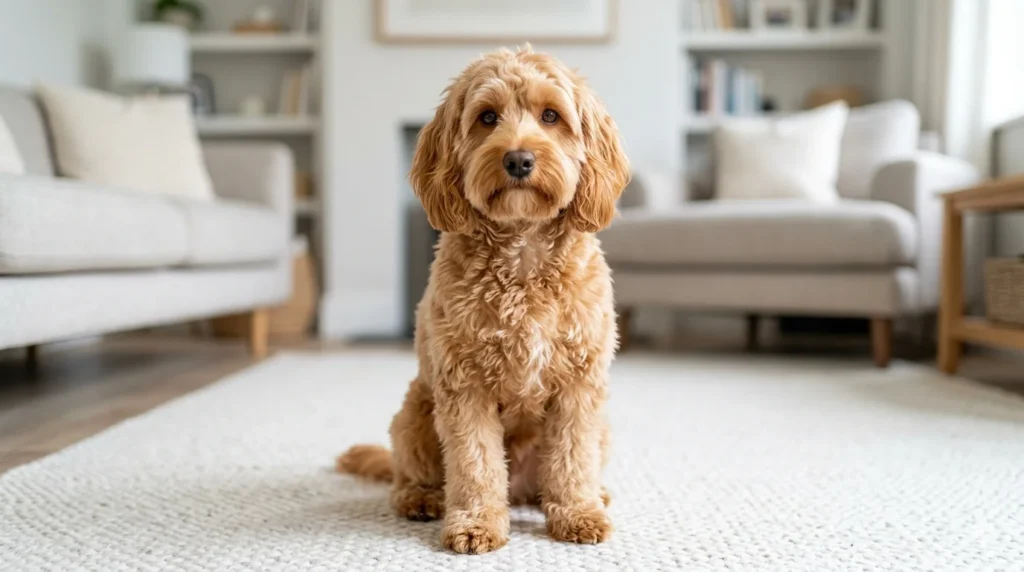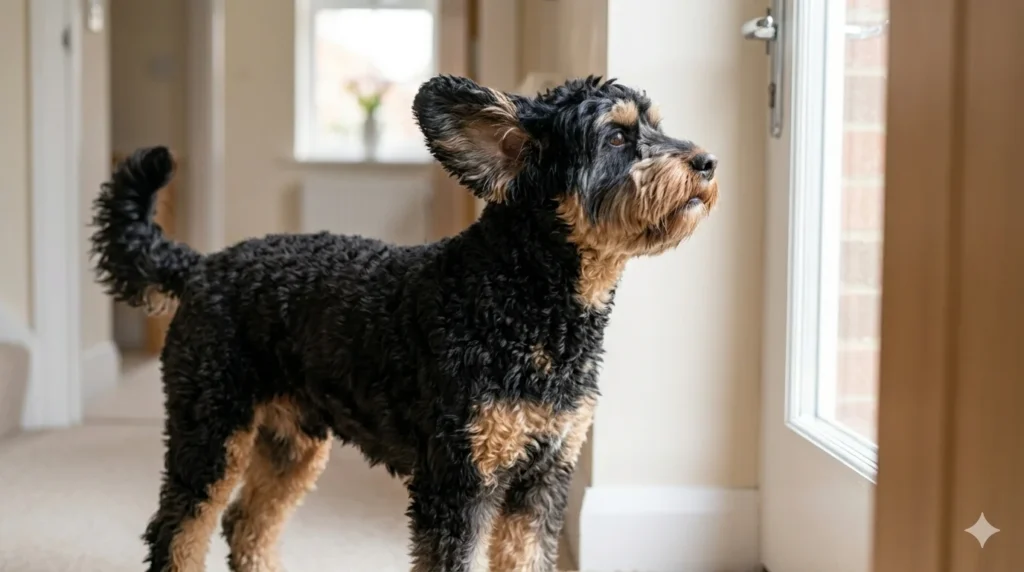
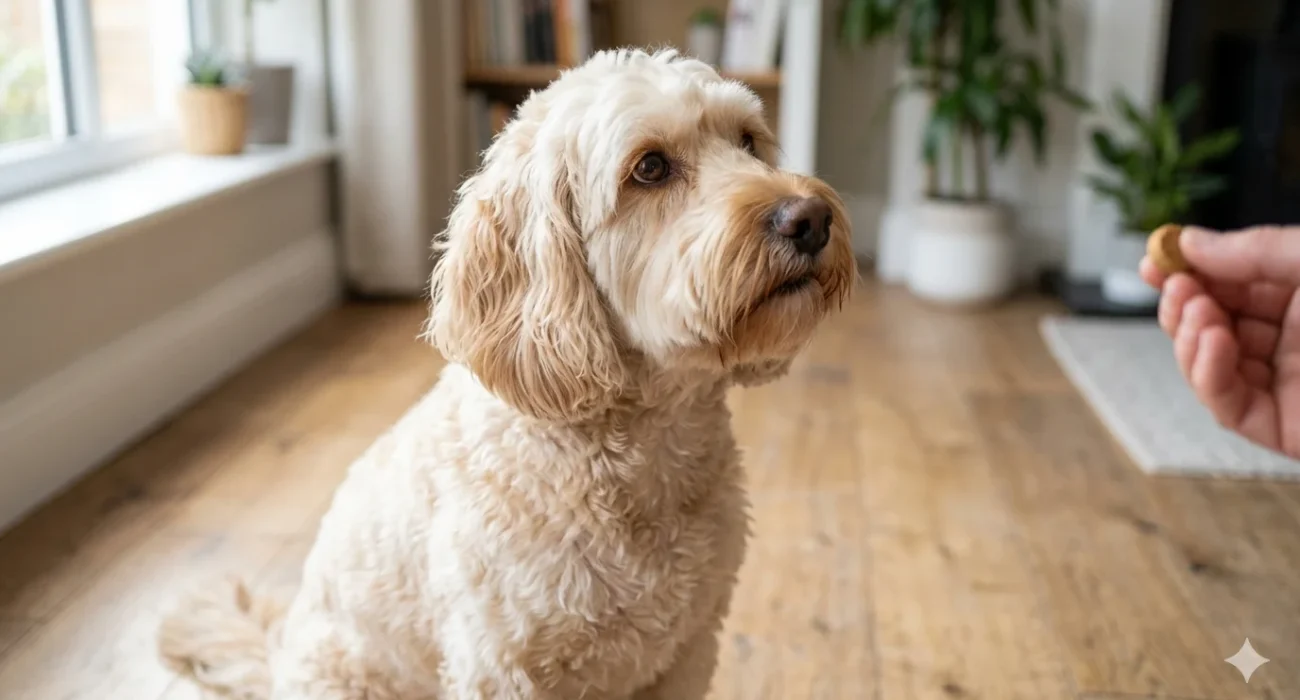
Are Cockapoos Hard to Train? Most Cockapoos are intelligent, people-focused and highly responsive to positive reinforcement, which can make them easier to train than many owners expect. However, their excitement, sensitivity, selective listening and tendency to develop separation issues can make training challenging without consistent routines and clear boundaries.
This guide explains what makes Cockapoos easy to train, why some owners struggle and how to improve recall, calm behaviour, house training, grooming tolerance and everyday obedience without relying on harsh corrections.
“They’re super smart and easy to train.”
“They’re cute… but stubborn and a little chaotic.”
Both can be true.
Cockapoos are often very trainable, but they can also be surprisingly hard to train if you don’t set things up the right way. And most “Cockapoo training problems” are really about mismatched expectations, inconsistent routines, or not understanding what’s driving the behavior.
So in this guide, I’m going to break down what makes Cockapoos easy, what makes them tricky, and exactly how to train them without turning your life into a constant game of “what’s in your mouth?!”
Are Cockapoos hard to train?
Most Cockapoos are not hard to train. They are intelligent, people-focused and often highly motivated by food, praise and play. However, they can become difficult to train when they are overexcited, anxious, given inconsistent rules or allowed too much freedom before learning reliable habits.
The Honest Answer: Are Cockapoos Hard to Train?
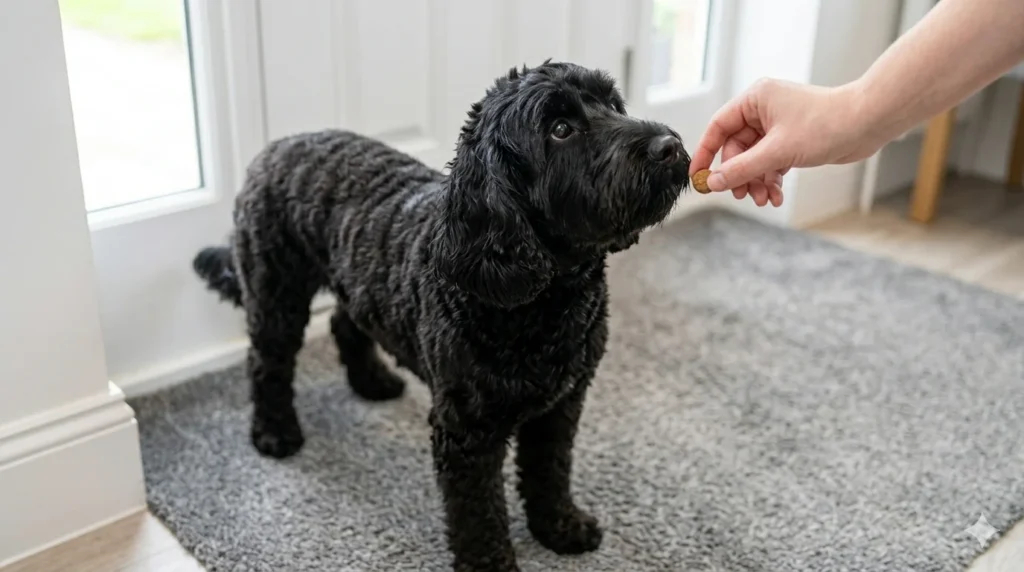
Most Cockapoos are not hard to train compared to many other breeds.
They usually have:
- Strong intelligence (thanks, Poodle side)
- A desire to be near you and engage
- Quick pattern recognition
- Great food motivation
But they can become difficult when they have:
- High excitement and low impulse control
- Separation anxiety tendencies
- Inconsistent household rules
- Too much freedom too soon
- A sensitive temperament
- A “selective listening” streak
So the real answer is:
Cockapoos are easy to train for people who train consistently and manage energy well.
They’re hard to train for people who wing it, skip structure, or accidentally reward chaos.
One Cockapoo owner summed this up perfectly in a Reddit discussion about Cockapoo training struggles, where they realized their dog wasn’t stubborn—just confused by inconsistent rules.
Are Cockapoos Hard to Train? The Quick Answer
Most Cockapoos are relatively easy to train when owners use positive reinforcement, short daily sessions and consistent household rules. They may feel harder to train when excitement, separation stress, poor impulse control or accidentally rewarded behaviours interfere with learning.
Why Cockapoos Can Be Easy to Train (The Good News)
1) They’re People-Focused
A lot of Cockapoos are little Velcro dogs. They want to follow you, sit near you, and stay involved.
That’s a huge advantage because training is basically:
“Pay attention to me → do this → good things happen.”
Dogs that naturally care about you learn faster.
2) They’re Smart Enough to Learn Fast
Poodles are famously intelligent, and Cocker Spaniels are very responsive when training is positive.
Most Cockapoos pick things up quickly—but that includes bad habits:
- “If I bark, I get attention.”
- “If I jump, people interact with me.”
- “If I ignore recall, nothing happens.”
Another owner discussed in this Reddit thread about fast-learning but “naughty” puppies described how their Cockapoo learned commands in days—but also learned to steal socks just as quickly.
They’re always learning. The question is what they’re practicing.
3) They Respond Well to Positive Reinforcement
Cockapoos tend to thrive with:
- Treats
- Praise
- Toys
- Play
- Sniff breaks
They usually struggle with harsh corrections or punishment-based methods. The RSPCA guide to reward-based dog training explains how positive reinforcement can teach desired behaviours without increasing fear or anxiety.
Not because they’re “weak,” but because many are emotionally sensitive and can shut down or become anxious.
Why Cockapoos Can Feel Hard to Train (What People Don’t Tell You)
1) They Get Overexcited Easily
This is one of the biggest challenges.
Overexcitement can look like:
- Jumping
- Mouthiness
- Zoomies
- Ignoring commands
This isn’t disobedience—it’s overstimulation.
Training doesn’t work well when your dog is at a 9/10 excitement level. The American Kennel Club dog training guide provides practical advice on attention, impulse control and building reliable behaviour around distractions. You have to teach calm behavior intentionally.
2) They Can Be Clingy (and Develop Separation Issues)
Cockapoos bond hard. That’s great… until it’s not.
Some develop:
- Barking when you leave
- Panic behaviors
- Destructive chewing
- Difficulty settling alone
That kind of stress makes all training harder.
3) People Accidentally Reward Bad Behavior
This is the biggest reason Cockapoos feel “hard.”
They’re cute. So people:
- Pet them when they jump
- Talk to them when they bark
- Give attention when they demand it
From the dog’s perspective: that works.
And once a behavior works, it sticks.
4) They Can Be “Selectively Obedient”
This is where the “stubborn” label comes from.
They might:
- Listen perfectly at home
- Ignore you outside
That’s not stubbornness—it’s lack of proofing.
A Cockapoo that knows “sit” in your living room doesn’t automatically know it at a busy park.
5) Grooming Can Become a Training Problem
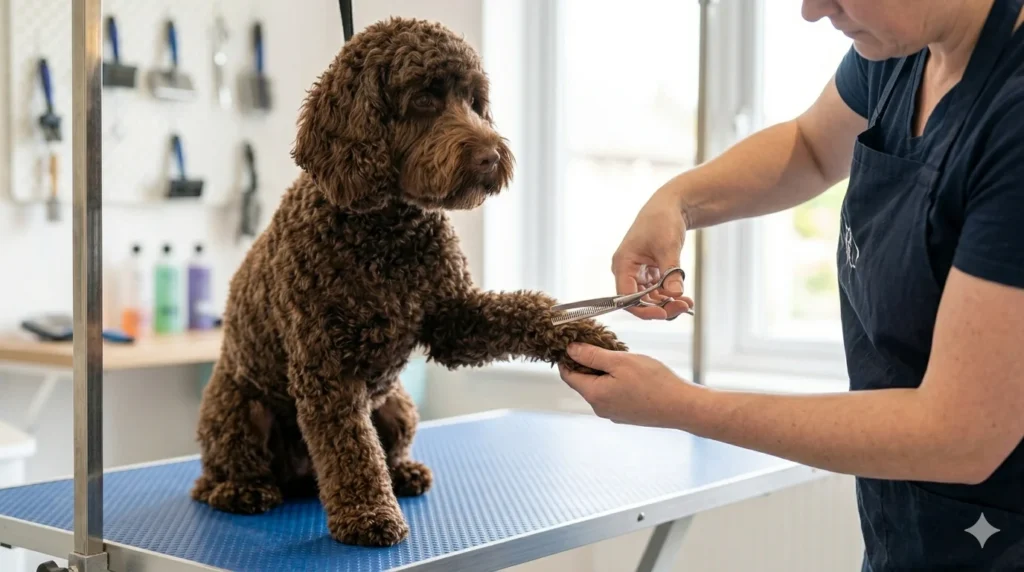
Cockapoos need regular grooming. If you don’t train handling early, you can end up with:
- Resistance to brushing
- Struggles during nail trims
- Ear sensitivity
- Stress at the groomer
Handling is a trained skill, not something dogs just “accept.”
What’s Usually Easy vs Hard for Cockapoos
Easier Training Areas
- Sit, down, touch
- Trick training
- Crate training (if introduced properly)
- Routine-based habits
Harder Training Areas
1) Recall
Because the world is more exciting than you sometimes.
2) Calm behavior
Impulse control must be taught, not expected.
3) Separation training
Needs early, gradual work. The VCA Animal Hospitals guide to separation anxiety in dogs explains why gradual independence training is more effective than allowing a dog to become highly distressed.
4) House training (sometimes)
Usually a schedule issue, not stubbornness.
5) Barking
Especially if it’s been reinforced.
The Biggest Mistakes That Make Cockapoos “Hard to Train”
Mistake 1: Too Much Freedom Too Soon
If your dog is:
- having accidents
- chewing everything
- stealing items
They have too much access.
Use:
- crates
- pens
- gates
- supervision
This is clarity, not punishment.
Mistake 2: Repeating Commands
“Come… come… come…”
Now your dog learns: the first few times don’t matter.
Say it once. Then help them succeed.
Mistake 3: Inconsistent Training
Training once in a while = inconsistent results.
Better:
- 2–5 minute sessions
- multiple times a day
Consistency beats intensity.
Mistake 4: Not Meeting Mental Needs
A bored Cockapoo becomes:
- a barker
- a chewer
- a chaos machine
Add:
- sniff walks
- puzzle feeders
- short training games
Mistake 5: Punishing Fear
If your dog is scared:
- grooming
- noises
- being alone
Punishment makes it worse.
You need:
- gradual exposure
- positive associations
- confidence-building
The Training Approach That Works Best
Keep it simple:
- Management → prevent bad habits
- Reinforcement → reward good behavior
- Reps → repeat often
- Proofing → train in new environments
- Consistency → same rules from everyone
If your Cockapoo feels hard to train, one of these is missing.
A Practical Training Plan (Simple Version)
Weeks 1–2: Foundation
- Potty routine
- Name response
- “Touch”
- Crate + alone time
- Reward calm behavior
Weeks 3–6: Basics
- Sit, down
- Loose leash walking
- Leave it
- Place (mat training)
Weeks 7–12: Real-Life Skills
- Recall outdoors
- Greeting manners
- Grooming handling
- Social exposure
Common Problems (and Quick Fixes)
Jumping
- Teach “sit for attention”
- Remove attention when jumping
- reward calm greetings
Barking
- Identify the trigger
- Don’t reward noise
- Reward quiet moments
- Add enrichment
Recall Issues
- Use high-value rewards
- Practice in stages
- Avoid calling for negative things
Accidents
- follow a schedule
- supervise closely
- reward immediately outside
Mouthing
- redirect to toys
- stop play briefly if teeth hit skin
- ensure enough sleep
Grooming Struggles
- start small
- reward handling
- build tolerance slowly
Are Cockapoos Actually Hard to Train?
Most of the time, no.
They’re:
- smart
- engaged
- food-motivated
- people-oriented
But they can feel difficult if you’re dealing with:
- overexcitement
- inconsistency
- separation stress
- lack of structure
Final Takeaway
Are Cockapoos Hard to Train? In most cases, no. Cockapoos are intelligent, engaged and highly responsive dogs that can learn quickly when training is clear, rewarding and consistent.
Problems usually arise when excitement, separation stress, mixed household rules, insufficient mental stimulation or too much freedom interfere with learning. Use short training sessions, reward calm behaviour, practise skills around gradually increasing distractions and ensure every family member follows the same rules.
With suitable structure and positive reinforcement, most Cockapoos become reliable, responsive and enjoyable companions rather than increasingly difficult dogs.
FAQs (Frequently Asked Questions)
Are Cockapoos hard to train?
Most Cockapoos are not hard to train compared to many other breeds. They are intelligent, people-focused, and food-motivated, making them generally easy to train for owners who maintain consistent routines and manage their dog’s energy well. However, they can be challenging if training lacks structure or consistency.
What makes Cockapoos easy to train?
Cockapoos are usually people-focused and eager to engage, which helps in training. Their strong intelligence allows them to learn cues quickly, and they respond very well to positive reinforcement like treats, praise, toys, and play. This combination makes them quick learners when trained with kindness and consistency.
Why do some people find Cockapoos difficult to train?
Cockapoos can be difficult to train due to factors like high excitement levels leading to over-arousal, separation anxiety causing stress behaviors, inconsistent household rules, and accidentally rewarding bad behavior because of their cuteness. They may also show selective obedience if rewards aren’t motivating or if they’re overstimulated.
How should I handle my Cockapoo’s high energy and excitement during training?
Since Cockapoos can become easily overexcited with behaviors like jumping and barking, it’s important to teach calmness skills deliberately. Training sessions should be conducted when your dog is calm rather than at peak excitement levels. Managing their energy through regular exercise and structured routines also helps improve focus during training.
What are common mistakes owners make when training Cockapoos?
A frequent mistake is unintentionally rewarding undesirable behaviors like jumping or barking because the dog is cute. Inconsistent rules and lack of structure also confuse the dog. Additionally, using harsh methods can cause sensitive Cockapoos to shut down or become anxious rather than learning effectively.
How can I prepare my Cockapoo for grooming sessions?
Grooming requires training your Cockapoo to tolerate brushing, ear checks, nail trims, clippers, and dryers from an early age. Using positive reinforcement during these handling exercises helps prevent stress and resistance later on. Treat grooming as a set of learned skills rather than assuming it will come naturally.
Are Cockapoos suitable for first-time dog owners?
Cockapoos can be suitable for first-time owners because they are intelligent, social and usually responsive to rewards. However, owners must be prepared to manage excitement, grooming needs, separation training and consistent daily routines.
Are Cockapoos stubborn?
Cockapoos are sometimes described as stubborn, but selective listening is often caused by distractions, weak rewards or insufficient practice in different environments. A dog that responds at home may need additional training before responding reliably outdoors.
How long does it take to train a Cockapoo?
Basic behaviours can often be introduced within a few weeks, but reliable real-world training takes several months of consistent practice. Recall, loose-leash walking, calm greetings and independence usually require continued reinforcement through adolescence.
What is the best training method for a Cockapoo?
Cockapoos generally respond best to positive reinforcement using food, praise, play and access to enjoyable activities. Short, frequent sessions are often more effective than long or repetitive training sessions.
Why does my Cockapoo listen at home but ignore me outside?
Outdoor environments contain stronger distractions, including smells, dogs, people and movement. Practise with a long line, increase distractions gradually and use more valuable rewards until the behaviour becomes reliable.
Can punishment make Cockapoo training problems worse?
Yes. Many Cockapoos have sensitive temperaments, and harsh punishment can create fear, anxiety or avoidance. Prevent unwanted behaviour, reward the behaviour you want and use gradual exposure for situations your dog finds difficult.