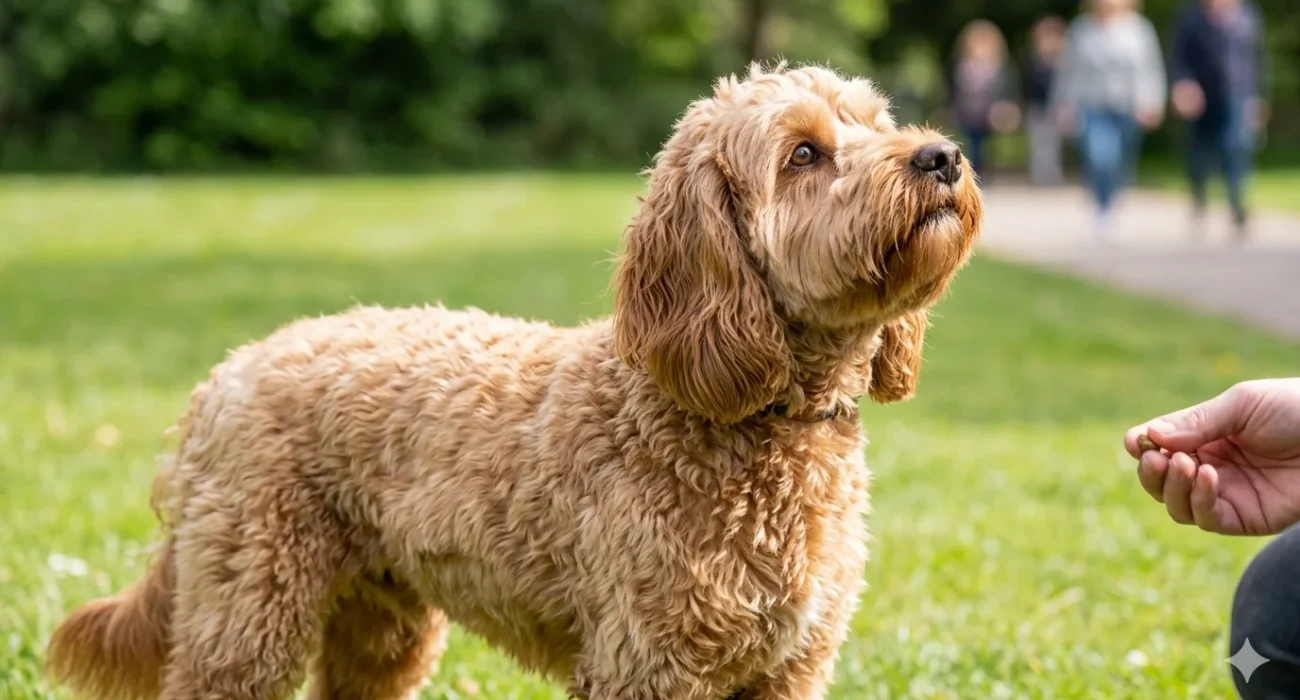
Cockapoo Adolescent Behavior Problems commonly appear between six and eighteen months, when a previously well-behaved puppy may suddenly ignore commands, pull on the leash, bark more, chew household items or struggle to settle. Although this stage can be frustrating, most teenage Cockapoo behaviours are normal and can be improved through consistent training, careful management, suitable enrichment and enough rest.
This guide explains when Cockapoo adolescence begins, why behaviour can change so dramatically and how to manage the twelve most common problems without turning training into a daily battle.
This stage can feel confusing because your dog looks “grown,” but their brain is basically still under construction. The good news is most adolescent behavior problems are normal, predictable, and fixable with the right plan.
In this guide, I’m going to walk you through the most common Cockapoo adolescent behavior problems, why they happen, and exactly what to do about each one.
What are the most common Cockapoo adolescent behavior problems?
Common Cockapoo adolescent behavior problems include selective hearing, jumping, mouthing, destructive chewing, excessive barking, leash pulling, recall regression, humping, rough play, fear periods, resource guarding and separation anxiety. Most improve with consistent boundaries, reward-based training, controlled freedom, mental enrichment and adequate sleep.
When Does Cockapoo Adolescence Start (And End)?
Most Cockapoos hit adolescence around 6 to 18 months, with some starting a little earlier and some finishing later. The American Kennel Club guide to dog adolescence explains why teenage dogs may test boundaries, become more independent and temporarily lose reliability around distractions.
You will usually see:
- 6 to 10 months: Testing boundaries, selective hearing, energy spikes
- 10 to 14 months: Peak “teen” behavior, more reactivity, more independence
- 14 to 24 months: Gradual settling, but still needs structure
Smaller dogs sometimes mature sooner, but Cockapoos can stay mentally “teenage” longer than people expect because they are smart, social, and easily reinforced by attention.
Cockapoo Adolescent Behavior Problems: Quick Overview
The most common Cockapoo adolescent behavior problems are caused by increasing independence, poor impulse control, excess stimulation and inconsistent boundaries. These behaviours are usually manageable when owners combine training with structured rest, enrichment and controlled exposure to distractions.
Why Cockapoos Get “Teenage Problems” So Intensely
Cockapoos are a mix of Cocker Spaniel (sensitive, people-focused, sometimes anxious) and Poodle (highly intelligent, active, quick to learn patterns). That combo often creates a dog that is:
- Very social and easily bored
- Fast at learning, including bad habits
- Emotionally sensitive
- Prone to over-arousal (0 to 100 energy shifts)
So the same adolescent phase that’s annoying in any dog can feel extra intense here.
The 12 Most Common Cockapoo Adolescent Behavior Problems (With Solutions)
1) “Selective Hearing” (Suddenly Ignores You)
They know the cue. They just decide they have better plans.
This is one of the most common frustrations—owners often say their dog was “perfect” at 4 months and now acts like training never happened.
Fix it:
- Say cues once (no repeating)
- Train in layers of distraction
- Use a long line outdoors
- Use high-value rewards (chicken > kibble)
2) Jumping Up on People
Teen Cockapoos jump because it works. Attention = reward.
A common real-life example comes from a Reddit thread where an owner shared how their puppy jumped on every guest despite knowing “sit”—because guests kept petting anyway, unintentionally reinforcing it.
Fix it:
- Teach sit to greet
- Turn away if jumping starts
- Reward calm, grounded behavior
- Practice with people who follow your rules
3) Mouthing and Nipping
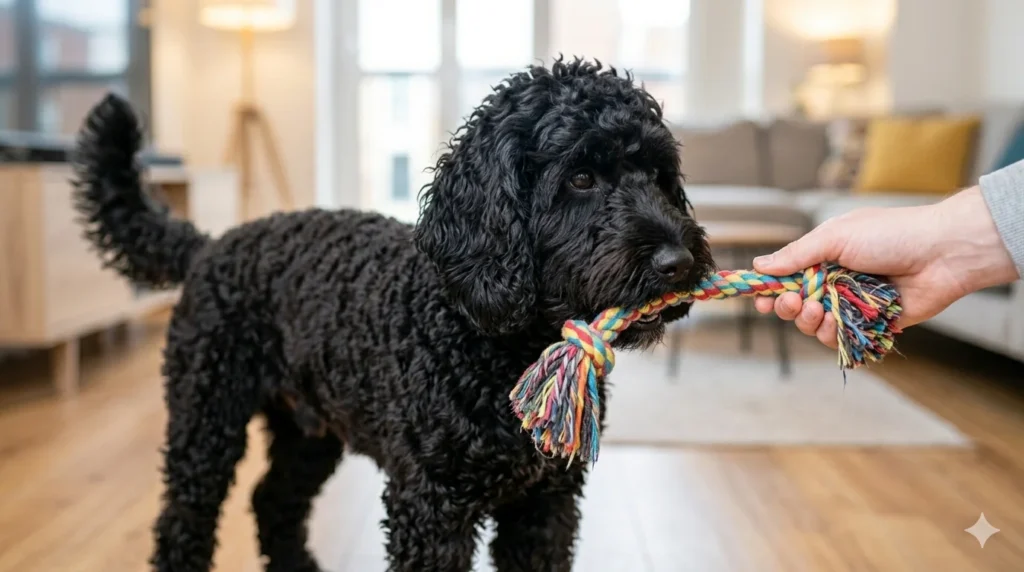
This often feels aggressive, but it’s usually overstimulation.
You’ll see this especially in the evenings.
Fix it:
- End play immediately when teeth touch skin
- Redirect to toys or chews
- Add structured play (with rules)
- Increase sleep (hugely underrated)
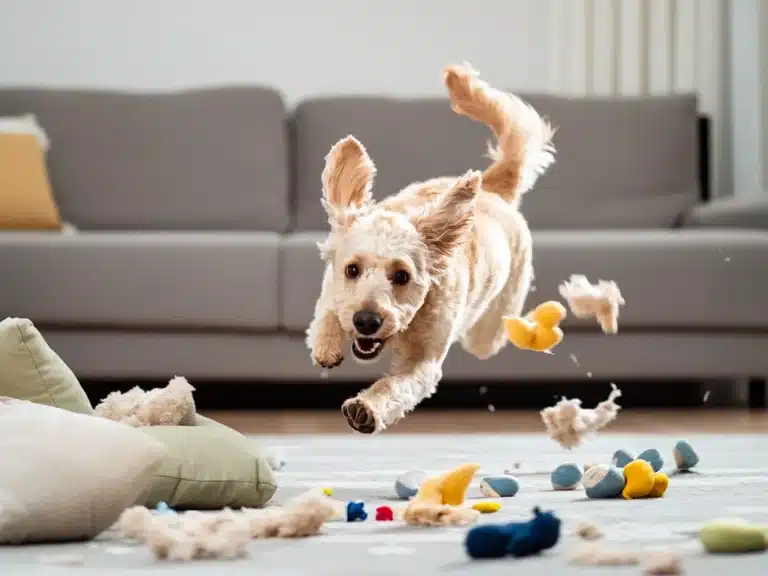
4) Chewing and Destroying Stuff
If your dog is destroying things, it’s not personality—it’s access + energy.
Fix it:
- Crate/pen when unsupervised
- Remove access to tempting items
- Add daily enrichment (Kongs, snuffle mats)
5) Barking at Everything
Adolescent Cockapoos often become more vocal.
This includes:
- Door sounds
- Hallway noise
- People outside
- Random triggers
Another cockapoo owner described in this Reddit thread highlighted a Cockapoo barking at every elevator sound.
Fix it:
- Teach “place” or mat behavior
- Block visual triggers
- Use counter-conditioning (sound → treats)
- Avoid yelling (adds intensity)
6) Pulling on Leash
Walks can suddenly feel like resistance training.
This happens because pulling works—and adolescence increases environmental drive.
Fix it:
- Stop when leash tightens
- Reward slack leash instantly
- Keep sessions short and consistent
7) Recall Regression
They used to come. Now they don’t.
Fix it:
- Use a long line
- Reward heavily
- Don’t call only to end fun
- Practice “come → reward → go play again”
8) Humping
Embarrassing but common.
Often caused by:
- Overstimulation
- Stress
- Excitement
Fix it:
- Interrupt calmly
- Redirect to sit/down
- Reduce overstimulating situations
9) Rough or “Rude” Dog Play
Teen Cockapoos may ignore social cues.
Fix it:
- Choose calm play partners
- Interrupt play regularly
- Avoid chaotic dog parks if needed
10) Fear Periods (Sudden Spookiness)
They may suddenly fear random objects.
This is normal—but handling it wrong creates long-term fear.
Fix it:
- Don’t force interaction
- Create distance
- Pair with treats
11) Resource Guarding
This can show up or worsen during adolescence.
Fix it:
- Never punish growling, The RSPCA guidance on reward-based dog training explains why punishment can increase fear and why calm, positive training is safer and more effective.
- Use trades (better item → release)
- Practice “drop” positively
If escalation occurs, get professional help.
12) Separation Anxiety / Velcro Behavior
Cockapoos are prone to attachment issues.
Fix it:
- Practice independence in small steps
- Desensitize leaving cues (keys, shoes)
- Use calm enrichment before leaving
The Real Root Cause Most People Miss: Over-Arousal
Most adolescent problems come down to one thing:
Your dog is too “amped,” not too “bad.”
Signs:
- Zoomies → biting
- Barking spirals
- Ignoring cues
- Inability to settle
What Actually Helps
Not just more exercise—but better balance:
- Physical activity
- Mental stimulation
- Chewing/licking
- Sniffing
- Sleep
The “Settle” Skill (Game Changer)
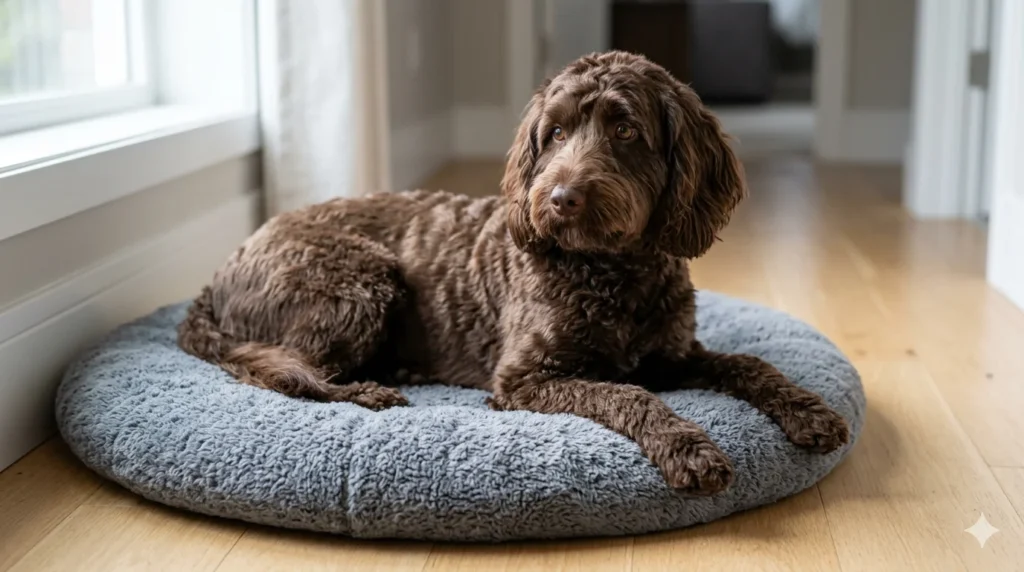
Teaching your dog to relax is one of the highest-impact skills.
How:
- Reward calm on a mat
- Feed slowly while lying down
- Build duration over time
Common Owner Mistakes
- Too much freedom too soon
- Only exercising, not training
- Inconsistent rules
- Punishing instead of teaching
- Ignoring calm behavior
A Simple 14-Day Reset Plan
Days 1–3:
- Management (crate, leash, remove access)
- Start enrichment feeding
Days 4–7:
- Train recall, leash, settle
Days 8–14:
- Real-life practice (guests, sounds, alone time)
When to Worry
The VCA Animal Hospitals guide to canine behaviour problems explains when anxiety, aggression, compulsive behaviour or repeated biting should be assessed by a veterinarian or qualified behaviour professional.
Get help if you see:
- Escalating aggression
- Severe anxiety
- Biting
- Extreme fear
- Compulsive behavior
Will They Grow Out of It?
Partially.
But habits don’t disappear—they get practiced or replaced.
That’s the real answer.
Let’s Wrap This Up
Cockapoo adolescent behavior problems usually come down to:
- Too much freedom
- Too much arousal
- Not enough structure
- Not enough real-world practice
If you focus on:
- Management
- Recall + leash skills
- Settle training
- Enrichment + decompression
- Consistency
You don’t just “survive” adolescence—you end up with an incredibly well-adjusted adult dog.
FAQs (Frequently Asked Questions)
When does Cockapoo adolescence typically start and end?
Most Cockapoos enter adolescence between 6 to 18 months of age. This stage usually includes boundary testing and energy spikes from 6 to 10 months, peak ‘teen’ behaviors like increased reactivity and independence from 10 to 14 months, and gradual settling with ongoing need for structure from 14 to 24 months.
Why do Cockapoos exhibit intense teenage behavior problems?
Cockapoos are a mix of Cocker Spaniel and Poodle traits, making them very social, intelligent, and emotionally sensitive. They can get easily bored, learn both good and bad habits quickly, and tend to over-arouse rapidly, which intensifies typical adolescent behaviors.
How can I stop my adolescent Cockapoo from ignoring commands or showing ‘selective hearing’?
Stop repeating commands; say cues once and use better training rather than louder words. Practice obedience in progressively distracting environments using a long line outdoors for safety. Reward with high-value treats mixed with play rewards consistently during short daily drills to rebuild reliability.
What is the best way to prevent my Cockapoo from jumping up on people?
Teach an incompatible behavior like ‘sit’ to greet people. Manage the environment by keeping your dog on a leash during greetings or using barriers so jumping is physically impossible. Use a greeting protocol where you ignore jumping by turning away and only pet when the dog sits calmly.
How should I handle mouthing and nipping behavior in my teenage Cockapoo?
Recognize that mouthing often comes from overstimulation or play style. Add structure to play by teaching ‘Take it’ and ‘Drop’ commands during tug games. Calmly end interactions if teeth touch skin by stepping away briefly. Provide legal chew outlets and ensure your dog gets enough sleep as overtired teens nip more.
What strategies help reduce destructive chewing in adolescent Cockapoos?
Manage your dog’s environment using crates or pens when unsupervised and keep tempting items inaccessible. Provide enrichment through food puzzles, snuffle mats, scatter feeding, and frozen stuffed Kongs. Always supervise when loose or ensure they are tired enough to nap to prevent boredom-driven chewing.