

Cockapoo food allergies can cause itchy skin, constant paw licking, recurring ear infections, loose stools and other digestive problems. Understanding the difference between a true food allergy and a food intolerance is the first step toward finding the right diet and treatment plan.
One day they’re totally fine. Next, you’re Googling “why is my Cockapoo licking paws like crazy?” at 1:14 a.m, standing in your kitchen holding a bag of kibble like it personally betrayed you.
Food allergies in Cockapoos are real, common, and wildly confusing because the symptoms often don’t look like food problems. Sometimes it’s skin irritation. Sometimes it’s loose stool. Sometimes it’s ear infections that will not quit.
Let’s break it down in plain English: what food allergies actually are, what they look like in Cockapoos, what people get wrong, and a step-by-step plan to fix it without spiraling.
What Are Cockapoo Food Allergies?
Cockapoo food allergies occur when the immune system reacts to a food protein as a threat. Common symptoms include chronic itching, paw licking, recurring ear infections, skin redness, vomiting and loose stools. A strict elimination diet supervised by a veterinarian is the most reliable way to identify the trigger.
What a “Food Allergy” Actually Means (and What It Doesn’t)
A lot of people say “my dog is allergic to chicken” when what they really mean is “my dog gets itchy and weird when they eat this food.”
There are two different things:
- Food allergy
This is an immune system reaction — the body sees a protein as a threat, triggering inflammation, itching, ear issues, GI upset, or all of the above. - Food intolerance / sensitivity
Not immune based. More like the digestive system saying “this doesn’t agree with me.” Usually looks like gas, soft stools, vomiting, or mucus in poop. It can sometimes contribute to skin irritation too.
Both matter. Both feel awful. And the first step in figuring them out is the same: simplify the diet and test things properly.
Why Cockapoos Can Be Allergy-Prone
Cockapoos are a mix of Cocker Spaniel and Poodle — both breeds that can have sensitive skin, ears, and digestion. Add:
- Floppy ears
- Curly dense coat that traps moisture
- A tendency toward environmental allergies
…and you get a dog that’s more likely to react to triggers.
Some Cockapoos are fine on most foods. Others react to something as common as chicken or beef. If your dog seems sensitive, you’re not imagining it.
The Most Common Signs of Food Allergies in Cockapoos
Food allergy symptoms often look like skin or GI problems, not just stomach upset.
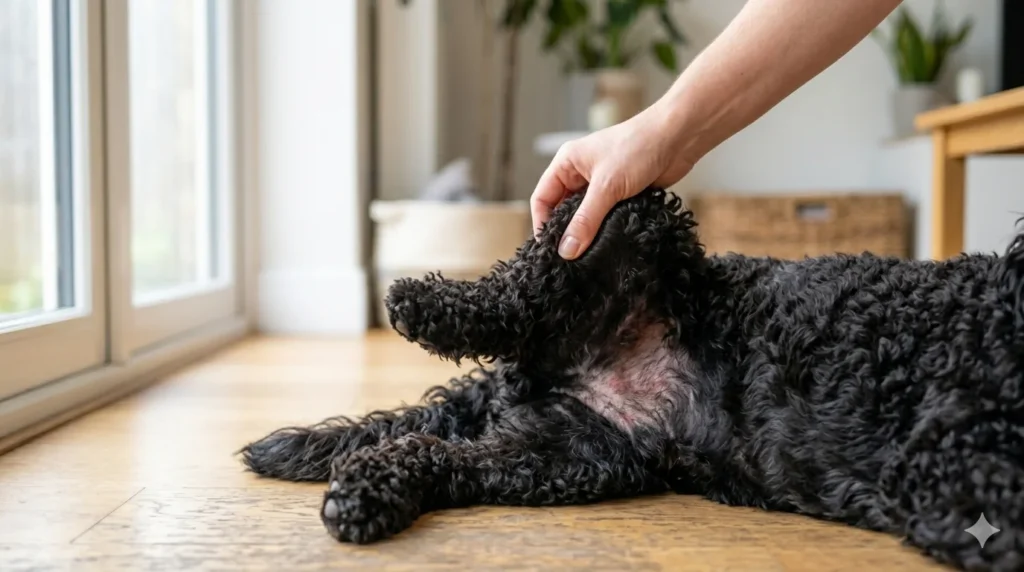
Skin & Itch Signs:
- Constant paw licking or chewing
- Red paws or brown saliva staining
- Belly rash or armpit redness
- Face rubbing on carpet
- Hot spots
- Chronic itch that comes and goes
For example, many owners with allergy-prone Cockapoos share stories of itchy paws, ear issues, and diet confusion, trying different foods and supplements to get relief. In one Reddit thread, a Cockapoo parent discussed yeast ears, paw licking, and food sensitivities — and how diet changes played into their management approach.
Ear Signs:
- Recurrent ear infections
- Head shaking
- Ear odor, gunk, or redness
- Ear scratching until the ear flap is irritated
GI Signs:
- Soft stool that never firms up
- Recurring diarrhea
- Occasional vomiting
- Gas, bloating
- Mucus in stool
“Random” Signs People Miss:
- Scooting (often tied to anal gland irritation from soft stools)
- Bad breath despite dental care
- Restlessness at night because they’re itchy
- Dull coat or flaky skin
If your Cockapoo has 2 or 3 of these consistently, it’s worth investigating food as a contributor.
Most Common Triggers in Cockapoos
Dogs can technically become allergic to any protein they’ve eaten repeatedly over time. That’s why “he’s been eating chicken for two years and now he’s allergic” is actually possible.
Common triggers include:
- Chicken
- Beef
- Dairy
- Eggs
- Soy
- Wheat
- Lamb (less common)
- Fish (rare, but possible)
Some dogs react not to the protein but to additives, fats, or flavorings. That’s why elimination diets have to be strict and controlled.
Food Allergy vs Environmental Allergy (Why People Get Stuck)
A lot of dogs who seem food allergic are actually dealing with environmental allergies (pollen, grass, dust mites).
Clues it might be environmental:
- Itch is seasonal
- Symptoms flare after walks on grass
- It improves with bathing even if food stays the same
Clues it might be food:
- Symptoms are year-round
- Ear infections keep returning regardless of season
- GI signs are part of the picture
- Past diet change helped, then symptoms returned
Reality: Many Cockapoos have both food and environmental allergies.
The Biggest Mistake People Make: Switching Foods Too Fast
I get it. Your dog is miserable. You want relief now. So you switch from chicken kibble to salmon, then lamb, then grain-free, then raw… and now you have no idea what helped or hurt because everything changed constantly.
This is exactly what another Cockapoo owner described in this Reddit thread about diet and allergy frustration when talking about itchy paws and ear issues—it’s easy to bounce between diets without clarity on what’s actually making a difference until you commit to a structured elimination plan.
If you want to solve this, you have to be boring and methodical for a few weeks. Not forever — just long enough to get a clear answer.
The Only Reliable Way to Diagnose: Elimination Diet
Blood and saliva tests for food allergies in dogs are not reliable for diagnosis. The gold standard remains:
A strict elimination diet trial for 8–12 weeks.
That means:
- One diet only
- No flavored meds
- No treats unless they match the diet
- No table scraps or “just one bite”
If your Cockapoo is truly food allergic, you’ll typically see improvement by week 4–6 and clearer results by week 8.
Choosing the Right Elimination Diet
You generally have two routes:
Option A: Veterinary Hydrolyzed Diet
Proteins are broken down so the immune system usually doesn’t recognize them.
Pros: Controlled, often effective
Cons: Can be pricey, some dogs don’t love the taste
Option B: Novel Protein Limited Ingredient Diet
Proteins your dog likely hasn’t eaten (e.g., rabbit, venison, duck).
Pros: Often tastier, can be more affordable
Cons: Over-the-counter versions can have cross-contamination
If your Cockapoo has eaten many proteins already, hydrolyzed is usually the cleanest reset.
Always work with your vet if your dog is a puppy, underweight, or has other health issues.
What to Feed (and What Not to)
Allowed during trial:
- Prescribed elimination diet food only
- Treats made from the exact same diet
- Using kibble as training treats
Not allowed:
- Dental chews
- Peanut butter
- Mixed-ingredient treats
- Flavored meds or supplements
Yes — it has to be that strict.
Timeline: What Improvement Should Look Like
- Weeks 1–2: GI symptoms often improve first
- Weeks 3–6: Itching and ear issues begin calming
- Weeks 6–12: Full picture — fewer flare-ups, better coat
If nothing improves by week 8 while being truly strict, food is less likely the main driver.
After the Trial: The “Challenge” Step (Don’t Skip It)

If your Cockapoo improves:
- Reintroduce a suspected allergen (like chicken) for 7–14 days
- Watch for symptoms returning
- If symptoms come back, that protein is likely a problem
This is how you actually know what’s triggering the reaction.
Common Cockapoo Scenarios
“My Cockapoo is itchy but also has a yeast smell”
Yeast often overgrows when allergies weaken the skin barrier. Diet helps, but so does vet-guided skin/ear treatment.
“He gets ear infections every month”
Recurring ear infections often tie back to allergies — food or environment.
“She has soft stool basically always”
Soft stool can be intolerance, allergy, parasites, or inflammatory bowel issues — start with a vet check and fecal test.
Sneaky Allergy Triggers
Hidden triggers include:
- Bully sticks (beef)
- Pig ears
- Dental chews with mixed proteins
- “Natural flavor” (animal derived)
- Table scraps (especially cheese, eggs, chicken)
During a trial, simplify everything — food, treats, and even toothpaste.
Can Puppies Have Food Allergies?
Yes. True food allergies are more common as dogs get older, but puppies can have intolerances or early signs too. If your Cockapoo puppy is itchy or has chronic GI issues, don’t just “wait it out” — talk to your vet.
Simple Plan to Start Today
- Rule out obvious stuff: Vet visit if symptoms are severe; fecal test for GI signs; check for fleas.
- Pick a real elimination diet: Hydrolyzed or controlled novel protein.
- Be annoyingly strict: No extras. Everyone follows it.
- Rechallenge to confirm: One protein at a time.
- Build the long-term diet: Avoid triggers you confirmed.
The Takeaway
If your Cockapoo is itchy, licking paws nonstop, getting repeat ear infections, or having stomach issues, food allergies could absolutely be part of it. But guessing and switching foods every week will keep you stuck.
The winning move is boring, strict, and methodical. Do the elimination trial, confirm triggers, and then build a balanced diet your dog can thrive on.
Once you find the right food?
It’s amazing how quickly a Cockapoo can go from itchy and uncomfortable back to happy, playful, and less dramatic in the kitchen at 1:14 a.m.
FAQs (Frequently Asked Questions)
What is the difference between a food allergy and a food intolerance in Cockapoos?
A food allergy in Cockapoos is an immune system reaction where the body treats a specific protein as an enemy, causing inflammation, itching, ear issues, or gastrointestinal problems. Food intolerance, on the other hand, is not immune-based but related to digestion difficulties, leading to symptoms like gas, loose stools, vomiting, or reflux. Both conditions affect your Cockapoo’s wellbeing and often require diet simplification and testing.
Why are Cockapoos prone to food allergies and skin problems?
Cockapoos are a mix of Cocker Spaniel and Poodle breeds, both of which tend to have skin and environmental allergies. Their floppy ears can trap moisture, increasing ear infection risks, and their curly coats can hold moisture that irritates the skin. Additionally, genetic variability means some Cockapoos react strongly to certain foods while others do not.
What are the common signs that my Cockapoo might have a food allergy?
Common signs include constant paw licking or chewing, red paws with brown saliva staining between toes, belly rashes or armpit redness, face rubbing on carpets, hot spots, chronic itching that comes and goes, recurrent ear infections with odor or redness, soft or diarrhea-like stools, occasional vomiting especially in the morning, gurgly stomach or bloating, mucus in stool, scooting due to anal gland issues, bad breath despite dental care, restlessness at night from itching, and dull or flaky coat.
Which foods are most commonly responsible for allergies in Cockapoos?
Cockapoos commonly react to proteins such as chicken, beef, dairy products, eggs, lamb (less common), soy, wheat (though true wheat allergy is less frequent), and fish (rare but possible). Some may also react to additives like fats or flavorings found in mixed-ingredient treats. Because of this variety of triggers, strict elimination diets are necessary for accurate diagnosis.
How can I tell if my Cockapoo’s itchiness is due to food allergies or environmental allergies?
Environmental allergies often cause seasonal itching (especially in spring and fall), mainly affecting feet and face areas; symptoms worsen after outdoor exposure like walks on grass and improve with frequent bathing even if diet remains unchanged. Food allergies tend to cause year-round symptoms including recurring ear infections regardless of season and gastrointestinal issues. Many Cockapoos have both types of allergies simultaneously.
What is the biggest mistake owners make when managing food allergies in Cockapoos?
The biggest mistake is switching foods too quickly without giving enough time to observe the effects. Rapid changes—from one protein source like chicken kibble to salmon kibble to lamb or grain-free options—make it impossible to determine what helps or worsens symptoms. A methodical approach with a simplified diet over several weeks is essential for accurately identifying allergens and effectively managing your Cockapoo’s health.