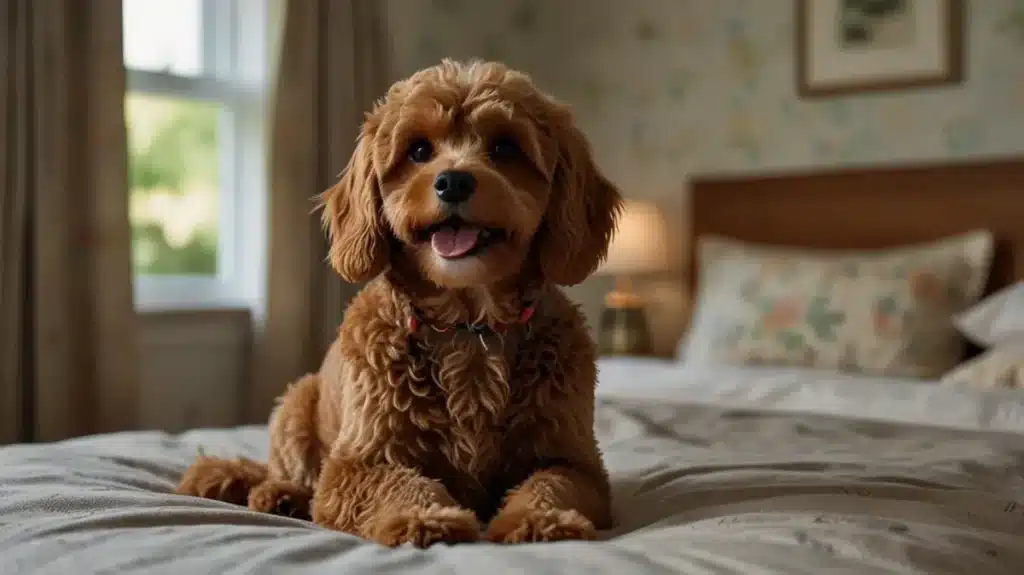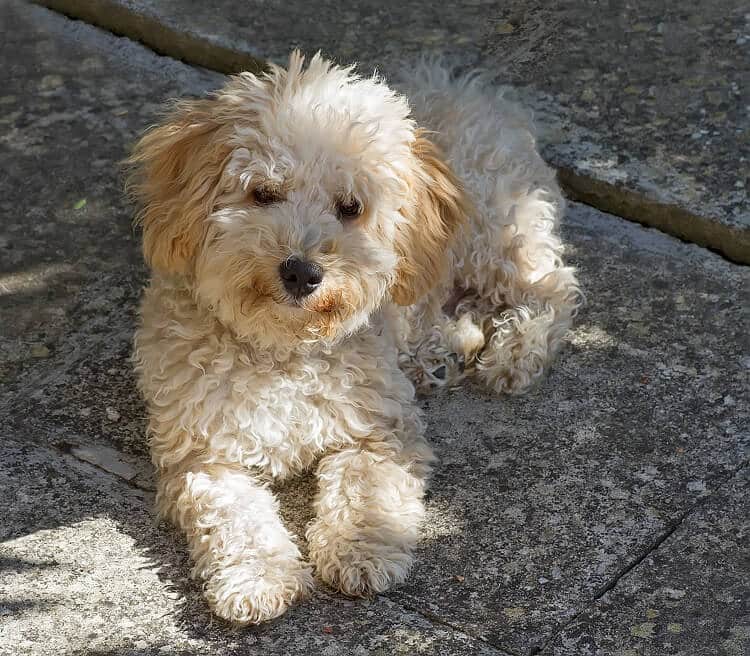
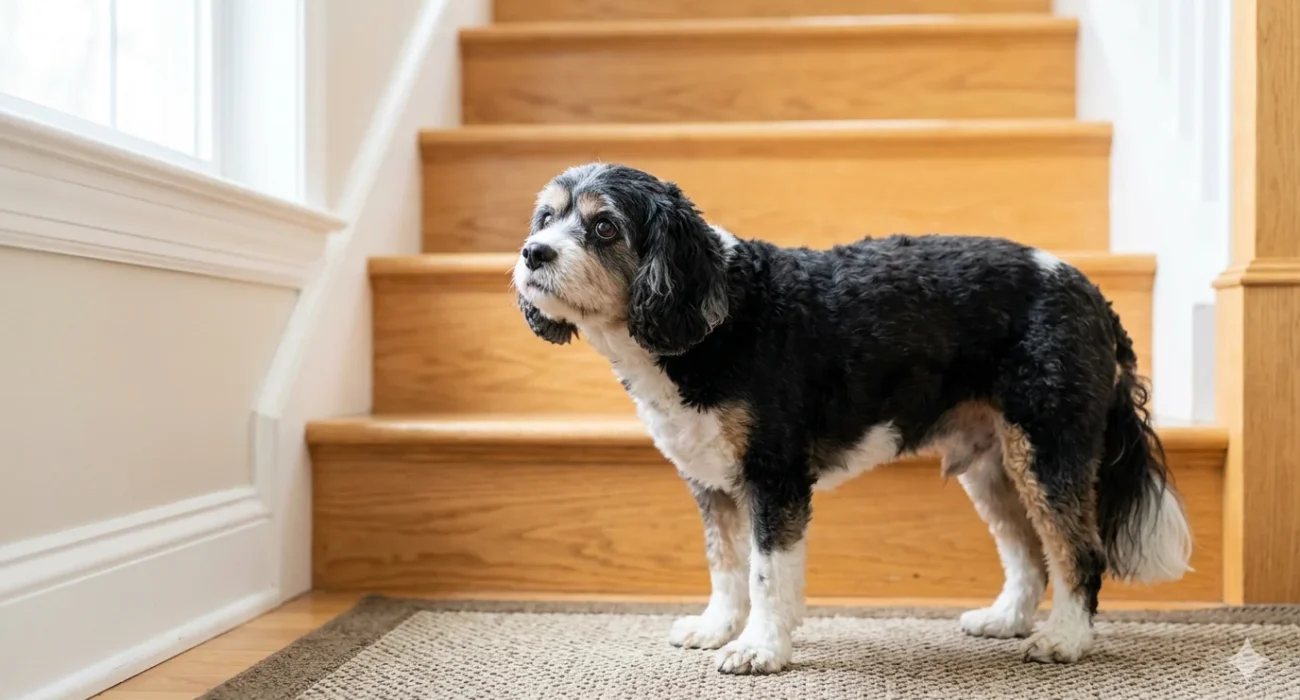
How to help a senior Cavapoo use stairs is one of the biggest concerns for owners of aging dogs. If your Cavapoo has hit their senior years and suddenly the stairs look like Mount Everest, you’re not imagining it. One day they’re bouncing up and down like a little teddy bear, and the next they’re hesitating at the first step. The good news is that with the right support, traction, and confidence-building, many senior Cavapoos can use stairs safely again.
One day they’re bouncing up and down like a little spring‑loaded teddy bear. The next day they’re standing at the bottom step, staring, hesitating, maybe even whining or turning away.
The good news? You can usually help this — not by “training harder,” but by making the experience easier on their body, safer on their joints, and less scary in their mind.
In this guide, I’ll walk you through the exact, practical steps to help a senior Cavapoo use stairs again — without pushing too hard or making the process frustrating for either of you.
Why Senior Cavapoos Struggle with Stairs
Cavapoos are small and eager to please, which can mask early discomfort — until one day they just stop.
Here are the big reasons stairs get hard as they age:
1) Joint pain and arthritis
Stairs put extra stress on hips, knees, and the lower back. Going down tends to feel worse because it loads the front legs and shoulders more intensely. In fact, a pet owner shared in this Reddit thread how their senior dog with hip arthritis became petrified of stairs and began crying and refusing to move near them — a pattern many aging dogs show when discomfort increases.
2) Weakness or muscle loss
Older dogs can lose strength in their hind end. A Cavapoo that used to hop up stairs may not have the leg power anymore — especially on slick surfaces.
3) Slipping and confidence loss
One bad slide can make stairs psychologically daunting. Another Cavapoo owner described how their dog totally refused the bed stairs he once used happily, even with treats and toys, only approaching them when highly excited — suggesting a fear component tied to stair hesitation. One owner shared in this Reddit thread their cavapoo stair anxiety story.
4) Vision changes
Age‑related vision decline can make stairs visually confusing. Dogs may hesitate if they can’t clearly see the edge of each step.
5) Nail and paw issues
Long nails or overgrown paw fur reduce traction on hard stair surfaces and make each step feel unstable.
6) Fear or negative association
If your dog had a slip, was carried back up after struggling, or felt rushed, they may associate stairs with stress or danger.
And here’s the key: often it’s not just one thing — joint pain can create fear, and fear can make a dog less confident, even on safe steps. This is why a vet check is almost always worth it before aggressive stair training.
Quick Checklist: Pain vs. Fear
Watch your Cavapoo as they approach stairs:
Signs it might be pain/physical limitation:
- Stiffness after rest
- Hesitation before even one step
- “Bunny hopping” with hind legs
- Reluctance to go down more than up
Signs it might be fear/confidence issues:
- Sometimes they do stairs, then suddenly refuse
- They pull back or show anxious body language
- They glide up if excited but refuse at calm moments
It’s very common for both to coexist — discomfort often makes dogs wary, and wariness can make the movement feel harder than it is.
Step 1: Get the Medical Basics Checked
If your senior Cavapoo has new stair trouble, a vet visit should be step one.
Even small signs like hesitation, stiffness, or a change in movement can be related to:
- Arthritis or joint degeneration
- Patellar luxation
- Hip pain
- Spinal discomfort
- Vision decline.
If your dog is in pain, no amount of reward or training will magically fix the stairs — you must address the underlying cause first.
If your vet suspects arthritis, the Canine Arthritis Resources website provides helpful educational information about recognizing joint pain, improving mobility, and supporting senior dogs with long-term arthritis management.
Step 2: Make the Stairs Physically Safe
Most owners try to lure their dog up before making the stairs safe — but that’s backwards. Your goal is to make stairs grippy, predictable, and confident‑inspiring.
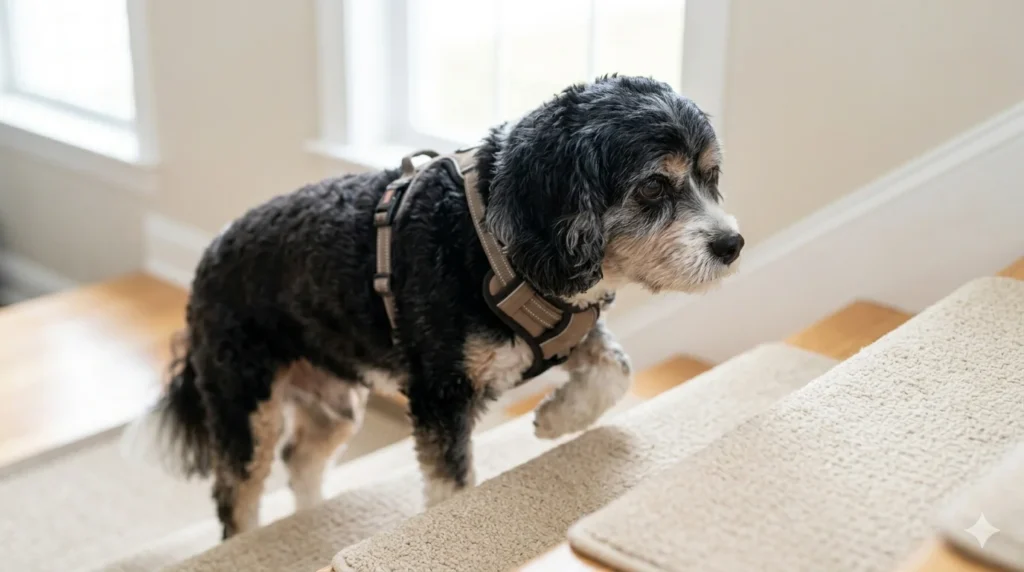
Fix slippery surfaces
This is often the biggest win.
Good options include:
- Carpet stair treads
- Non‑slip rubber treads
- A stair runner
- Grip pads or strips
If you do one thing today, start here.
Improve lighting and contrast
Older dogs can struggle visually when steps blend together. Brighter light and clear step edges can help.
Clear the landing zones
Top and bottom areas should be free of clutter so your dog approaches without feeling trapped.
Check nails and paw fur
Regular nail trims and trimmed paw pad fur can increase traction dramatically.
Step 3: Decide If Your Cavapoo Should Use Stairs at All
This isn’t about giving up — it’s about smart adaptation.
Stairs may be okay if:
- Pain is managed
- Traction is improved
- Your dog can walk up calmly without slipping
Consider ramps or limited stair use if:
- They slip or panic
- Pain signs are obvious
- Hind legs are weak or unstable
- They refuse even with traction fixes
Many owners find that once the environment and medical needs are addressed, stairs become an option again — but sometimes ramps or assisted options are simply kinder long term.
Step 4: Rebuild Confidence the Right Way
Once stairs are safe, you can rebuild confidence without pressure.
Rule #1: No forcing
Don’t tug on the leash, push from behind, or rush the process. That teaches fear, not confidence.
Use high‑value rewards
Think:
- Small bits of chicken
- Tiny cheese pieces
- Freeze‑dried treats
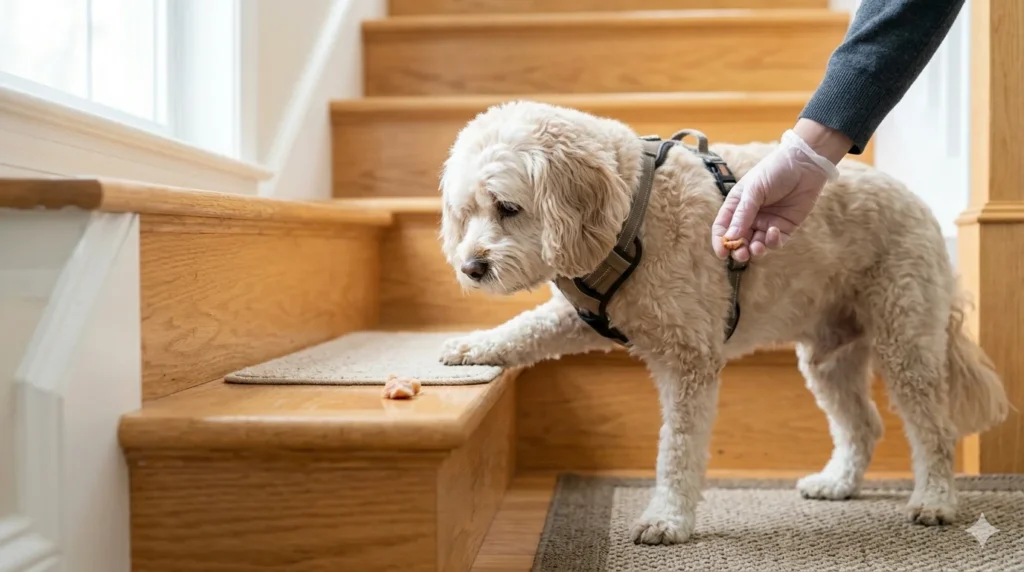
Start with ONE step
Here’s a simple routine:
- Put your dog on a leash or harness.
- Stand next to the first step.
- Reward even one paw up.
- Reward again if they place all paws.
- End the session there.
Short sessions (1–3 minutes) twice a day are better than long, exhausting ones.
Slowly build up — only move to two steps once your dog handles one easily.
Going Down Often Needs Separate Training
Going down involves different muscles and balance demands than going up.
Train it like this:
- Start at the top with a single step down
- Reward controlled, calm movement
- Use treats held near their nose to guide steps
If going down looks painful or your dog freezes, back off and try again later.
Step 5: Use the Right Gear
Skip neck collars for stair work — harnesses are far better. They reduce pressure and give you a secure grip if needed.
Look for:
- A secure chest fit
- Comfortable padding
- A handle on the back
If your Cavapoo’s hind end is wobbly, a rear support sling can help them feel stable while rebuilding confidence — but don’t carry them mid‑stair, as that teaches freezing is a “solution.” Instead, help them safely back down and reset with a smaller goal.
The American Kennel Club also recommends using properly fitted harnesses, positive reinforcement, and gradual confidence-building exercises to help older dogs move around safely.
Step 6: Create a Predictable Stair Routine
Senior dogs do best with consistency.
Use:
- The same staircase
- The same cue word (“stairs” or “step”)
- The same pace
- The same reward timing
This turns stairs from a scary unknown into a familiar pattern.
Step 7: Strengthen the Body (Without Overdoing It)
Even with traction and confidence work, strength matters.
Here are gentle ways to help:
- Sit‑to‑stand reps — Ask for a sit, then stand again.
- Short leash walks — Consistent, slow walks help maintain muscle.
- Gentle balance exercises — Have front paws on a low step briefly, then reward.
- Controlled step‑overs — Use a rolled towel as a gentle obstacle to improve awareness.
Only work within comfort — if your dog seems tired or sore afterward, reduce the reps.
Common Stair‑Training Mistakes and How to Avoid Them
Here are the things that derail progress:
Mistake 1: Practicing only when you’re in a hurry
Senior dogs feel your stress — pick calm times.
Mistake 2: Using excitement only
Hyper excitement isn’t real confidence.
Mistake 3: Letting them slip once
Even one slip without traction fixes can make them fear stairs permanently.
Mistake 4: Too many reps
Senior joints don’t love repetition; small wins matter.
Mistake 5: Only rewarding at the top
Reward early efforts — even the first paw up.
Step 8: When Ramps Are the Better Answer
Sometimes the most loving solution is: stop stressing stairs.
A gentle dog ramp can protect joints long‑term and let your senior move independently with less impact.
Look for a ramp that is:
- Non‑slip
- Stable
- Not overly steep
Ramp training follows the same reward‑based approach as stairs — start flat, reward stepping on it, then gently raise the incline over days.
Emergency Safety Tips
If your Cavapoo is unsteady:
- Block stair access with a baby gate when unsupervised
- Carry during high‑risk times (night, after rest)
- Add traction immediately
- Use a harness with a handle for quick support
- Never let them rush down stairs
Prevention is easier than recovery — a fall can set back mobility for weeks.
For more guidance on caring for aging dogs, the AAHA Senior Pet Care Guidelines offer trusted veterinary recommendations on mobility, routine health checks, pain management, and improving your senior Cavapoo’s quality of life.
A simple 7-day plan you can follow
If you’re overwhelmed, follow this.
Day 1: Safety reset
- Add stair treads or temporary non-slip mats.
- Trim nails and paw fur if needed.
- Choose high-value treats.
Day 2: One step practice (up)
- 3 micro-sessions.
- Reward for one paw, then two, then all four.
Day 3: Two steps practice (up)
- Same approach, short sessions.
- Stop while it’s still easy.
Day 4: One step practice (down)
- Start at the top.
- Reward controlled movement.
Day 5: Three to four steps (up), one to two steps (down)
- Keep it calm.
- Add a treat at the top and bottom.
Day 6: Combine a short stair run
- Only if your dog is stable and not sore.
- If they hesitate, shrink the goal again.
Day 7: Evaluate honestly
- Are they improving?
- Are they sore afterward?
- Are slips gone?
- Do they look confident?
If progress is stalled and pain signs are present, it’s time to talk to your vet about pain management and mobility support.
Let’s Wrap This Up
Helping a senior Cavapoo use stairs isn’t about getting them to be “brave.” It’s about making stairs safe, predictable, and comfortable again.
If you remember nothing else:
- Check for pain with a vet.
- Fix traction and safety first.
- Rebuild confidence step‑by‑step.
- Strengthen gently and consistently.
- Use ramps or barriers when stairs aren’t the best option.
You’re not forcing courage — you’re supporting comfort and confidence at every step.
FAQs (Frequently Asked Questions)
Why do senior Cavapoos struggle with stairs?
Senior Cavapoos often struggle with stairs due to joint pain and arthritis, muscle weakness or loss, slipping and confidence loss, vision changes, nail and paw issues, and fear or stress associated with stairs. These factors make stairs physically challenging and sometimes scary for older dogs.
How can I tell if my Cavapoo’s hesitation on stairs is due to pain or fear?
Observe your Cavapoo’s behavior: signs of pain include limping, stiffness, slow movement after resting, reluctance especially going down stairs, licking paws or joints, and wobbling. Signs of fear include random refusal to use stairs, pulling back, flattened ears, lip licking, shaking, avoiding certain stair surfaces like wood but not carpet, freezing on specific steps, or looking to be carried.
What should I do first if my senior Cavapoo suddenly refuses to use the stairs?
The first step is to get a thorough veterinary check-up to rule out or manage medical issues such as arthritis, patellar luxation, hip problems, spinal pain, neurological weakness, vision changes, and weight concerns. Your vet can also advise on safe pain management and whether limiting stair use temporarily is necessary.
How can I make the stairs safer and more comfortable for my senior Cavapoo?
Make the stairs less slippery by adding carpet stair treads, non-slip rubber treads, stair runners, grip tape (consider paw comfort), or yoga mat strips. Improve lighting near the staircase and add contrasting colors to highlight each step edge. Keep landing zones clear for easy access. Also regularly trim your dog’s nails and paw fur to improve traction.
Is it always advisable for senior Cavapoos to continue using stairs?
Not always. Depending on your Cavapoo’s health condition—especially if they have significant arthritis or joint issues—it might be best to limit stair use temporarily or permanently. Alternatives like ramps or being carried during flare-ups can reduce pain and prevent further injury while you manage their condition.
Can training alone help a senior Cavapoo overcome stair difficulties?
Training alone is often not enough because the issue usually involves physical discomfort or fear rather than obedience. The key is making the stair experience easier on their body by addressing medical issues and improving safety features like grip and lighting. Combining these adjustments with gentle encouragement can help rebuild confidence without pushing too hard.