Senior Cavapoo Joint Pain Signs can be easy to miss because dogs naturally hide discomfort. If you have a senior Cavapoo, you may notice small changes like stiffness after resting, hesitation on stairs, or shorter walks. Recognizing these early joint pain signs can help you improve your dog’s comfort, mobility, and quality of life before the problem gets worse.
If you have a senior Cavapoo, you already know the feeling.
Your Cavapoo still gets excited when you grab the leash… still follows you from room to room… still wants to jump up for cuddles. The American Kennel Club explains that stiffness, reduced mobility, and hesitation during daily activities are common signs of aging joints in senior dogs.
But something feels slightly off.
Maybe they hesitate for a second before jumping.
Maybe mornings look a little slower.
Maybe the stairs suddenly seem… harder.
Joint pain in senior Cavapoos often starts subtly — and gets missed early.
If that sounds familiar, you’re not overthinking it. You’re noticing early signs — and that’s a good thing.
This guide will walk you through:
- The most common (and sneaky) joint pain signs
- What they actually mean
- And simple, practical things you can do starting today
First — Cavapoos Are Really Good at Hiding Pain
Dogs don’t complain the way humans do.
They adapt. Quietly.
That’s why joint pain often shows up as behavior changes first, not obvious limping.
One owner described in this Reddit thread about a senior dog becoming slower and reluctant to jump how they initially thought their dog was “just aging” — until mobility issues became more obvious.
If you’re noticing small changes, you’re already doing the right thing by paying attention.
1. Stiffness After Rest (The Classic Early Sign)
What It Looks Like:
- Slow to get up after naps
- Stiff first few steps
- Takes time to “loosen up”
Why It Happens:
Joints tighten during rest. Movement helps temporarily — but the underlying discomfort is still there.
What Helps:
- Gentle movement throughout the day
- Warm, soft sleeping areas
- Avoid long periods of inactivity
What Not to Do:
- Don’t dismiss it as “just age” — stiffness = discomfort signal
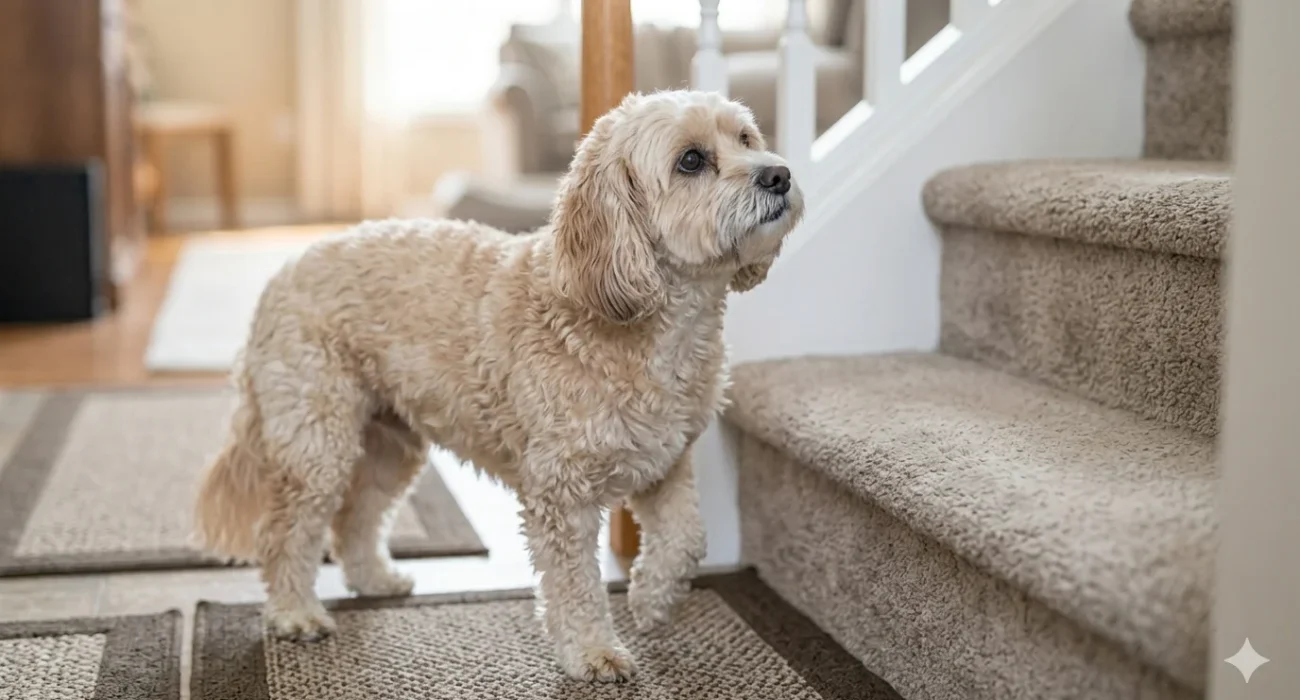
2. Hesitation with Stairs, Jumping, or the Couch
This is one of the most telling behavior changes.
What It Looks Like:
- Pausing before stairs
- Taking steps slowly
- Avoiding jumping onto furniture
- Asking to be lifted
One pet owner shared in this Reddit thread about a small dog suddenly refusing stairs that hesitation was the first sign something physical might be wrong — not behavioral.
Why It Happens:
Jumping and stairs put pressure on joints (especially knees and hips).
What Helps:
- Add ramps or pet stairs
- Lift with support (chest + hips)
- Reduce repeated jumping
What Not to Do:
- Don’t encourage “just try” — hesitation usually means discomfort
3. Limping That Comes and Goes
This one tricks a lot of owners.
What It Looks Like:
- Limp after walks or play
- A quick “skip” step
- Normal later → then limping again
One owner explained in this Reddit thread about intermittent limping that kept disappearing and how they delayed a vet visit because the limp didn’t seem constant.
Why It Happens:
Early joint issues often flare up after activity, then settle.
What Helps:
- Monitor patterns (after walks? mornings?)
- Record short videos for your vet
What Not to Do:
- Don’t wait for constant limping — intermittent still matters
4. Slower Walks or Shorter Energy
What It Looks Like:
- Lagging behind
- Sitting during walks
- Turning back earlier than usual
- Slower on cold mornings
Why It Happens:
Movement becomes tiring or uncomfortable.
What Helps:
- Shorter, more frequent walks
- Gentle pace
- Avoid slippery or uneven surfaces
What Not to Do:
- Don’t assume they’re just “less interested” — many dogs still want to go
5. Licking or Chewing a Specific Joint
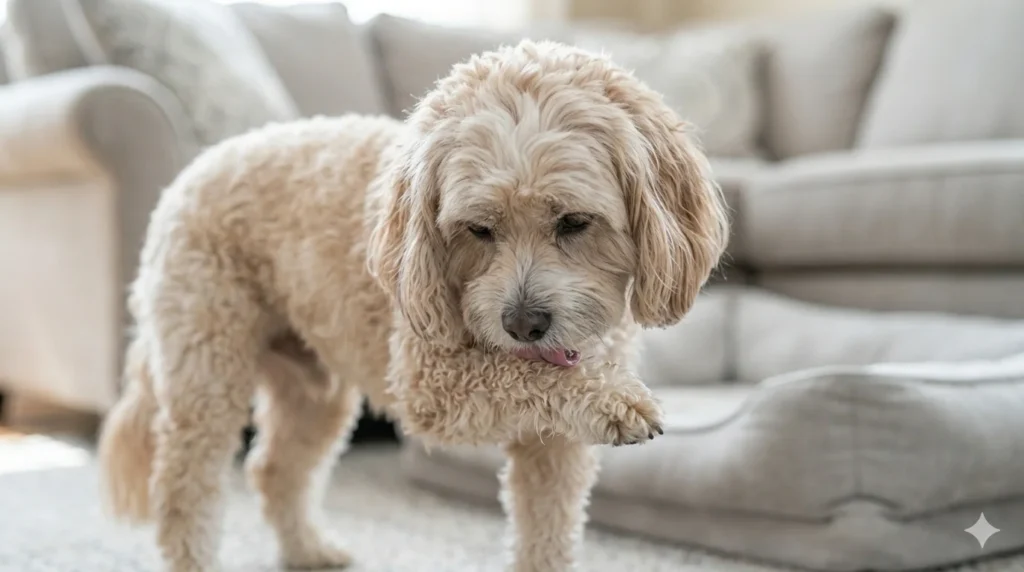
What It Looks Like:
- Repeated licking of one leg or joint
- Focus on one side more than the other
Why It Happens:
Licking can be a self-soothing response to pain.
What Helps:
- Track which area is targeted
- Share patterns with your vet
What Not to Do:
- Don’t assume it’s always allergies
6. Changes in Posture or Standing
What It Looks Like:
- Slight hunching
- Weight shifting off one leg
- Wider stance
- Sitting with a leg kicked out
Why It Happens:
Your dog is redistributing weight to avoid discomfort.
What Helps:
- Improve traction at home
- Reduce strain on joints
What Not to Do:
- Don’t ignore posture changes — they’re subtle but important
7. Difficulty Sitting, Standing, or Lying Down
What It Looks Like:
- “Plopping” into a sit
- Using front legs heavily to stand
- Multiple attempts to get up
Why It Happens:
These movements require joint flexibility and strength.
What Helps:
- Orthopedic bedding
- Gentle strengthening exercises (if comfortable)
The Canine Arthritis Resources website provides practical advice on exercise, weight management, and home modifications for dogs living with arthritis.
What Not to Do:
- Don’t rush or force movement
8. Nail Scuffing or Paw Dragging
What It Looks Like:
- Scraping sounds when walking
- Uneven nail wear
- Slight toe dragging
Why It Happens:
Joint discomfort changes gait mechanics.
What Helps:
- Keep nails trimmed
- Add non-slip surfaces at home
What Not to Do:
- Don’t ignore early scuffing — it’s a useful warning sign
9. Less Interest in Play
What It Looks Like:
- Watching toys but not chasing
- Avoiding jumping or rough play
- Reduced enthusiasm
Why It Happens:
Play involves movements that may hurt.
What Helps:
- Switch to low-impact play
- Short, gentle sessions
What Not to Do:
- Don’t label them as “lazy”
10. Irritability When Touched
What It Looks Like:
- Flinching
- Moving away
- Growling when picked up
Why It Happens:
Pain + anticipation of pain = defensive reaction.
What Helps:
- Handle gently
- Avoid sensitive areas
- Get a vet evaluation
What Not to Do:
- Don’t punish this — it’s communication
11. Personality Changes
Pain doesn’t just affect movement — it affects mood.
You might notice:
- Clinginess
- Anxiety
- Withdrawal
- Less enthusiasm
Some dogs become quieter. Others become more needy.
12. Accidents in the House
This surprises a lot of owners.
It’s not always a potty issue.
Sometimes it hurts to:
- Walk to the door
- Go downstairs
- Squat
So they hold it too long… then can’t.
13. Trouble Getting Comfortable at Night
Joint pain often shows up when they try to rest.
Look for:
- Frequent position changes
- Restlessness
- Avoiding their bed
What NOT to Do
Before we jump into solutions, avoid these common mistakes:
- Waiting for a constant limp
- Assuming it’s “just aging”
- Reducing all activity completely
- Letting them keep jumping freely
- Giving human pain meds
These can delay proper help or make things worse.
A Simple Action Plan You Can Start Tonight
If you’re noticing even a few signs, start here:
1. Reduce Jumping Immediately
- Add ramps or stairs
- Lift with support (chest + hips)
2. Shorten Walks (Don’t Stop Them)
- 2–3 shorter walks
- Gentle pace
- Avoid slippery or steep areas
3. Add Traction at Home
- Rugs or mats on floors
- Keep nails trimmed
This alone can reduce strain significantly.
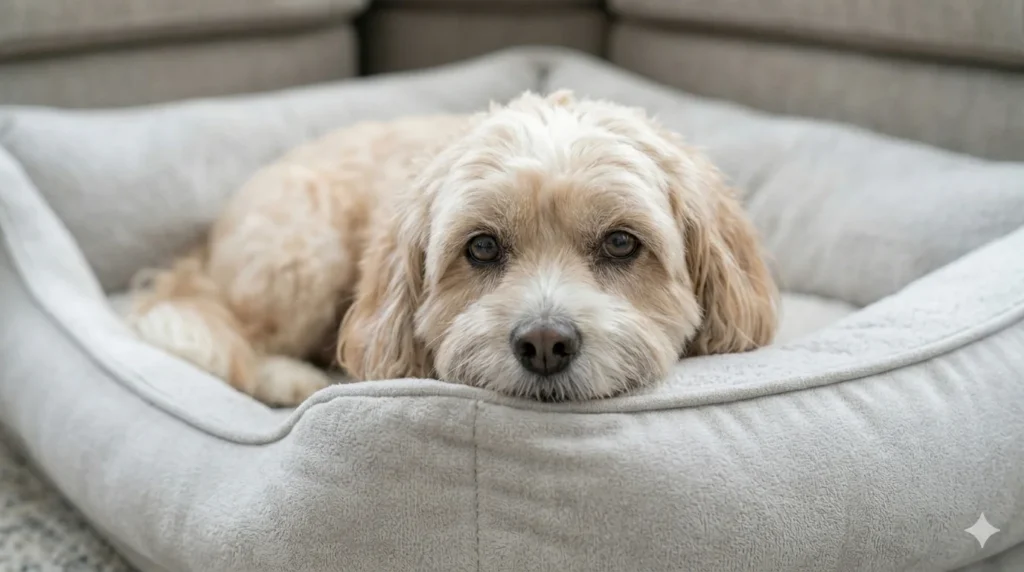
4. Upgrade Their Bed
- Orthopedic foam
- Warm, supportive surface
5. Monitor Weight
Even small weight gain = more joint stress.
- Measure food
- Limit treats
- Track monthly
6. Start Observing Patterns
For the next 1–2 weeks, note:
- Morning stiffness
- Walk tolerance
- Jumping hesitation
- Licking spots
This makes your vet visit much more effective.
The AAHA Senior Care Guidelines recommend early detection, supportive bedding, and regular veterinary assessments to improve comfort and mobility in aging pets.
Let’s wrap this up
Senior Cavapoo joint pain signs usually show up as small changes first: stiffness after rest, hesitation on stairs, shorter walks, less jumping, licking joints, mood shifts, and occasional limping.
The biggest mistake people make is waiting for a dramatic limp. By the time it’s obvious, your dog has probably been compensating for a while.
If you suspect joint pain, do the simple home upgrades (traction, ramps, better bedding, consistent gentle walks), track the patterns, and book a vet visit to get a real plan in place.
Because your Cavapoo doesn’t need to be “tough.” They just need to be comfortable.
FAQs (Frequently Asked Questions)
What are common signs of joint pain in senior Cavapoos?
Common signs include stiffness after resting, hesitating on stairs or jumping, intermittent limping, slower walks or shorter sniff sessions, licking or chewing specific joints, changes in posture, difficulty sitting or standing smoothly, nail scuffing or dragging paws, and less interest in play.
Why do senior Cavapoos hide their joint pain symptoms?
Cavapoos, like many dogs, are great at hiding pain and often adapt quietly without complaining. This means joint pain may first show as subtle behavior changes before obvious signs like limping appear.
How can I tell if my Cavapoo’s stiffness is due to joint pain rather than just aging?
While aging can cause some stiffness, joint pain stiffness typically shows as difficulty getting up after resting with a ‘tight’ feeling for the first few steps that loosens up with movement. The goal is to keep your dog comfortable rather than trying to make them act like a puppy again.
What should I watch for regarding my Cavapoo’s jumping habits as a sign of joint discomfort?
If your Cavapoo hesitates on stairs or stops jumping onto furniture or into cars, it could indicate joint pain. Look for pausing before stairs, taking them slowly one at a time, avoiding stairs altogether, or needing help to get onto couches or beds.
Can licking or chewing certain areas indicate joint pain in my senior Cavapoo?
Yes. Persistent licking or chewing of joints such as wrists, elbows, knees, hips, or paws—especially on one side—can be a sign of discomfort from joint pain rather than allergies.
When should I consider consulting a vet about my senior Cavapoo’s joint health?
If you notice any signs like intermittent limping, changes in posture, difficulty moving smoothly, nail scuffing, reduced playfulness, or hesitation with stairs and jumping—it’s important to consult your vet promptly to address potential joint issues and improve your dog’s comfort.