
Why Does My Cavapoo Bark So Much? 10 Causes & Solutions
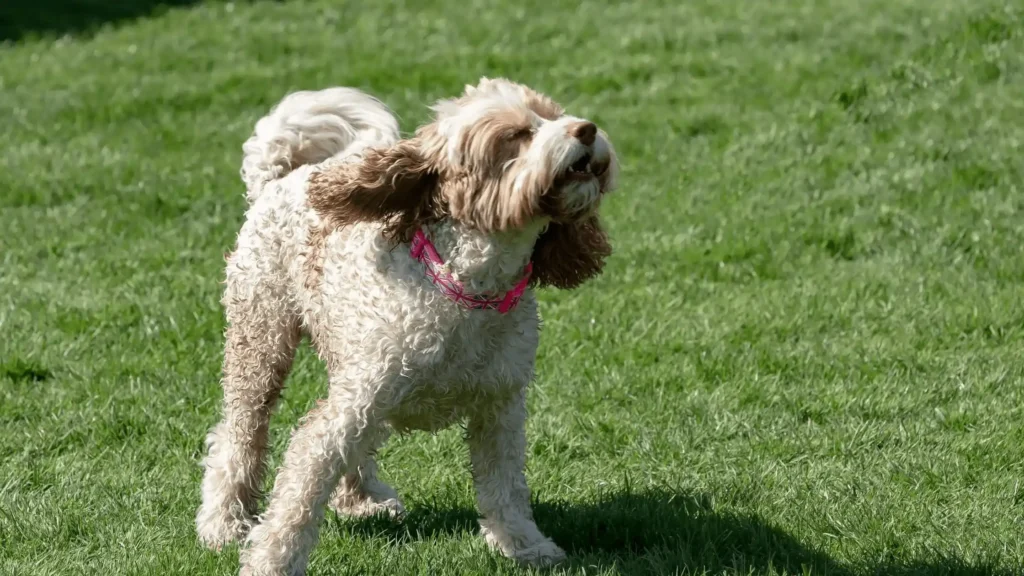
If you’ve caught yourself asking, “Why does my Cavapoo bark so much?”, you’re not alone. Cavapoos are affectionate, intelligent, people-focused dogs, but some can also be surprisingly vocal.
Barking is a normal form of canine communication. The goal isn’t to stop your Cavapoo from ever barking. Instead, you need to understand why your Cavapoo is barking so much and teach them a calmer, more appropriate response.
Your Cavapoo may bark because of boredom, excitement, fear, attention-seeking, territorial behavior, separation anxiety, frustration, or even physical discomfort.
Once you identify the trigger, excessive barking becomes much easier to manage.
If you’re still learning about this breed, start with our complete Cavapoo guide or explore our Cavapoo behavior guides.
Is It Normal for a Cavapoo to Bark a Lot?
Yes, some barking is completely normal.
Dogs bark to communicate excitement, fear, frustration, warnings, needs, and social information. However, there’s an important difference between normal communication and excessive Cavapoo barking.
A Cavapoo that barks two or three times when someone knocks at the door and then settles is displaying normal alert behavior.
A Cavapoo that continues barking for 10–20 minutes, paces around the house, repeatedly reacts to minor sounds, or cannot disengage from a trigger may need additional training, environmental management, or behavioral support.
According to the ASPCA’s barking behavior guide, dogs may bark for several reasons, including territorial behavior, alarm, attention, frustration, and separation-related problems.
Before asking how to stop a Cavapoo from barking, therefore, ask a more useful question:
What is causing my Cavapoo to bark?
Why Does My Cavapoo Bark So Much? 10 Common Causes
There isn’t one universal reason. Your Cavapoo’s age, personality, environment, routine, previous experiences, training, and health can all influence barking.
Here are 10 common causes.
1. Your Cavapoo Wants Attention
Attention-seeking barking is extremely easy to reinforce accidentally.
Your Cavapoo barks.
You look at them.
They bark again.
You throw their toy, give them food, talk to them, pick them up, or open the door.
The barking stops.
Unfortunately, your Cavapoo may have learned:
“When I bark, my human responds.”
Signs of Attention-Seeking Barking
Your Cavapoo may:
- stare directly at you while barking
- bark while you’re working
- bring you a toy and bark
- bark around mealtimes
- bark when you stop petting them
- immediately stop once they receive attention
How to Reduce Attention Barking
Avoid immediately rewarding the bark.
Instead:
Barking → wait for silence → mark calm behavior → reward
This teaches your dog that being quiet produces the desired outcome.
For more behavior guidance, visit our Cavapoo behavior hub.
2. Your Cavapoo Is Bored
Cavapoos may be small and cuddly, but that doesn’t mean they want to spend their entire day sleeping on the sofa.
Without enough mental and physical stimulation, a Cavapoo may create its own entertainment.
And barking can become part of that entertainment.
Signs Your Cavapoo May Be Bored
Watch for:
- destructive chewing
- stealing household objects
- restlessness
- excessive following
- digging
- attention-seeking
- difficulty settling
- barking at insignificant noises
How to Help a Bored Cavapoo
Try incorporating:
- age-appropriate walks
- sniffing walks
- food puzzles
- scent games
- short training sessions
- hide-and-seek
- interactive toys
- safe chewing activities
- structured play
- calm downtime
Physical exercise is important, but mental enrichment matters too.
A short training or scent session can challenge your Cavapoo mentally without simply increasing physical excitement.
Explore our main Cavapoo care guide for more information about meeting your dog’s everyday needs.
3. Your Cavapoo Has Separation Anxiety
If your Cavapoo primarily barks when you leave home, separation-related distress should be considered.
This is different from ordinary demand barking.
Signs of Separation Anxiety
You may notice:
- persistent barking or howling
- pacing
- excessive panting
- drooling
- scratching doors
- destructive behavior around exits
- indoor accidents
- refusing treats when alone
- frantic greetings when you return
How to Check for Separation Anxiety
Set up a pet camera and watch what happens during the first 5–30 minutes after leaving.
Does your Cavapoo settle?
Or does the distress continue?
A dog that barks briefly and then sleeps is displaying something very different from a dog that remains distressed throughout your absence.
Read our detailed Cavapoo separation anxiety guide for a complete training approach.
You can also consult the ASPCA separation anxiety resource.
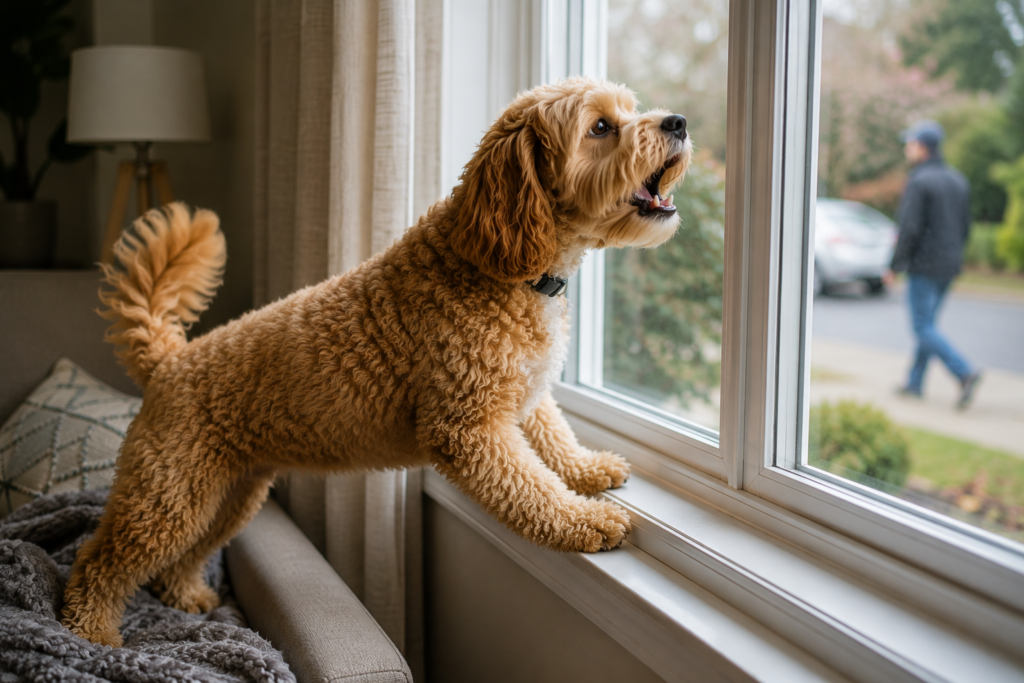
4. Your Cavapoo Is Alert Barking
Your Cavapoo hears someone outside.
Woof!
A delivery driver approaches.
Woof! Woof!
A car door closes.
Suddenly your Cavapoo thinks they’re responsible for home security.
Alert barking itself isn’t necessarily abnormal.
The problem occurs when your Cavapoo cannot settle after the trigger disappears.
Why Window Barking Becomes a Habit
Consider what your dog experiences:
- Someone walks past the window.
- Your Cavapoo barks.
- The person continues walking.
- The person disappears.
Your dog may interpret this as:
“I barked, and the stranger left.”
The barking appears successful.
How to Reduce Alert Barking
Try:
- closing curtains
- using privacy film
- moving furniture away from windows
- restricting access to trigger-heavy rooms
- playing background noise
- rewarding calm observation
You can then teach:
Person appears → Cavapoo looks at you → reward
Instead of:
Person appears → barking starts
5. Your Cavapoo Is Barking Because of Fear
Not every barking Cavapoo is being aggressive.
Sometimes barking means:
“I’m uncomfortable. Stay away.”
Common Fear Triggers
These can include:
- strangers
- children
- unfamiliar dogs
- loud appliances
- thunderstorms
- fireworks
- traffic
- unfamiliar environments
- sudden movements
Watch Your Cavapoo’s Body Language
Fear may also involve:
- tucked tail
- ears pulled backward
- trembling
- hiding
- retreating
- lip licking
- avoiding interaction
- refusing treats
Don’t force your Cavapoo toward something they’re frightened of.
Create enough distance for your dog to remain calm and gradually build positive associations.
Understanding body language is an important part of managing Cavapoo behavior.
6. Your Cavapoo Is Overexcited
Some Cavapoos bark because they’re simply overwhelmed with excitement.
Common triggers include:
- seeing the leash
- visitors arriving
- seeing another dog
- you returning home
- dinner preparation
- playtime
Signs of Excitement Barking
You may see:
- jumping
- spinning
- fast tail wagging
- running around
- play bows
- grabbing toys
- difficulty staying still
Teach Calmness Before Rewards
Avoid teaching:
Bark → door opens
or:
Bark → dinner appears
Instead:
Calm behavior → reward appears
Before opening a door, wait for four paws on the floor.
Before putting food down, wait for a short period of calm behavior.
Before starting a walk, reward your Cavapoo for remaining composed while the leash is attached.

7. Your Cavapoo Is Territorial
Your Cavapoo may bark when someone approaches an area they consider their territory.
This might include:
- your house
- backyard
- front door
- window
- car
- favorite resting area
Common Territorial Triggers
These include:
- delivery drivers
- visitors
- neighbors
- passing dogs
- people approaching the house
Instead of allowing your Cavapoo to patrol windows throughout the day, manage their environment and teach an alternative response.
For example:
Doorbell → go to mat → receive reward
Practice this when no real visitors are present.
Eventually, the doorbell can become a cue for going to the mat rather than starting an extended barking session.
8. Your Cavapoo Is Frustrated
Frustration can create surprisingly intense barking.
Your Cavapoo sees another dog.
They want to investigate.
The leash prevents them.
They pull.
They still can’t reach the dog.
Then the barking begins.
Frustration Barking Commonly Happens
- on leash
- behind fences
- through windows
- inside cars
- behind baby gates
- when waiting for food
- when prevented from greeting someone
How to Handle Frustration Barking
Distance is important.
If your Cavapoo is already barking, pulling, and unable to focus, getting closer to the trigger usually won’t help.
Move far enough away that your dog can notice the trigger while remaining responsive.
Then reward calm observation.
Over time, gradually decrease the distance.
9. Your Cavapoo Has Learned That Barking Works
Dogs repeat behaviors that produce results.
Your Cavapoo barks and you:
- provide food
- throw the toy
- open the door
- pick them up
- begin playing
- talk to them
- let them outside
The result?
Barking worked.
Replace Barking With Another Behavior
Teach your Cavapoo:
Want food? Sit calmly.
Want outside? Wait at the door.
Want play? Bring a toy calmly.
Want attention? Settle near you.
Reward behaviors you want your dog to repeat.
10. Your Cavapoo May Be in Pain or Discomfort
This cause is particularly important when barking appears suddenly.
A normally quiet Cavapoo that suddenly becomes unusually vocal may be experiencing physical discomfort.
Possible contributors include:
- pain
- itching
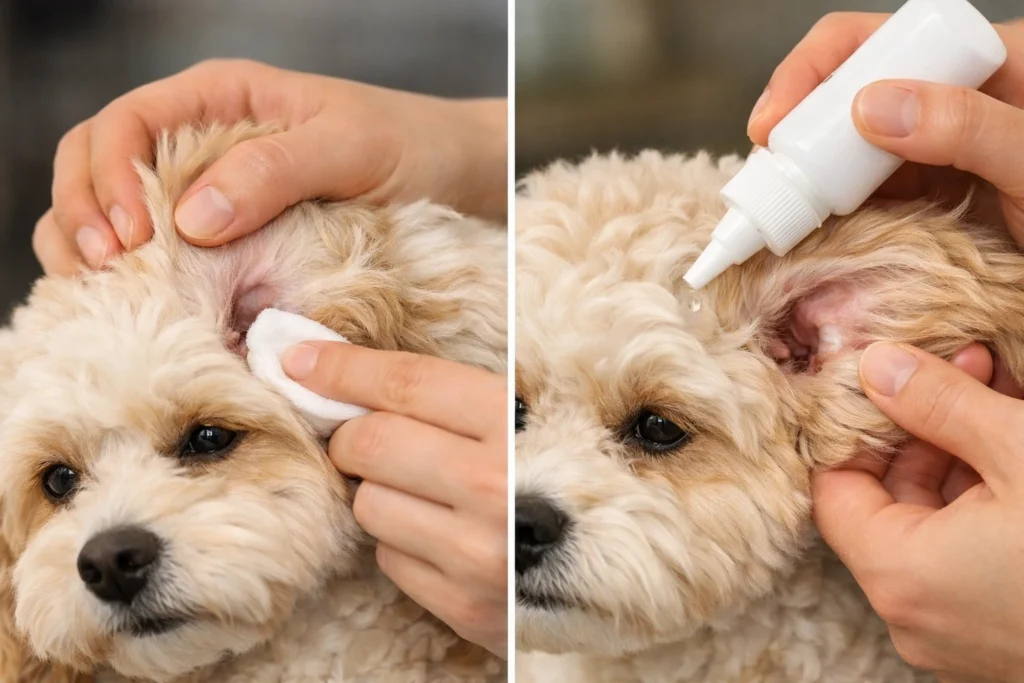
- ear problems
- digestive discomfort
- injuries
- dental discomfort
- reduced hearing
- reduced vision
- age-related changes
Visit our Cavapoo health guide for more health information.
Older dogs may also experience behavioral changes as they age. Our Cavapoo senior care guide covers age-related care in greater detail.
When Should You Contact Your Veterinarian?
Seek veterinary advice if increased barking occurs alongside:
- loss of appetite
- lethargy
- limping
- shaking
- sensitivity to touch
- scratching
- head shaking
- sleeping changes
- confusion
- sudden aggression
Don’t automatically assume every behavioral change is a training problem.
Why Does My Cavapoo Bark at Everything?
If your Cavapoo seems to bark at every person, sound, dog, vehicle, and movement outside, they may have become highly sensitive to environmental triggers.
Repeated barking also becomes self-reinforcing through practice.
Consider your dog’s entire routine.
Ask yourself:
- Is my Cavapoo getting enough sleep?
- Is my Cavapoo bored?
- Can they constantly watch people through a window?
- Are outside noises keeping them alert?
- Are they getting enough mental stimulation?
- Am I accidentally rewarding barking?
- Could anxiety be involved?
Often, excessive Cavapoo barking improves through several small changes rather than one dramatic training technique.
Why Does My Cavapoo Bark at Strangers?
Barking at strangers can result from:
- excitement
- uncertainty
- fear
- territorial behavior
- frustration
- alert behavior
Body language helps identify the reason.
A Cavapoo moving toward someone with loose, playful body language is communicating something different from a dog retreating with a tucked tail.
Training a Cavapoo Not to Bark at Strangers
Start far enough away that your Cavapoo can see the person without barking.
Then:
Person appears → reward
Person remains visible → calm behavior earns rewards
Person disappears → rewards stop
Gradually, unfamiliar people can become less emotionally significant.
Why Does My Cavapoo Bark at Other Dogs?
There are several possibilities.
Excitement
Your Cavapoo wants to meet the other dog.
Frustration
The leash prevents your Cavapoo from reaching the dog.
Fear
Your Cavapoo wants the other dog to move away.
Learned Reactivity
Your dog has repeatedly practiced barking whenever another dog appears.
Previous Negative Experiences
A frightening encounter can affect future behavior.
Don’t automatically assume dog-directed barking equals aggression.
If you’re interested in temperament differences between popular Doodle breeds, visit our Doodle comparison guides.
You can also explore our Cockapoo guide and Cockapoo behavior resources.
Why Does My Cavapoo Bark When I Leave?
If barking starts when you leave home, determine whether your dog is bored, protesting briefly, or experiencing genuine separation-related distress.
Use a camera to observe:
- when barking begins
- how long it continues
- whether your dog settles
- whether your dog accepts food
- whether pacing occurs
- whether they’re scratching exits
- whether destructive behavior occurs
For a complete explanation, read our Cavapoo separation anxiety guide.
Why Does My Cavapoo Bark at Night?
Nighttime barking can have several causes:
- outside noises
- needing the toilet
- unfamiliar surroundings
- insufficient daytime stimulation
- attention-seeking
- anxiety
- wildlife
- physical discomfort
Sudden nighttime barking in an older Cavapoo deserves particular attention, especially when accompanied by confusion or changes in sleeping patterns.
See our Cavapoo senior care resources for more guidance.
How to Stop a Cavapoo From Barking
Once you’ve identified the likely cause, you can begin addressing the behavior systematically.
Step 1: Identify Your Cavapoo’s Barking Triggers
Keep a simple diary for approximately one week.
Record:
- time
- trigger
- duration
- your response
- what happened afterward
Patterns can quickly become obvious.
Step 2: Stop Accidentally Rewarding Barking
Pay attention to what happens immediately after barking.
If your Cavapoo consistently receives food, play, attention, or access to something desirable, barking may be reinforced.
Instead, reward an appropriate alternative behavior.
Step 3: Manage Your Cavapoo’s Environment
Prevent unnecessary opportunities to practice barking.
If your Cavapoo spends hours barking through a front window, use curtains, privacy film, furniture placement, or controlled access while working on training.
Step 4: Increase Physical and Mental Enrichment
Use a combination of:
- walks
- sniffing
- scent games
- food puzzles
- training
- safe chews
- interactive play
- calm downtime
Step 5: Teach Your Cavapoo a Quiet Cue
Avoid repeatedly shouting “quiet.”
Instead:
- Introduce a manageable trigger.
- Allow one or two barks.
- Wait for a pause.
- say “Quiet.”
- Mark the silence.
- Reward.
- Repeat.
The VCA Animal Hospitals barking guide provides additional veterinary behavior information about barking and reinforcing appropriate responses.
Step 6: Teach a Place Command
A reliable mat or place command is particularly useful for:
- visitors
- doorbells
- deliveries
- mealtimes
- household excitement
Build the behavior when the environment is calm before expecting your Cavapoo to perform it around difficult triggers.
Step 7: Don’t Punish Fear or Anxiety
Punishment doesn’t resolve the underlying emotion.
If your Cavapoo is barking because they’re frightened, your goal should be to help them feel safer around the trigger.
The RSPCA dog behavior resources provide additional guidance on understanding and managing canine behavior.
What Should You NOT Do When Your Cavapoo Barks?
Don’t Constantly Yell
Shouting can increase excitement and doesn’t teach your Cavapoo what you want them to do instead.
Don’t Reward Demand Barking
Avoid immediately providing food, play, or attention simply to stop the noise.
Don’t Punish Anxiety
Anxiety requires a different strategy from demand barking.
Don’t Force Fearful Interactions
Give your Cavapoo sufficient distance and gradually build confidence.
Don’t Expect Overnight Results
A behavior practiced for months may require consistent training before substantial improvement occurs.
Don’t Ignore Sudden Changes
A sudden increase in barking, particularly alongside physical or behavioral symptoms, deserves investigation.
How Long Does It Take to Stop Cavapoo Barking?
There isn’t a universal timeline.
Simple attention-seeking barking may improve relatively quickly once everyone in the household becomes consistent.
Fear, reactivity, or separation anxiety can take considerably longer.
Instead of expecting perfection, monitor progress.
Ask:
- Is my Cavapoo barking less frequently?
- Are barking episodes shorter?
- Is recovery faster?
- Can my dog focus on me around triggers?
- Is my Cavapoo becoming easier to settle?
These are all meaningful signs of improvement.
When Should You Get Professional Help for Cavapoo Barking?
Speak with a veterinarian or qualified canine behavior professional if your Cavapoo:
- suddenly begins barking excessively
- appears extremely frightened
- displays aggression
- cannot settle
- injures themselves trying to escape
- experiences severe separation distress
- refuses food when alone
- becomes increasingly reactive
- shows significant behavioral changes
Medical causes should be considered when behavior changes unexpectedly.
For additional guidance, the American Kennel Club’s excessive barking guide discusses identifying triggers and teaching alternative behaviors.
Frequently Asked Questions About Cavapoo Barking
Why Does My Cavapoo Bark So Much?
Your Cavapoo may bark because of attention-seeking, boredom, excitement, fear, territorial behavior, frustration, separation distress, learned behavior, environmental triggers, or physical discomfort. Identifying the trigger is the most important first step.
Are Cavapoos Barky Dogs?
Some Cavapoos are naturally more vocal than others. Genetics, individual temperament, environment, socialization, routine, training, and previous reinforcement can all affect barking frequency.
How Do I Stop My Cavapoo From Barking at Everything?
Identify the main triggers, reduce unnecessary exposure, provide sufficient mental and physical enrichment, stop accidentally rewarding barking, and teach calm alternative behaviors.
Why Does My Cavapoo Bark at Me?
Your Cavapoo may want attention, food, play, access to something, or may simply have learned that barking gets a response from you.
Why Does My Cavapoo Bark at the Door?
Door barking may result from excitement, alert behavior, fear, or territorial behavior. Teaching your Cavapoo to go to a designated mat when the doorbell rings can provide a more appropriate alternative.
Should I Ignore My Cavapoo When They Bark?
It depends on the cause. Ignoring certain forms of attention-seeking barking may help, but fear, pain, anxiety, or genuine needs shouldn’t simply be ignored.
Can Separation Anxiety Cause Constant Cavapoo Barking?
Yes. Separation-related distress can cause persistent barking or howling and may occur alongside pacing, drooling, destruction, escape attempts, or indoor accidents.
Why Has My Cavapoo Suddenly Started Barking More?
Sudden behavioral changes can result from environmental changes, stress, pain, discomfort, illness, sensory changes, or new triggers. Unexplained changes should be discussed with your veterinarian.
Do Cavapoos Grow Out of Barking?
Not necessarily. Some puppy behavior improves with maturity, but repeatedly reinforced barking can become a strong habit. Training and management are more reliable than waiting for your dog to grow out of it.
Can I Completely Stop My Cavapoo From Barking?
You shouldn’t expect a dog to never bark. Barking is normal communication. A more realistic goal is reducing unnecessary barking and teaching your Cavapoo to settle when asked.
Final Thoughts: Why Does My Cavapoo Bark So Much?
So, why does my Cavapoo bark so much?
Your dog isn’t necessarily being stubborn or badly behaved.
Your Cavapoo may be communicating:
“Someone’s outside.”
“I’m bored.”
“Play with me.”
“I’m scared.”
“Don’t leave me.”
“I want that.”
Or even:
“Something doesn’t feel right.”
Instead of focusing only on stopping the sound, identify the reason behind it.
Manage unnecessary triggers, provide appropriate mental and physical stimulation, stop accidentally rewarding excessive barking, and consistently reinforce calm behavior.
If barking is associated with fear, aggression, separation distress, or a sudden behavioral change, speak with an appropriate professional rather than relying on punishment.
Continue learning with our complete Cavapoo guide, Cavapoo behavior guides, Cavapoo grooming guide, Cavapoo health resources, and Cavapoo senior care guide.